
Table of Contents
- Why Professional Hardscape Installation Matters
- Design Expertise and Customized Outdoor Layouts
- Quality Materials and Workmanship
- Durability and Long-Term Performance
- DIY vs Professional Hardscape Installation: What’s the Real Difference
- Questions to Ask a Paver Contractor
- Understanding Hardscape Installation Cost and ROI
- Professional Paver Installation Process and Timeline
- Frequently Asked Questions
Last Updated: October 14, 2026
Why Professional Hardscape Installation Matters
Hiring a professional for your hardscape project isn’t just about getting pavers laid down, it’s about creating an outdoor living space that lasts and works the way you need it to.
The difference between professional hardscape installation and DIY comes down to three things: expertise you can’t replicate, materials installed correctly, and systems that function. A professional contractor manages drainage, accounts for soil conditions, ensures proper base preparation, and thinks through how water moves across your property. That invisible work prevents costly problems later.
At Kingdom Paver, we’ve spent a decade helping homeowners understand that professional hardscape installation saves time, money, and frustration. Invest in quality workmanship from the start, and your outdoor space stays beautiful for years.
Design Expertise and Customized Outdoor Layouts
A skilled hardscape designer sees possibilities in your yard that you might miss, positioning features so your outdoor living space actually gets used.

Professional hardscape installation begins with design, not copying Pinterest, but creating a layout that fits your property’s slope, drainage patterns, and how your family lives.
Customized design also means choosing materials that match your climate and maintenance preferences. Certain pavers work better in freeze-thaw cycles; some stone hides stains better. A professional knows these trade-offs.
Kingdom Paver specializes in customized outdoor layouts that maximize usable space, patios, walkways, and outdoor kitchen areas that feel intentional, not like an afterthought.
Quality Materials and Workmanship
The pavers you choose matter far less than how they’re installed. This is where most DIY projects fail.
Professional hardscape installation means using quality materials AND installing them correctly. Base preparation is critical: compacted gravel, proper sand layers, and correct slope for drainage. Cheap pavers installed poorly will sink; expensive pavers installed poorly will crack.
Workmanship shows in details most homeowners don’t think about: joint sand properly compacted, pavers set to consistent height, edges sealed against erosion, preventing shifting, weeds, and sand washing away in rain.
Durability and Long-Term Performance
A professionally installed hardscape can last 20 to 30 years or more; a DIY installation that skips steps might show problems in 5 to 7 years. The difference isn’t luck, it’s the foundation, drainage, and maintenance.
Why Professional Installs Last Longer
Durability starts below the surface. A proper installation includes:
- A compacted, correctly graded base. Base depth and compaction determine whether pavers stay level under foot traffic, vehicle weight, and freeze-thaw cycles.
- Engineered drainage. Water that can’t escape pools under the pavers, erodes the base, and causes settling and cracking. Channel drains, slope, and permeable base layers move water away from the home and off the surface.
- Correct edge restraint. Edges that aren’t locked in place let the field of pavers spread outward, opening joints and shifting the pattern.
- Proper joint sand and compaction. Joint sand locks pavers together and keeps weeds and insects out. Skipping this step is one of the most common DIY failures.
Hardscape Is Low-Maintenance, Not Maintenance-Free
Hardscape requires less upkeep than a lawn, but it isn’t zero upkeep:
- Re-sanding joints. Over time, joint sand washes out or settles. Most hardscapes need joint sand topped up every few years, and sooner in high-traffic or poorly drained areas.
- Sealing. Some pavers benefit from sealing every 2 to 5 years depending on material, climate, and traffic. Sealing helps resist stains and slows color fading, but it isn’t required for every material.
- Cleaning. Periodic sweeping, rinsing, and, for stubborn stains, a pressure wash at low pressure keeps the surface looking sharp. High pressure can erode joint sand, so technique matters.
- Weed and moss control. Even well-installed hardscape can see weeds in joints over time. Prompt removal prevents roots from widening gaps.
- Spot repairs. A cracked paver or a settled corner can usually be lifted and reset individually, which is one of the advantages of a modular surface over poured concrete.
Don’t pressure-wash a paver surface at high pressure or aim directly at joint sand. It strips the sand that holds the pavers together and accelerates shifting.
Lifecycle Costs to Plan For
Think of hardscape cost in two phases: installation and ownership. Ownership costs are modest but real:
- Routine joint sand replenishment every few years
- Optional sealing on a 2-to-5-year cycle, depending on material
- Occasional spot repairs after severe weather or heavy use
- Seasonal cleaning and debris removal
Compare that to a failed DIY install: full re-excavation, new base material, new pavers, and disposal, a cost that can exceed the original professional installation.
Climate and Material Matter
Durability isn’t only about installation. Material choice affects how a hardscape handles local conditions:
- In regions with freeze-thaw cycles, pavers with low water absorption and a properly compacted base resist heaving better than materials that trap moisture.
- In hot, sunny climates, lighter-colored pavers stay cooler underfoot and fade more slowly.
- In wet climates, drainage design and permeable options matter more than the paver itself.
A qualified contractor matches material to climate, then installs it so the material’s strengths perform, delivering the 20-to-30-year lifespan instead of the 5-to-7-year failure.
DIY vs Professional Hardscape Installation: What’s the Real Difference
Most people get DIY hardscape projects wrong: they underestimate the skill required and overestimate how quickly they can learn it.
DIY hardscape installation looks straightforward. Dig, level, add base, lay pavers, fill joints. The reality is far more complex. Proper slope isn’t just “a little downhill”, it’s typically 1-2% grade, which requires precision.
The mistakes are expensive. Uneven settling creates tripping hazards, improper drainage causes foundation water damage, and inadequate base preparation leads to failure within a few years.
Professional hardscape installation includes project management, material sourcing, equipment access, and troubleshooting. A professional has seen dozens of yards, carries insurance, offers warranties, and finishes on schedule.
The time investment alone makes professional hardscape installation worthwhile for most homeowners. A patio a professional crew finishes in 3-5 days could stretch into months of weekends for a homeowner.
Questions to Ask a Paver Contractor
Before hiring, ask specific questions that reveal whether a contractor understands the work.
Start with experience: how long have they been installing hardscapes? Ask for references from local projects, local work means they understand your soil and climate.
Ask about the process: How do they handle drainage? What’s their base preparation method? Will they account for slope? These separate contractors who think through details from those who just lay pavers.
Ask about timeline: how long will the project take, and when can they start? A professional gives a realistic schedule. Ask about weather delays, what happens if rain halts the project?
Ask about cleanup and site management. Will they protect your landscaping? How do they handle debris?
Ask for a detailed written estimate breaking down materials, labor, timeline, and any site-specific considerations. Vague estimates are a red flag.
Understanding Hardscape Installation Cost and ROI
Most articles about hardscaping skip the money question, a mistake, because cost is the first thing homeowners want to understand. Here’s how pricing works and how to think about ROI without guessing.
What Drives the Price of a Hardscape Project
Hardscape pricing is usually quoted per square foot, but the number depends on several variables that stack:
- Project size. Larger projects often carry a lower cost per square foot because mobilization, equipment, and design time are spread across more area. A small 150-square-foot walkway can cost proportionally more per square foot than a 600-square-foot patio.
- Material choice. Concrete pavers, clay brick pavers, natural stone (like bluestone, travertine, or granite), and porcelain pavers sit at very different price points. Natural stone and porcelain typically run higher than standard concrete pavers, and specialty finishes or custom cuts add more.
- Base and site preparation. This is the invisible cost that separates a lasting install from a failing one. A level, well-draining yard needs less work than a sloped site, one with poor soil, or one that requires excavation of an existing concrete slab or old patio.
- Drainage and grading work. French drains, channel drains, dry wells, and regrading add cost but prevent the water damage that ruins hardscapes and foundations.
- Design complexity. Curves, multiple levels, steps, seat walls, fire features, and outdoor kitchens require more labor, more cuts, and more engineering than a simple rectangular patio.
- Access and logistics. A backyard reachable only by wheelbarrow takes longer than one a skid steer can enter. Tight access, steep terrain, and long carry distances all raise labor hours.
- Permits and inspections. Some jurisdictions require permits for certain hardscape work, and permit fees and inspection time become part of the project cost.
Because these factors vary so much by property, a responsible contractor won’t quote a firm number over the phone. They’ll walk the site, measure, check drainage and access, then build an estimate line by line.
Ask for a written estimate that separates materials, labor, base preparation, drainage, and any permit costs. A single lump-sum number hides where the money is going, and where corners might be cut.
How to Read a Hardscape Estimate
A useful estimate is more than a total. Look for:
- Square footage and material type specified
- Base depth and compaction method described
- Drainage plan included or called out as an add-on
- Edging, joint sand, and sealing listed separately
- Timeline and payment schedule
- Warranty terms in writing
If two quotes differ dramatically, the gap is usually in base preparation, drainage, or material grade, not labor rate. The cheaper quote often assumes less prep work, which determines whether the hardscape lasts.
The Realistic Return on Investment
Hardscaping isn’t a guaranteed profit center, and no honest contractor will promise a specific percentage return. What a well-built patio, walkway, or driveway does is improve how your home shows and how you use your property:
- Curb appeal. A clean, well-designed front walkway or driveway is one of the first things a buyer or appraiser notices.
- Usable space. A functional patio effectively adds outdoor living square footage you and your family use daily.
- Reduced repair costs. Proper installation avoids the settling, cracking, and drainage failures that generate repair bills within a few years.
- Market positioning. In a competitive neighborhood, quality hardscaping can help a home stand out during showings.
Treat ROI as a range, not a promise. The strongest financial case for professional installation is usually the avoided cost of fixing a failed DIY job, re-excavation, new base, new materials, and disposal often cost more than doing it right the first time.
Budgeting Without Guesswork
The most reliable way to budget is to get two or three site-specific estimates from licensed, insured contractors, compare them line by line, and ask each to explain any line you don’t understand, a real number for your property instead of a national average.
Professional Paver Installation Process and Timeline
The first step is site preparation. The contractor marks out the area, removes existing material if needed, addresses drainage issues, and checks for underground utilities before digging.
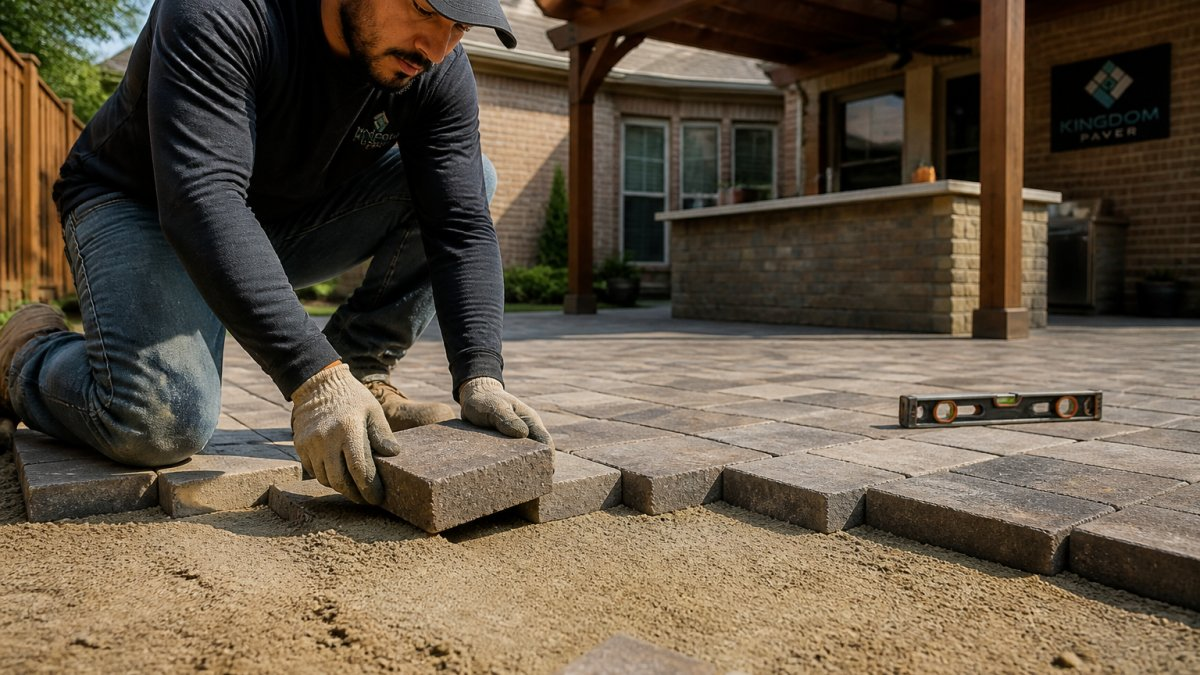
Paver layout comes next: the contractor sets the pattern, checks level and slope, places and taps pavers into position, sweeps joint sand into gaps, compacts, and finishes edges.
The timeline depends on project size and complexity. A small patio might take 3-5 days. A larger project with multiple features could take 1-2 weeks. Weather delays and site conditions affect timing.
After installation, proper maintenance extends the life of your hardscape.
Professional hardscape installation transforms your outdoor living space from an idea into a durable, beautiful reality. The expertise, quality materials, and proper technique that professionals bring prevent costly mistakes and create features that last.
Frequently Asked Questions
What are the main benefits of hiring a professional hardscape installer?
Professional hardscape installation delivers durability, expert design, and proper drainage that DIY projects often miss. Professionals use quality materials, follow best practices for site preparation, and ensure your patio, walkway, or driveway lasts 15-20+ years. They also handle permits, utilities, and local codes, saving you costly mistakes and rework.
How does professional paver installation improve durability compared to DIY?
Professionals properly grade the base, install correct drainage, and use appropriate materials for your climate. Improper base preparation is the leading cause of sinking, cracking pavers. Experts know load requirements for driveways versus patios, select pavers suited to freeze-thaw cycles, and apply sealants correctly to extend lifespan significantly.
Should I ask about drainage and permits before hiring a paver contractor?
Yes. Ask how they handle drainage on sloped properties, whether they pull permits for your area, and how they identify underground utilities. Poor drainage causes pooling and erosion; unpermitted work can create liability issues. A qualified contractor explains these upfront and includes them in their scope.
Does professional hardscape installation increase home resale value?
Quality hardscape improvements, patios, walkways, and outdoor kitchens, enhance curb appeal and usable outdoor living space, which appeal to buyers. While ROI varies by project scope and market, well-executed hardscaping typically recovers 50-80% of its cost at resale and improves your quality of life immediately.


