
Table of Contents
- How a Paver Patio Affects Home Value
- Paver Patio Cost vs Return on Investment
- Paver Patio vs Concrete Slab Resale Value
- Average Cost of Professional Paver Installation
- Curb Appeal and Marketability Boost
- Micro-Market and Lifestyle Factors
- Frequently Asked Questions
Last Updated: September 16, 2026
How a Paver Patio Affects Home Value
A paver patio is a hardscaped outdoor living area built from interlocking stone or concrete units set on a compacted base, and it affects home value by improving appraised value, resale speed, and perceived value during showings. This guide from Kingdom Paver breaks down the cost-to-value ratio, the resale math, and the trade-offs most homeowners never hear about.
Resale Value and Appraisal Gains
Appraisers treat a paver patio as a capital improvement, not a cosmetic upgrade, meaning the structure can be valued alongside the home rather than written off as landscaping.
Before you commit to a design, ask a local agent for three recent neighborhood comps with and without hardscaping. The gap between those two sets of sale prices tells you more about your realistic return on investment than any national average.
Paver Patio Cost vs Return on Investment
Paver patio cost versus return on investment depends less on the material and more on how well the finished space matches what buyers in your micro-market already pay for. There is no universal ROI percentage, but you can build a realistic estimate in about 20 minutes using three inputs: your project cost, your neighborhood’s sold comps, and the size of the outdoor living space buyers in your price band already expect.
A Simple Cost-to-Value Framework
Rather than chasing a national average, work the math locally. The table below shows how the same patio budget produces different outcomes depending on the neighborhood price band. These are illustrative ranges, not guarantees, your comps will tell you where you actually land.
| Neighborhood Price Band | Typical Patio Budget | Realistic Value Credited at Resale | Notes |
|---|---|---|---|
| Entry-level (under $250K) | $8,000-$15,000 | 40-55% of cost | Buyers prioritize the house itself; outdoor space is a bonus |
| Mid-range ($250K-$500K) | $12,000-$25,000 | 55-70% of cost | Patios are expected; finish quality drives the credit |
| Upper-mid ($500K-$800K) | $20,000-$40,000 | 60-75% of cost | Outdoor living is a differentiator; kitchens and fire features help |
| Luxury ($800K+) | $40,000+ | 65-80% of cost | Buyers expect hardscaping; design cohesion matters most |
What Drives ROI Percentages
Several factors push your cost-to-value ratio up or down:
- Neighborhood price band. A patio that fits a mid-range home recovers more than the same patio on an entry-level home.
- Visibility from the house. A patio you can see from the kitchen or living room reads as usable square footage; a hidden one reads as landscaping.
- Drainage and structural integrity. Buyers and inspectors punish water pooling.
- Finish quality. Clean edges, consistent joint lines, and a level surface signal professional installation.
- Size relative to the lot. An oversized patio on a small lot can feel like a liability rather than an amenity.
- Timeline. A patio installed 10 years ago has already delivered a decade of use; the resale credit is a bonus, not the whole return.
How to Check Your Own Micro-Market in 20 Minutes
National averages are nearly useless here. Build a local picture:
- Filter sold listings in your subdivision (not your whole ZIP code) on Zillow or Redfin for the last 6-12 months.
- Note which homes had hardscaping in their listing photos.
- Compare sold price per square foot of homes with patios against those without, holding bed/bath count and lot size roughly constant.
- Note the finish level, plain concrete pad, basic paver patio, or full outdoor kitchen, because buyers pay for tiers, not just presence.
- Ask a local agent to sanity-check your read; they see negotiation details public data hides.
The Lifestyle Return Competitors Ignore
ROI isn’t only a resale number. If you plan to stay five or more years, the enjoyment value of a patio, hosting, grilling, kids playing outside, morning coffee, is a real return that never shows up in a comp. The resale math matters most if you plan to sell within two to three years; beyond that, weigh lifestyle value alongside it.
Skipping proper base compaction to save on the project budget is the single most common reason pavers sink and crack within a few seasons. The repair cost usually exceeds what you saved on the base, and a visibly failing patio actively reduces perceived value during showings.
Paver Patio vs Concrete Slab Resale Value
For resale value, interlocking pavers generally outperform a plain concrete slab because they handle freeze-thaw movement and soil shifting without cracking into visible failure. A slab is cheaper upfront but ages in a way buyers notice.
Durability and Maintenance Costs
A concrete slab is a single rigid pour: when the ground moves, it cracks, and cracks are permanent. Pavers flex with minor movement because each unit is independent, and a damaged section can be lifted and reset without replacing the whole surface.
Maintenance costs also diverge over time:
| Factor | Interlocking Pavers | Concrete Slab |
|---|---|---|
| Upfront cost | Higher | Lower |
| Crack behavior | Individual units can be reset | Cracks are permanent |
| Repair approach | Section-level | Full replacement |
| Aesthetic appeal | Wide color and texture range | Limited, can look flat |
| Resale perception | Premium hardscaping | Builder-grade |
| Long-term investment | Holds appearance longer | Fades and stains |
Average Cost of Professional Paver Installation
Pricing for professional paver installation depends on square footage, site access, base depth, drainage requirements, and material selection. Kingdom Paver does not publish flat rates because two patios of identical size can differ substantially once excavation and grading are factored in.
What actually moves the number:
- Site prep and excavation. Removing old concrete or correcting a sloped yard adds labor.
- Base depth. High-traffic areas and clay-heavy soil need a deeper compacted base.
- Drainage. French drains, channel drains, or regrading change the scope.
- Paver selection. Premium concrete pavers and natural stone sit at different price points.
- Complexity. Curves, steps, seat walls, and outdoor kitchen integration add time.
DIY vs Professional Installation
Professional installation is worth it when drainage, slope, or structural integrity is even slightly in question. DIY saves on labor but concentrates all the risk on the base work, which determines whether the patio survives its first wet season.
The labor you save doing it yourself is real, but the base preparation is where nearly all long-term paver failures originate. If you can’t confidently compact and grade to spec, hire the installation.
Curb Appeal and Marketability Boost
Curb appeal is where a paver patio earns its keep before a buyer reaches the front door. A well-executed outdoor living space signals the home has been maintained, shaping how buyers read everything else about the property. Here’s what actually happens in the listing and showing process, and how to measure the boost yourself.

Why Marketability Works Differently From Appraised Value
An appraiser gives you a number; a buyer gives you a feeling, and that feeling shows up measurably:
- Listing photo performance. Outdoor living spaces are among the most-clicked photos in a listing. A strong patio shot often becomes the lead image, which drives more clicks and more saved listings on Zillow and Redfin.
- Showing volume. Listings with usable outdoor space tend to attract more showings because buyers can picture themselves using it. More showings generally means more offers and less time on market.
- Negotiation leverage. A move-in-ready patio removes a project from the buyer’s to-do list, which can reduce inspection-related concessions and repair requests.
- Time on market. In a slow season, shaving weeks off a listing can be worth more than the patio cost in carrying costs alone (mortgage, taxes, insurance, utilities).
How to Measure Your Own Marketability Boost
You don’t need a study, you need your local data:
- Pull sold listings in your subdivision from the last 6 months on Zillow or Redfin.
- Note days-on-market for homes with visible hardscaping versus those without.
- Compare list-to-sale price ratios between the two groups.
- Look at which photo the listing led with, patios often appear first when they’re a selling point.
- Ask a local agent which features they highlight in their own listings; their answer tells you what buyers in your area respond to.
The Design Choices That Actually Move the Needle
Not all patios read the same to buyers. The features that most consistently improve perceived value during showings:
- Visibility from main living areas. A patio framed by the kitchen or living room window reads as an extension of the home.
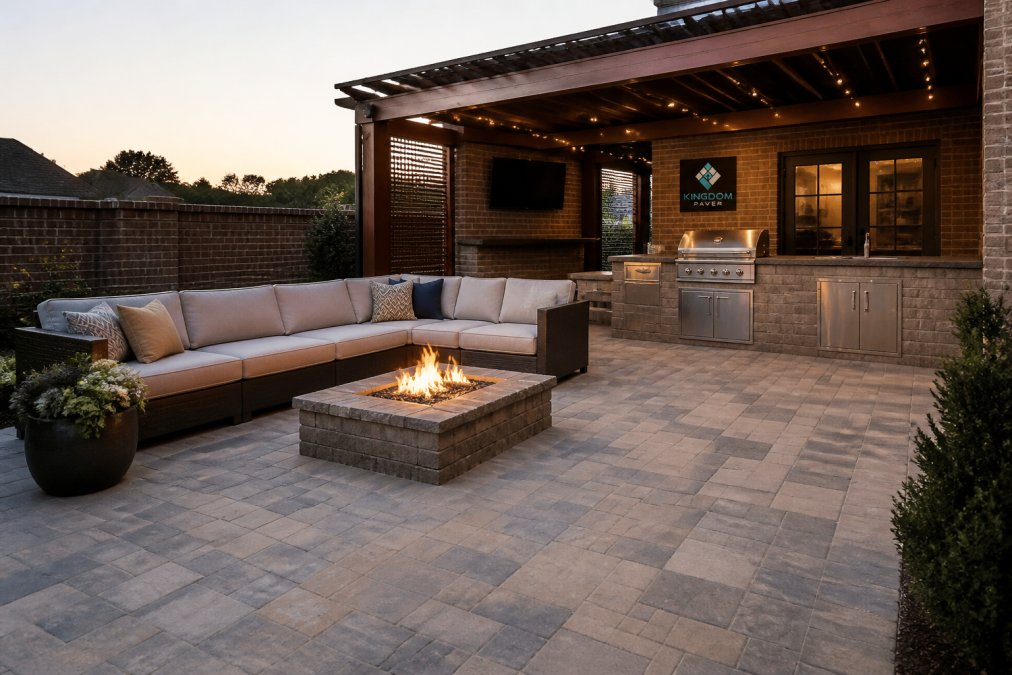
- Defined zones. A seating area, a dining area, and a fire feature signal intentional design rather than a bare slab.
- Cohesive materials. Pavers that complement the home’s siding, roof, and walkway look intentional; mismatched colors look like an afterthought.
- Lighting and landscaping. Low-voltage path lighting and planted borders photograph well and extend usable hours.
- Clean edges and level surface. These small details signal quality installation and reduce buyer hesitation.
Marketability is not the same as appraised value. The appraisal credit is capped by comps, but the marketability boost, more clicks, more showings, faster sale, can add real dollars in a slow market. Measure both before you decide.
Micro-Market and Lifestyle Factors
Two forces decide whether your patio pays off, and neither shows up in a national average: your micro-market and the lifestyle value buyers there are chasing.
Pull the last six months of sold listings in your own subdivision and note which ones had hardscaping. That local snapshot is a far better guide to resale potential than any regional report.
Frequently Asked Questions
How much does a paver patio add to home value?
A paver patio can increase your home’s value, depending on your local market and the project’s quality. According to real estate insights, homes with well-designed outdoor living spaces often appraise higher. The exact amount depends on your neighborhood comps and the patio’s integration with your landscape.
What is the average cost of professional paver installation?
The cost of professional paver installation varies based on square footage, site preparation, drainage needs, and paver style. For an accurate quote, contact Kingdom Paver directly.
Is a paver patio a better investment than a wood deck?
Paver patios often outperform wood decks in resale value. Wood decks require annual staining and can rot, while pavers last decades with minimal maintenance. In humid climates, pavers resist moisture damage better. A paver patio also integrates seamlessly with landscaping, boosting curb appeal. For long-term ROI, pavers are generally the stronger choice.
Do paver patios provide a high return on investment?
Yes, paver patios can deliver a strong return on investment at resale. This means you can recoup a significant portion of your cost through increased home value. The ROI is higher when the patio complements your home’s architecture and your neighborhood has similar outdoor features. Professional installation ensures durability and maximizes resale potential.
What factors influence the resale value of an outdoor living space?
Key factors include design quality, material durability, maintenance needs, and local market demand. A well-built paver patio with proper drainage and aesthetic appeal adds more value. Neighborhood comps matter: if nearby homes have upgraded outdoor spaces, yours should too. Also, features like outdoor kitchens or fire pits can further boost perceived value.


