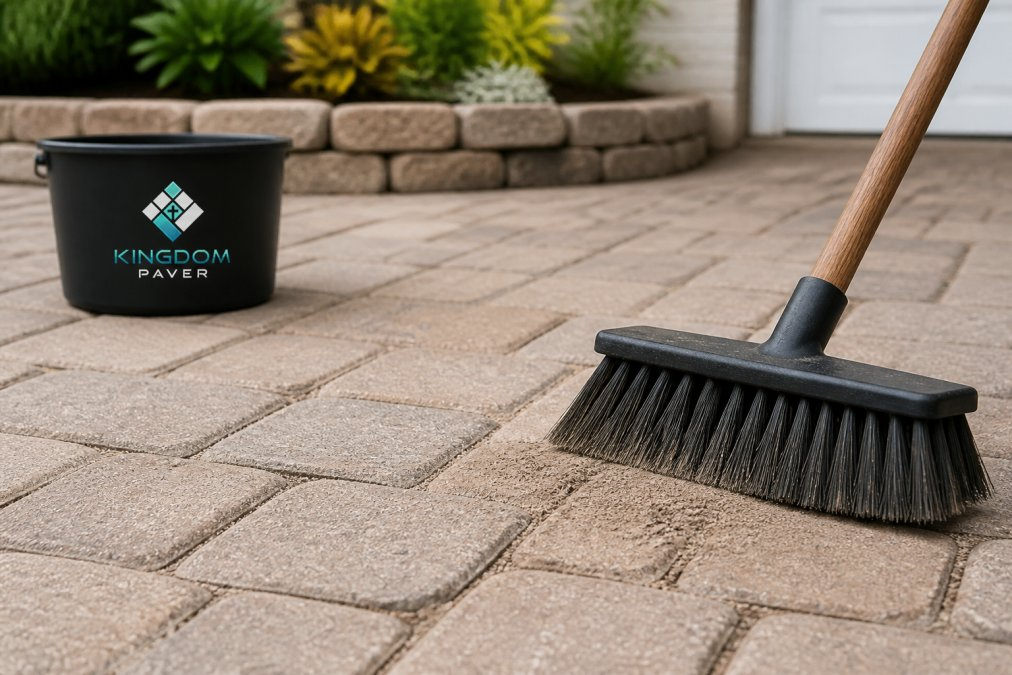
Weeds thrive in paver joints because soil trapped between pavers holds moisture, seeds settle into cracks, and sunlight reaches the germination zone. Paver joints create what’s essentially a long, narrow garden bed where seeds blow in from neighboring plants, moisture accumulates from rain and irrigation, and compacted soil becomes an ideal seedbed.
Most homeowners address weeds reactively by pulling them as they appear, but this cycle repeats year after year because the underlying conditions never change. Preventing weeds requires understanding three key factors: the material filling the joints, the sealing methods available, and the maintenance schedule that keeps prevention working long-term.
Polymeric Sand vs Regular Sand for Paver Joints
Polymeric sand is a specialized joint filler that hardens when exposed to moisture, creating a barrier against weed germination. Regular sand stays loose and provides no resistance to weed seeds or water infiltration.
Regular Sand:
Settles and compacts within the first year
Allows water to drain through, carrying soil and seeds deeper into joints
Weeds establish easily because nothing blocks germination
Requires frequent topping off as material migrates
Polymeric Sand:
Hardens into a solid mass when wet, creating a physical barrier
Prevents weed seeds from reaching soil where they can germinate
Resists water infiltration while still allowing some drainage
Stays in place for years without settling
If you’re installing new pavers or replacing old sand, polymeric sand is the smarter choice for weed prevention. The upfront cost is offset by years of reduced maintenance and fewer weeds. However, polymeric sand requires proper installation, correct compaction and water application during curing are essential for it to harden properly.
How to Remove Weeds from Paver Joints
When weeds do appear, the method you use determines whether you’re solving the problem or just delaying it. The most effective removal combines immediate action with a method that prevents regrowth.
Close-up of hands using a metal weed picker tool to extract weeds from between gray stone pavers on a residential patio, with soil and roots visible, natural afternoon sunlight
Manual Weeding Techniques
Manual removal is the safest and most effective method for preventing weed regrowth in paver joints. The key is removing the whole root, not just the visible plant. A weed picker slides into the joint and extracts the root intact, preventing regrowth.
Here’s the process:
Water the joints lightly the day before weeding. Moist soil releases roots more easily.
Use a weed picker or flat screwdriver to slide beneath the weed root and work it loose gently.
Extract slowly and steadily, keeping the root intact. Broken roots regrow.
Remove all soil and debris from the joint after the weed is out.
Refill the joint with fresh polymeric sand if material was displaced.
Manual weeding works best on small areas or light weed growth. Pull weeds before they flower and set seed, which stops the next generation from starting.
Natural Weed Control Methods
Several natural methods work effectively in paver joints without chemicals. Baking soda and salt can be sprinkled directly on weeds; baking soda is less harsh than salt, which can erode stone over time. Vinegar (white vinegar at 5% acetic acid or horticultural vinegar at 20%) kills weeds when sprayed directly on them. Boiling water kills weeds instantly but risks damaging pavers. Flame weeding uses a propane torch to burn weeds quickly.
The reality of natural methods: they kill the visible weed, but without root removal, regrowth is likely within weeks. They’re best used as supplemental treatments alongside prevention methods like polymeric sand and sealing.
Using Joint-Stabilizing Sealers to Prevent Weeds
Joint-stabilizing sealers are liquid products that harden in paver joints, creating a protective barrier against weed germination and water infiltration. Unlike polymeric sand, which fills the entire joint, sealers coat and stabilize existing material, creating a surface hostile to weed establishment.
Homeowner in work gloves applying clear joint-stabilizing sealer to paver joints using a brush applicator on a residential driveway, with pavers visible and morning sunlight
Penetrating sealers soak into the sand and harden it from within, remaining less visible. Film-forming sealers create a surface layer that bonds the sand together, providing stronger protection but adding a slight sheen.
Clean the joints thoroughly before sealing. Remove all debris, loose sand, and any existing weeds.
Let the area dry completely for at least 24 hours after cleaning.
Apply the sealer according to product instructions, usually with a brush or applicator bottle.
Allow curing time, typically 24-48 hours before the sealed joint is fully hardened.
Sealers work best as part of a layered prevention strategy: start with quality polymeric sand, maintain it with regular cleaning, and seal it periodically to extend its life.
Paver Joint Maintenance Schedule
Preventing weeds in paver joints is an ongoing routine. The right maintenance schedule keeps prevention methods working and catches problems early.
Monthly visual inspections catch weeds when they’re small and easy to remove. Pressure washing removes debris, moss, and algae that create favorable conditions for weeds, use low pressure (under 1,500 PSI) to avoid blasting sand out of joints. Annual sand top-off replaces settled or washed-away material. Sealer reapplication every 2-3 years refreshes the protective barrier as UV exposure and foot traffic degrade it.
Common Mistakes in Preventing Weeds Between Pavers
Using regular sand instead of polymeric sand is the biggest mistake. It’s cheaper upfront but fails to prevent weeds and costs more in weed removal over time.
Incomplete root removal during manual weeding guarantees regrowth within weeks. Ignoring pressure washing allows debris to accumulate, creating a nutrient-rich environment where weeds thrive. Applying sealer to dirty or settled joints wastes the sealer’s protective qualities. Skipping the curing step after polymeric sand installation prevents proper hardening. Waiting too long between maintenance cycles lets small problems become widespread. Using harsh chemicals unnecessarily can damage pavers or harm nearby plants.
The common thread: these mistakes treat weed prevention as a one-time event rather than an ongoing practice. Regular attention prevents escalation.
Pro Tip The best time to prevent weeds is during paver installation. Insist on quality polymeric sand, [proper compaction](/2026/08/23/paver-installation-base-preparation-guide/), and correct curing. This foundation makes all future maintenance easier and more effective.
Preventing weeds in paver joints comes down to using the right materials from the start, maintaining them consistently, and addressing problems quickly. Polymeric sand and joint-stabilizing sealers create barriers that make weed germination difficult. Regular maintenance, pressure washing, sand top-off, and sealer reapplication, keeps those barriers effective.
If you’re planning a new patio or driveway, the installation phase is where prevention starts. Quality materials and proper installation technique set the foundation for years of low-maintenance enjoyment. If you already have pavers, starting a regular maintenance routine now will reduce weed pressure and protect your investment. Kingdom Paver brings experience in paver installation and maintenance, understanding local climate and soil conditions that affect weed growth. Contact Kingdom Paver to discuss how professional installation or maintenance can keep your patio weed-free and looking great for years to come.
Frequently Asked Questions
What can I put in between my pavers to prevent weeds?
Polymeric sand is the most effective filler for paver joints. It hardens when wet, creating a barrier that blocks weed seeds and soil from settling into gaps. For added protection, apply a joint-stabilizing sealer over polymeric sand to lock it in place and further reduce weed germination. Regular sand allows weeds to establish more easily because it stays loose and retains moisture, making it a less reliable option for long-term weed prevention.
How often should I re-sand my paver joints to prevent weed growth?
Most homeowners should refresh polymeric sand every 2-3 years, depending on climate and foot traffic. In areas with heavy rain or freeze-thaw cycles, check joints annually for erosion or settling. If you notice gaps widening or sand washing out, top off the joints promptly. A consistent paver joint maintenance schedule prevents small problems from becoming major weed infestations and extends the life of your hardscape.
Can I use vinegar to kill weeds in paver joints without damaging the stone?
Yes, vinegar is a safe natural weed control method for most paver materials. Use full-strength white vinegar (5% acidity) or horticultural vinegar (20% acidity for tougher weeds) and apply directly to weeds on sunny days. Avoid pouring vinegar over large areas, as it can affect soil pH. Test on a small area first, especially with natural stone pavers, since vinegar may etch certain materials. Combine vinegar applications with manual weeding for best results.
Is polymeric sand the most effective way to prevent weeds?
Polymeric sand is highly effective but works best as part of a complete prevention strategy. When combined with a joint-stabilizing sealer and regular maintenance, it provides excellent weed deterrent properties. However, no single solution prevents 100% of weeds. Proper paver installation with adequate compaction, good drainage, and preventative maintenance, including occasional manual weeding and pressure washing, create the most durable, weed-resistant paver joints over time.