
Table of Contents
- Why Paver Driveway Drainage Matters
- Understanding Permeable vs. Pervious Pavers for Water Management
- Best Base Material for Driveway Pavers
- How to Fix Standing Water on Paver Driveways
- French Drain Installation for Paver Driveways
- Permeable Paver Installation Cost and Long-Term Value
- Preventing Water Damage and Erosion
- Conclusion
Last Updated: August 21, 2026
Why Paver Driveway Drainage Matters
Poor drainage on paver driveways creates structural problems. When water pools between pavers or beneath the surface, it forces moisture into your foundation, erodes the base material, and causes pavers to sink and crack. Standing water also accelerates freeze-thaw cycles in colder seasons. Paver driveway drainage has evolved significantly, and modern solutions can redirect water effectively while maintaining your driveway’s appearance and durability.
At Kingdom Paver, we’ve seen how proper drainage planning prevents costly repairs. A driveway installed without water management might look fine initially, but once the base material saturates, damage compounds quickly. This guide covers practical strategies that keep your paver driveway dry, stable, and lasting decades.
The most common mistake homeowners make is assuming pavers themselves handle drainage. The real work happens beneath the surface in the base layers and through strategic water redirection systems.
Understanding Permeable vs. Pervious Pavers for Water Management
Permeable pavers allow water to pass through their surface into the base layer below. Pervious pavers are engineered with porous material that actively filters water while supporting vehicle weight. This distinction affects both installation and long-term performance.
Permeable paver systems like TRUEGRID PRO LITE use recycled plastic construction with open spaces for grass or gravel infill, working well for lower-traffic driveways. Concrete permeable pavers like Belgard’s Eco-Dublin offer traditional aesthetics while maintaining permeability. Both reduce runoff compared to solid pavers, but require proper base construction to function.
During heavy rain, water infiltrates through the paver surface, flows through base layers, and disperses into surrounding soil. This reduces erosion, minimizes flooding risk, and recharges groundwater, benefits standard impermeable pavers can’t match.
How Permeable Pavers Improve Driveway Drainage
Water enters through the paver surface, moves through joint aggregate, and flows into a prepared base layer. That base typically consists of compacted stone and geotextile fabric designed to filter while allowing water passage. Water then either infiltrates into native soil or connects to subsurface drainage systems.
Installation is critical. The aggregate base must be compacted to support vehicles while remaining loose enough for water flow. Most professionals use 4-6 inches of 3/4-inch crushed stone (icpi.org).
Permeable pavers require more maintenance than solid pavers. Dust and debris can clog joint aggregate over time, reducing permeability. Pressure washing once or twice yearly keeps the system functioning.
Comparing Porous Paver Options
Plastic permeable pavers like TRUEGRID handle freeze-thaw cycles well and cost less upfront. Concrete permeable pavers offer better curb appeal and feel more traditional, but require more careful base preparation. Grass-fill systems like GrassPave2 add green aesthetics while maintaining drainage, though they require mowing and reseeding.
For most homeowners, concrete permeable pavers balance durability, appearance, and function. Plastic options work best when budget is primary or when you accept maintenance requirements.
Best Base Material for Driveway Pavers
The base layer determines whether your paver driveway drains effectively or becomes a water trap. Proper base construction costs more upfront but eliminates drainage failures.

Aggregate Base and Geotextile Fabric
Start with 4-6 inches of 3/4-inch crushed stone or recycled asphalt. Compact it in 2-inch lifts using a plate compactor. Most professionals aim for 95% standard proctor density, maintaining both stability and water flow.
Geotextile fabric sits between the aggregate base and native soil, filtering fine particles while allowing water passage. Without it, soil particles migrate upward into the aggregate base, clogging the drainage system. Use non-woven geotextile rated for at least 5 ounces per square yard (astm.org).
Use concrete or composite edge restraints along the driveway perimeter, set at the same height as the final paver surface. This prevents lateral movement and keeps the drainage system intact.
Subsurface Drainage Layers
In wet climates or with poor soil infiltration, add a 2-4 inch drainage layer of large stone (1.5-2 inch diameter) below the geotextile. This creates an air gap allowing water to move laterally before infiltrating downward.
For high water tables or seasonal wetness, a perforated drain pipe buried 12-18 inches below grade and running along the driveway perimeter redirects water away from structures. Slope should be at least 1% (1 inch drop per 100 inches of length), though 2-3% works better (icpi.org).
Subsurface drainage and permeable pavers work together. Pavers handle surface runoff; subsurface systems handle infiltrated water. Both prevent saturation in heavy-rain climates.
Skipping proper base preparation to save money is the most expensive mistake you can make. A sinking, cracking driveway costs 3-5 times more to repair than proper installation costs upfront.
How to Fix Standing Water on Paver Driveways
Standing water between pavers indicates a drainage failure. The fix depends on the cause: poor grading, settled base material, or missing subsurface drainage.

Grading and Slope Requirements
Your driveway should slope away from your home at minimum 1-2% grade (1-2 inches drop per 100 inches of length). If standing water is localized, remove pavers, adjust the base layer for proper slope, and reset them. This works if the base hasn’t degraded significantly.
For existing driveways where re-grading isn’t feasible, surface drainage channels redirect water around low spots.
Installing Channel Drains and Trench Drains
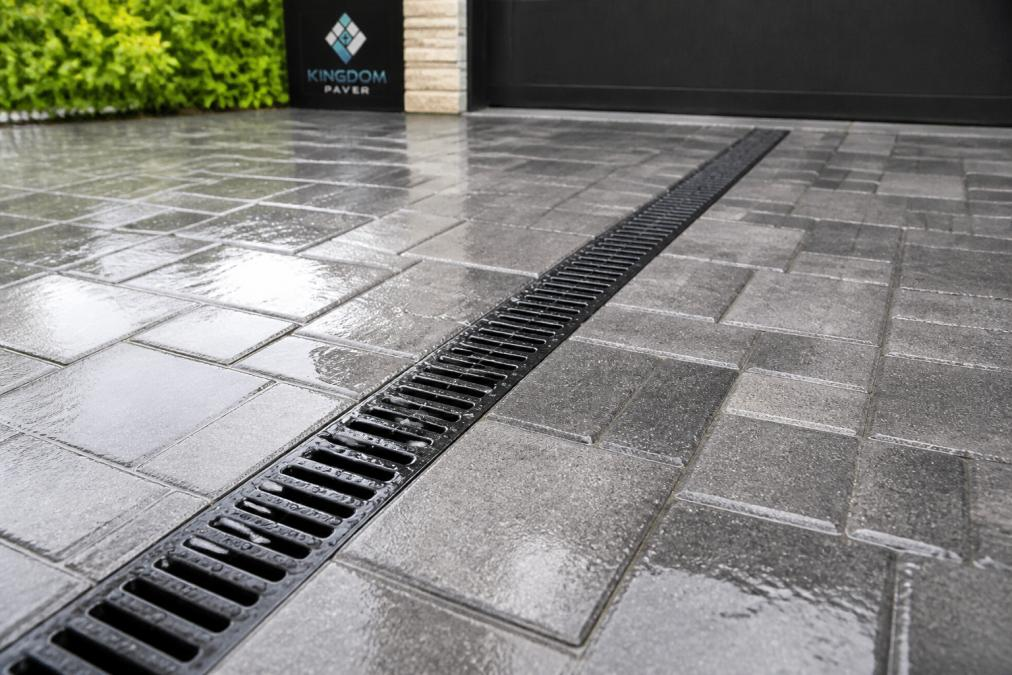
Channel drains are the most practical retrofit solution for standing water. These linear systems collect water and direct it away from the driveway.
NDS Spee-D Channel Drain systems use lightweight PVC construction costing $34-55 per 48-inch section. The channel sits in a shallow trench cut into the paver surface, sloped toward a discharge point. ACO KlassikDrain K100 systems use polymer concrete construction rated for higher loads, ranging from $46-270 per section.
Installation involves cutting a trench across or along the driveway edge, setting the channel at proper slope, and connecting discharge piping. Most channels need 1-2% slope minimum; 3-5% works for short runs.
Channel drains work regardless of soil type or water table. They’re mechanical, water enters, flows, and exits. This makes them ideal for clay soils, wet climates, or properties where subsurface drainage isn’t possible.
Channel drains solve standing water problems that grading alone can’t fix. They’re the most reliable retrofit for existing driveways.
French Drain Installation for Paver Driveways
A French drain captures groundwater and redirects it away from your property. Modern systems like NDS EZ Drain reduce labor by roughly 50% compared to conventional installation.
For paver driveways, French drains typically run along the perimeter, 12-18 inches below grade, sloped toward a daylight outlet or dry well. Perforated 4-inch pipe sits in the trench, surrounded by 2-3 inches of stone, then wrapped in geotextile fabric before backfilling.
Water won’t flow without gravity. A minimum 1% slope is required; 2-3% is better. If your property is too flat, a sump pump system becomes necessary.
French drains handle water before it reaches your driveway. For properties with high water tables or consistent groundwater issues, they’re worth the investment. For typical residential situations, they’re often unnecessary.
Permeable Paver Installation Cost and Long-Term Value
Permeable paver systems cost more upfront than solid pavers, but long-term value often justifies it.
What Affects Installation Pricing
Recycled plastic permeable pavers start around $187 per 72 square feet. Concrete permeable pavers typically cost 15-30% more than standard concrete pavers. The real cost difference is in base preparation, which requires more material, compaction, and precision.
A 500-square-foot driveway might need 20+ tons of stone and geotextile fabric. A properly installed permeable paver system typically costs 20-40% more than basic solid paver installation. A failed installation requiring repair costs 300-500% more.
Maintenance and Clogging Prevention
Permeable pavers require maintenance that solid pavers don’t. Joint aggregate clogs with dust and debris over time. Pressure washing 1-2 times yearly keeps the system functional.
Clogging prevention starts with good construction. If joint aggregate is properly sized and the base is well-compacted, water flows through even when the surface is dirty. For properties with heavy tree coverage, sweeping regularly helps prevent clogging.
Properly maintained permeable pavers improve over time. Surface weathering slightly increases water permeability. Solid pavers just age without improving drainage.
Preventing Water Damage and Erosion
Improper drainage allows water to migrate toward your foundation, basement, or landscaping. Prevention has three components: surface management, subsurface management, and perimeter protection.
Surface management means grading that directs water away from structures. A 2-3% slope away from your home’s foundation is standard.
Subsurface management uses French drains, perimeter drains, or infiltration systems to handle groundwater, particularly important in wet climates or on sloped properties.
Perimeter protection involves edge restraints, proper compaction, and geotextile fabric that prevents soil migration, keeping your drainage system functioning for decades.
Erosion prevention often involves landscape features like swales or rain gardens. A swale is a shallow, vegetated drainage channel that slows runoff and allows infiltration. A rain garden is a planted depression that captures runoff and filters it through soil and plants.
For paver driveways, proper grading, quality base material, and surface or subsurface drainage eliminate most water-related problems.
Proper paver driveway drainage is the foundation of a durable, attractive driveway. Whether you choose permeable pavers, channel drains, French drains, or a combination approach depends on your soil conditions, climate, and budget. Address drainage before installation, not after problems appear. Kingdom Paver specializes in designing and installing drainage systems tailored to your specific property conditions. Our experience in the Katy and Cypress areas means we understand local soil, climate patterns, and water management challenges affecting driveway longevity. Contact Kingdom Paver today for a consultation on the right drainage solution for your property.
Frequently Asked Questions
Q: What should I put under pavers for proper drainage?
A: Proper drainage begins with a compacted aggregate base layer, typically 4-6 inches of crushed stone or gravel. Above that, add a geotextile fabric to prevent soil from mixing with the drainage layer. Then install a permeable base course of larger aggregate stones to allow water to flow downward and away from the paver surface. This layered approach prevents water saturation and reduces erosion under your pavers.
Q: How do permeable pavers improve driveway drainage?
A: Permeable pavers have open joints and porous surfaces that allow water to infiltrate directly through the paver material instead of pooling on top. Water passes through the paver into the base layers, where it disperses into the soil or flows toward drainage outlets. This reduces surface runoff, prevents standing water, and recharges groundwater.
Q: What is the best base material for driveway pavers?
A: The best base material combines multiple layers: a 4-6 inch compacted crushed stone base (typically limestone or granite), a geotextile fabric separator, and a 2-inch permeable bedding layer of smaller aggregate. This combination provides structural support, allows water infiltration, and prevents soil migration. The aggregate base must be properly compacted to support vehicle weight while maintaining permeability for drainage.
Q: How much does permeable paver installation cost?
A: Permeable paver installation cost depends on driveway size, base preparation, soil conditions, and whether you need additional drainage systems like French drains or channel drains. Permeable pavers themselves range from basic recycled plastic systems to premium concrete options. Installation labor varies by complexity and local rates. Contact Kingdom Paver for a custom quote based on your specific drainage needs and driveway dimensions.
This article was written using GrandRanker


