
Table of Contents
- Start With a Plan: Footprint, Fuel, and Function
- Custom Fire Pit Design Ideas That Fit Your Yard
- Gas vs Wood Burning Fire Pit Pros and Cons
- Outdoor Fire Pit Seating Area Design
- Cost of Custom Fire Pit Installation
- Fire Pit Safety Regulations and Clearances
- Design for Your Climate and Maintenance Reality
- Bring Your Custom Fire Pit Design to Life
- Frequently Asked Questions
Last Updated: September 7, 2026
A custom fire pit anchors the outdoor living space and gives families a reason to gather past sunset. Custom fire pit design ideas succeed when they balance visual impact with fuel choice, seating flow, and local fire pit safety regulations. At Kingdom Paver, we have spent a decade building patios and fire features across Katy and Cypress, and the most successful projects start with a clear plan.
Start With a Plan: Footprint, Fuel, and Function
Before browsing stone samples or flame effects, decide how the fire pit will be used. Answer three questions: how many people should it seat, what fuel do you prefer, and where will it sit relative to the house and patio?
The footprint is the most common mistake. Measure the intended area and mark the diameter with a garden hose to visualize the footprint before construction begins. This prevents costly layout errors and ensures the surrounding hardscape feels proportional.
Fuel choice drives every other decision, from installation cost to daily maintenance. Gas lines require professional connection, while wood-burning units need only a spark screen and seasoned logs. Many homeowners in master-planned communities check HOA rules early, since some restrict permanent fire features or fuel types.
Custom Fire Pit Design Ideas That Fit Your Yard
The right style depends on your home’s architecture, yard dimensions, and desired permanence. Here are three directions that deliver strong results for suburban lots.

Modern Fire Bowls and Tables
Contemporary landscapes pair well with low-profile fire bowls and fire tables. These units sit close to the ground and double as a centerpiece for conversation. Architectural-grade concrete options, such as those from DreamCast Concrete Fire Bowls, offer a minimalist aesthetic that suits modern patio design. They run on natural gas or propane and provide a clean, smokeless flame that works beautifully under a covered veranda.
The trade-off is weight: a concrete bowl requires a stable, level installation surface. Fire glass or lava rock fills the bowl, hides the burner, and reflects heat outward.
Artisan Steel and Laser-Cut Designs
For homeowners who want a personalized focal point, custom steel fire pits deliver. Artisan fabricators like Breck Ironworks laser-cut silhouettes and patterns into heavy-gauge steel, creating a piece that is equal parts sculpture and heat source. These are typically wood-burning units, which means the fire itself becomes part of the visual display through the cut-out designs.
Steel requires honest maintenance: rust-resistant finishes help, but expect to touch up the surface periodically to prevent oxidation.
Built-In Masonry and Seating Walls
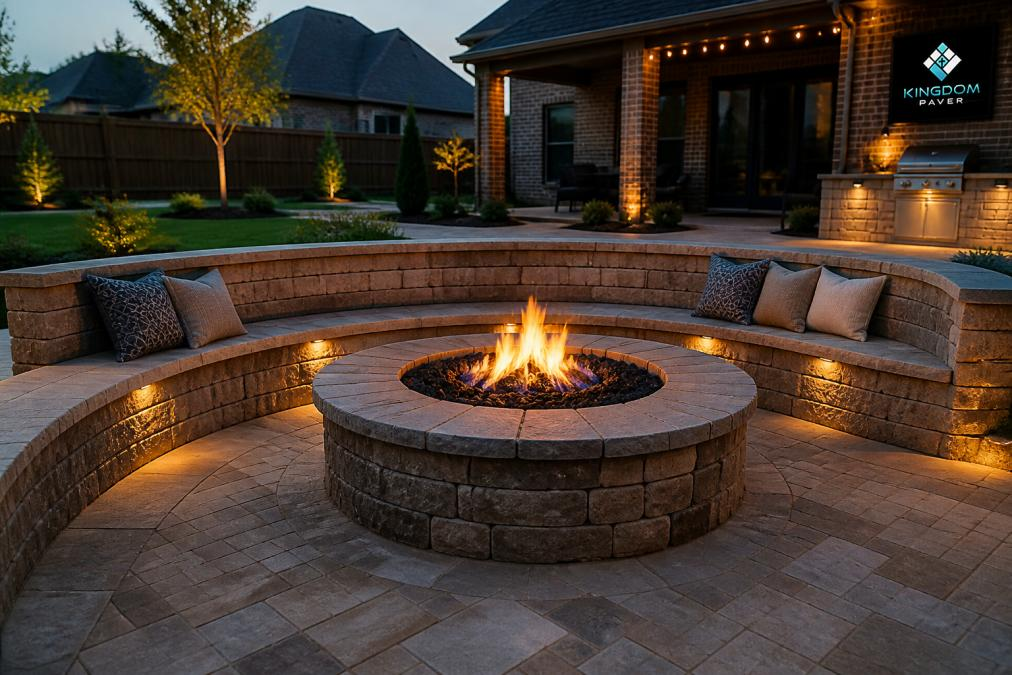
The most permanent approach is a built-in masonry fire pit surrounded by a seating wall. Professional installation with stone veneer or matching block ties the pit directly into your hardscape, raising the fire to a comfortable viewing height and incorporating bench seating that eliminates the need for separate patio furniture.
Built-in units are right when you want the pit to feel like original architecture. They also pair naturally with an outdoor kitchen, placing the grill, counter space, and fire within one cohesive entertaining zone.
Gas vs Wood Burning Fire Pit Pros and Cons
The fuel debate comes down to convenience versus experience. Gas offers instant ignition, precise flame control, and no smoke, ideal for frequent casual use. Wood delivers the classic crackle, scent, and hands-on ritual, but requires cleanup and a longer wait for the fire to build.
| Consideration | Gas Fire Pit | Wood-Burning Fire Pit |
|---|---|---|
| Ignition | Instant with switch or remote | Requires kindling and time |
| Smoke and odor | None | Moderate to heavy |
| Maintenance | Low; check burner and lines | High; ash removal and cleaning |
| Operating cost | Higher fuel cost | Lower if wood is sourced locally |
| Ambiance | Clean, consistent flame | Traditional, dynamic fire |
| Installation | Needs gas line or propane tank | Simpler; venting not required |
For most families, gas wins on practicality, but wood wins on atmosphere. Some install a gas burner with a decorative log set that mimics a wood fire, capturing a middle ground. Your decision also affects installation cost, since running a natural gas line adds excavation and labor.
Outdoor Fire Pit Seating Area Design
Seating determines how many people actually enjoy the fire. A common approach combines a built-in seating wall with a few movable chairs, giving fixed capacity for regular use and flexibility for larger parties. The wall should sit far enough back that guests feel the heat without risking contact.
Guests should move from the house to the kitchen to the fire without crossing through the conversation circle. Ambient lighting, such as low-voltage path lights or string lights, extends usability after dark and adds safety along walkways.
Cost of Custom Fire Pit Installation
Most cost guides stop at the initial build price, but the real picture includes what you spend over the first decade of ownership.
Upfront Installation Costs
Your initial investment splits into three categories: the unit itself, site preparation, and labor. For a typical suburban backyard:
- DIY Propane Fire Bowl Kit: A prefabricated stainless steel or concrete bowl with a propane hookup runs $400 to $1,200. You supply the propane tank and a level paver base. Total project cost lands between $600 and $1,800, assuming you already own basic tools.
- Mid-Range Built-In with Gas Line: A professionally installed natural gas unit with a stone veneer surround and a simple seating wall typically costs $4,500 to $9,000. This includes excavation for the gas line, a concrete footing, and the burner assembly.
- Premium Custom Masonry: A fully integrated masonry pit with a curved seating wall, matching hardscape, and an outdoor kitchen tie-in starts around $12,000 and can exceed $25,000 depending on material choices and site complexity.
Site preparation is the hidden variable. Rocky soil, tree roots, or a long distance from your gas meter add excavation time and material costs. A reputable installer will quote after a site visit, not from a photo.
Total Cost of Ownership (TCO)
Long-term operating and maintenance costs differ significantly by fuel type and material:
- Natural Gas: Average operating cost runs $0.50 to $1.50 per hour of burn time, depending on your local utility rates. A family that uses the pit two evenings per week for eight months spends roughly $150 to $400 per year on fuel.
- Propane: A 20-pound tank costs $18 to $25 to refill and provides 8 to 12 hours of burn time at medium flame. Heavy use translates to $300 to $600 per year, making propane noticeably more expensive than natural gas over time.
- Wood: If you buy seasoned firewood by the cord, expect to pay $250 to $400 per cord in most regions. A cord lasts a casual user a full season, making wood the cheapest fuel option at $200 to $400 per year.
Gas burners need an annual inspection and occasional cleaning of burner ports, typically $75 to $150 if hired out. Wood-burning pits require ash removal, spark screen replacement every few years, and periodic firebox cleaning. Fire glass and lava rock should be replaced every two to three years, adding $50 to $200 per refresh.
The Hidden Cost: Permits and Compliance
A permit for a permanent fire pit typically costs $50 to $300 depending on your municipality. Skipping it can lead to fines, a stop-work order, or an order to tear out the structure if a future home sale inspection reveals unpermitted work.
Before signing any contract, ask your installer whether they pull permits and whether their quote includes permit fees. Some municipalities require separate electrical and gas permits, which adds $100 to $400 to the total.
What Kingdom Paver Includes
Our project-based quotes cover site assessment, footing preparation, gas line connection by a licensed plumber, and final hardscape integration. We do not quote from a price list because your yard’s drainage, slope, and soil conditions determine the correct foundation. Contact our team for a consultation.
Fire Pit Safety Regulations and Clearances
Safety is not optional, and local rules often dictate what you can build and where. Clearance requirements typically mandate a minimum distance from your house, property lines, and overhead structures like a pergola or tree branches. Check with the local building department before breaking ground.
The National Fire Protection Association guidelines on outdoor fires emphasize maintaining a safe distance from combustible materials and never leaving a fire unattended. A spark screen is essential for wood-burning pits to catch embers, and a fire extinguisher or water source should always be within reach. Gas units need professional connection to ensure the ignition system and gas lines meet code, preventing leaks or pressure issues.
Design for Your Climate and Maintenance Reality
Climate determines whether your fire pit lasts five years or twenty. The Gulf South’s high humidity, intense UV exposure, and occasional severe weather create challenges that generic online galleries never address.
Humidity and Material Selection
Relative humidity in the region routinely exceeds 80% during summer, accelerating oxidation and moisture absorption. Material choices that work in Arizona or Colorado can fail here within a few seasons.
- Concrete and Cast Stone: These absorb moisture through their surface. In a freeze-thaw cycle, trapped water expands and causes spalling, surface flaking that ruins the finish. The Gulf South rarely freezes hard enough to cause this, but the occasional cold snap still poses a risk. Specify a high-density concrete mix and apply a penetrating sealer annually to keep moisture out.
- Steel and Iron: Standard mild steel rusts quickly in humid air. Powder-coated steel performs better, but only if the coating is applied over a properly prepared surface. Corten steel, which develops a protective rust patina, is a popular choice because the oxidation layer actually protects the underlying metal. The trade-off is that corten stains surrounding concrete or pavers as it weathers, so plan for a drip edge or gap between the pit and your hardscape.
- Natural Stone: Granite and bluestone handle humidity well. Limestone and sandstone are more porous and will absorb moisture, leading to efflorescence, a white mineral deposit on the surface, and eventual cracking. If you prefer the look of limestone, use it only in non-structural caps and seal it aggressively.
Wind and Burn Performance
Open fire pits in windy areas suffer from uneven flames, smoke blowback, and heat that never reaches the seating circle.
A rectangular or square pit oriented perpendicular to the prevailing wind creates a windbreak effect that stabilizes the flame; circular pits offer no such advantage. If set on a round design, consider a wind guard, a tempered glass panel system that surrounds the burner and redirects airflow.
For wood-burning pits, a taller firebox wall, 14 to 16 inches above the fire surface, helps contain embers and shields the flame from gusts. Pair this with a heavy-duty spark screen that secures with clips.
UV Exposure and Color Fading
Dark-colored concrete and stone absorb UV radiation and heat, accelerating surface breakdown. Lighter tones reflect heat and maintain color longer. If you want a dark finish, choose an integral color that runs through the material rather than a surface stain that fades unevenly.
Powder-coated steel in dark colors will chalk, a fine white powder forms as the coating degrades from UV exposure. Expect to recoat or touch up dark steel every three to five years in this climate.
Maintenance Reality Checklist
A fire pit in this region is not a set-and-forget feature. This schedule keeps it safe and functional:
- Monthly: Wipe down the burner and ignition system to remove dust and pollen. Check for insect nests in gas lines or burner ports.
- Quarterly: Inspect the sealant on concrete or stone surfaces. Reapply if water beads no longer form on the surface.
- Annually: Have a licensed professional inspect the gas line, pressure regulator, and burner assembly. Replace fire glass or lava rock if it shows signs of crumbling or discoloration.
- After Severe Weather: Check for standing water in the firebox, debris accumulation, and any shifting of the base or seating wall. Heavy rain can undermine an improperly compacted base.
The best material choice for your climate is the one you are willing to maintain. A low-maintenance gas unit with a powder-coated steel bowl and a concrete base will outperform a high-maintenance natural stone pit that you neglect after the first season.
Ask your installer for a written maintenance plan specific to your materials and yard’s exposure. A reputable contractor will provide one without hesitation.
Bring Your Custom Fire Pit Design to Life
Good planning separates a fire pit that becomes the heart of the backyard from one that gets ignored after a season. Start with the footprint and fuel, choose a style that complements your home, and never skip permitting and safety steps.
That is where Kingdom Paver comes in. With ten years of experience serving Katy and Cypress, we handle the full scope of custom building solutions, from initial layout to final paver installation. We build customized outdoor kitchens and fire pits that integrate seamlessly with your patio and walkways. Contact Kingdom Paver today to start your project and get your backyard ready for entertaining this season.
Frequently Asked Questions
What is the typical cost of a custom fire pit?
The cost of custom fire pit installation varies widely based on materials, size, fuel type, and site preparation. A DIY block kit is the most budget-friendly option, while a fully custom masonry build with integrated seating and gas lines costs more. For an accurate number, request a detailed quote from a local contractor like Kingdom Paver. They can assess your yard and provide pricing based on your specific design and scope.
How do I choose between a wood-burning and gas fire pit?
This decision comes down to how you plan to use the pit. Wood-burning pits deliver the classic campfire experience, aroma, and crackle but require cleanup and a larger clearance area. Gas fire pits (natural gas or propane) offer instant ignition, easy flame control, and no smoke, making them better for frequent, low-effort use in smaller spaces. Consider your local regulations and the cost of running a gas line if you choose natural gas.
What materials are best for a durable custom fire pit?
For a permanent, built-in fire pit, concrete block, natural stone, and masonry veneer are top choices because they handle high heat and weather exposure well. Ensure the interior is lined with a fire-rated refractory panel or fire brick. For a modern look, architectural-grade concrete bowls are durable but heavy. Powder-coated steel pits are stylish but need maintenance to manage oxidation. Choose materials that complement your patio pavers and hardscape for a cohesive look.
How far does a fire pit need to be from my house?
Fire pit safety regulations and clearances typically require a minimum of 10 to 25 feet from a structure. Always check your local municipal codes, as rules vary by city and HOA. A good rule of thumb is to place the fire pit in the center of your outdoor living space, away from overhanging trees, dry brush, and vinyl siding. Your installer should confirm specific setback requirements before breaking ground.


