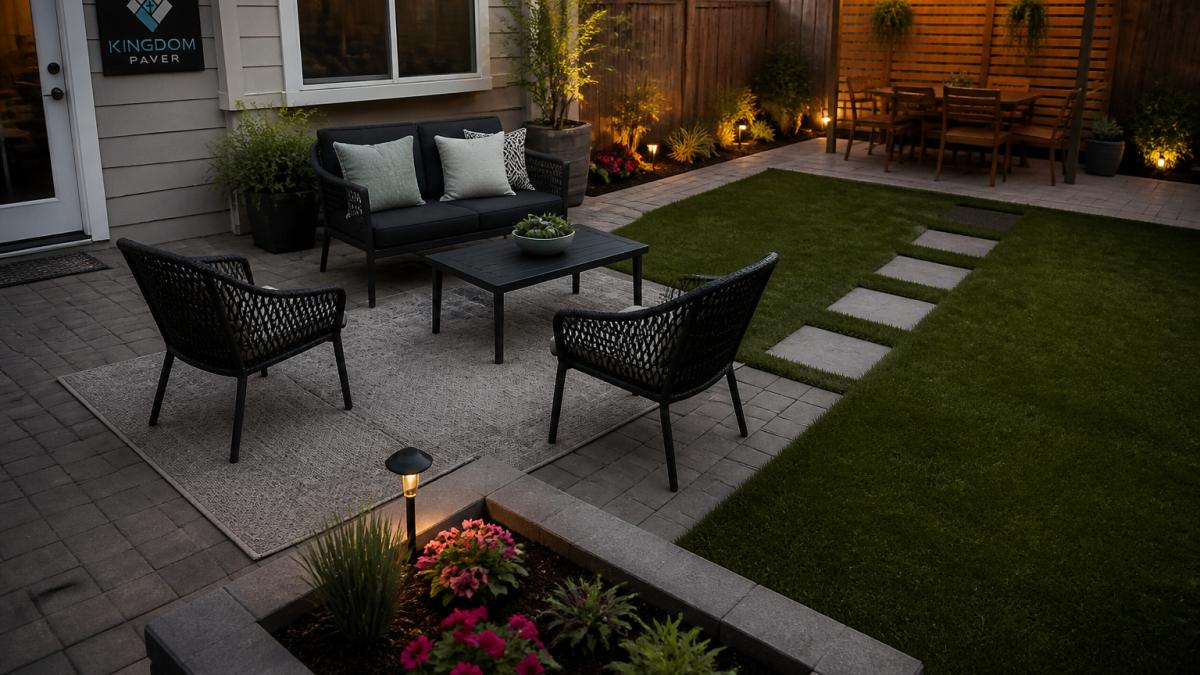
When your backyard feels cramped and your budget feels tighter, you might think outdoor transformation is out of reach. But small backyard design ideas don’t require a fortune, they require strategy. At Kingdom Paver, we’ve helped homeowners create stunning outdoor living spaces within realistic budgets by focusing on high-impact, affordable solutions. This guide walks you through seven proven strategies that deliver real results without the premium price tag.
The challenge isn’t whether you can afford to improve your backyard. It’s knowing which projects deliver the most value per dollar spent. Some upgrades add curb appeal instantly. Others transform how your family actually uses the space. The best small backyard design ideas do both.
1. Build Affordable Patio Paver Ideas for Instant Impact
A patio is the foundation of outdoor living. It’s where you gather, entertain, and simply exist outside. The good news: patio pavers are one of the most budget-friendly ways to create a polished, functional outdoor space.
Concrete Pavers vs. Gravel: Cost and Durability
Concrete pavers offer durability and a finished look at a fraction of the cost of natural stone. According to The Home Depot’s paver selection guide, concrete pavers start around $1.50 per unit, making them accessible for DIY installation on small footprints. They’re modular, weather-resistant, and available in multiple textures and colors.
Gravel is even cheaper, roughly $5 per bag for pea gravel from bulk suppliers. It drains excellently and works beautifully as a temporary or permanent patio surface. The tradeoff: gravel shifts over time and requires occasional raking and replenishment. For a finished, low-maintenance look, concrete pavers win. For flexibility and rock-bottom cost, gravel works.
Layout Tips for Small Spaces
Maximize visual impact by arranging pavers in a herringbone or diagonal pattern rather than a grid. This creates the illusion of more space. Keep the patio footprint modest, 8 by 10 feet is plenty for a seating area in a small yard. Add a border of mulch or low plants to define the patio edge and separate it from the rest of the yard.
For professional installation that handles drainage and ensures pavers stay level, Kingdom Paver specializes in custom patio layouts that maximize small spaces. Proper base preparation and grading prevent the settling and cracking issues that plague DIY installations.
2. Create a Small Backyard Fire Pit Design Without Breaking the Bank
A fire pit becomes the focal point of your entire backyard. It draws people outside, creates ambiance, and gives your family a reason to gather. You don’t need an expensive built-in feature to make this work.
Portable fire pits cost significantly less upfront and require no installation. They work well for renters or homeowners testing the concept. The catch: they’re smaller, less stable in wind, and don’t integrate into your overall design the way a permanent feature does.
Built-in fire pits, whether stone, brick, or metal, become a true focal point. They’re larger, safer, and add measurable property value. Kingdom Paver’s custom fire pit designs are built to your exact specifications and yard dimensions, using durable materials. This is where professional craftsmanship matters: improper construction leads to cracking, uneven heat, and safety hazards.
Position your fire pit where it anchors the yard without consuming precious space. A corner location works well. Surround it with low seating, a bench, a few chairs, or even a simple concrete ring. This concentrates activity in one area and makes the rest of the yard feel larger.
Ensure adequate clearance from structures, overhanging branches, and property lines. Check local fire codes before building, many jurisdictions have specific setback requirements and burning restrictions.
3. Add Vertical Gardens and Trellises for Greenery
Small yards need vertical solutions. Trellises and vertical gardens add lush greenery without consuming floor space. They’re also surprisingly affordable.
A basic trellis system starts around $30 and mounts directly to a fence or wall. Plant climbing vines like clematis or climbing roses, and within a season you’ve created a living privacy screen and a genuine focal point. Vertical gardens, stacked planters or wall-mounted pockets, work similarly and accommodate herbs, flowers, or vegetables.
The beauty of vertical gardening is flexibility. Adjust plantings seasonally. Add or remove sections as needed. For small backyards, this approach delivers maximum greenery impact with minimal ground footprint. Pair vertical elements with hardscaping to create dimension and break up flat, featureless walls.
4. Define Zones with Budget-Friendly Hardscaping and Softscaping
Small yards need clear zones to feel intentional rather than cramped. Hardscaping, pavers, gravel, mulch, and softscaping, plants, shrubs, ground cover, work together to define separate areas for different activities.
Diagram illustrating small backyard design ideas through concrete herringbone pavers and layered garden zones.
(/2026/09/27/flagstone-vs-pavers-pros-cons-cost/) need occasional cleaning and sealing. Mulch requires replenishment. Plants need water and seasonal care. Gravel shifts and needs raking.
Strategy
Best For
Cost Range
DIY Difficulty
Concrete Pavers
Durable patio foundation
Budget-friendly
Moderate
Fire Pit
Focal point and gathering
Varies widely
High (built-in)
Vertical Gardens
Greenery without floor space
Low
Low
Hardscaping/Softscaping
Defining zones and dimension
Moderate
Moderate
Bistro & Solar Lights
Ambiance and evening use
Low
Low
Raised Beds
Vegetables and controlled plantings
Low to moderate
Low
Shade & Rugs
Comfort and visual cohesion
Low to moderate
Low
Frequently Asked Questions
What are the most cost-effective materials for small backyard hardscaping?
Concrete pavers start around $1.50 per unit and offer durability with minimal maintenance. Pea gravel costs approximately $5 per bag and works well for pathways or budget patio areas. Retaining wall blocks create tiered levels that maximize usable space in sloped yards. The best choice depends on your yard’s drainage, slope, and intended use. Professional installation ensures proper grading to prevent pooling and premature cracking.
Can I add a small backyard fire pit design to a tight space without spending a fortune?
Yes. Portable fire pits start under $100 and require no installation. For a permanent fixture, custom-built fire pits create a focal point that adds property value, though they involve higher upfront costs. In small yards, position your fire pit where it serves as a gathering point without dominating the space. Ensure adequate clearance from structures and vegetation per local fire codes, and check zoning regulations before installation.
How can I make my small backyard look bigger on a budget?
Use vertical gardens and trellises to draw the eye upward and add greenery without consuming floor space. Outdoor rugs define seating areas and create visual separation between zones. Bistro lights or solar pendant lights add depth and ambiance while making the space feel intentional. Pergolas provide shade and frame views. Light colors on hardscaping and furniture reflect light and open up the space. These layered approaches create dimension and texture without major renovation costs.
What DIY backyard landscaping ideas work best for low-maintenance yards?
Raised beds filled with perennials reduce weeding and give you control over soil quality. Ground covers and mulch suppress weeds and retain moisture. Container gardening lets you move plants to follow sunlight. Solar lights eliminate wiring hassles. Choose native perennials suited to your hardiness zone for better survival rates and lower water needs. Group plants by water requirements to simplify irrigation, and apply mulch 2-3 inches deep around beds to reduce maintenance.
Do I need professional help to design a small backyard, or can I do it myself?
Many DIY projects work well for small spaces: pavers, gravel paths, container gardens, and lighting. However, drainage issues, sloped yards, and retaining walls benefit from professional assessment. Poor drainage causes pavers to sink and crack within years. Kingdom Paver’s 10 years of experience in hardscaping means proper grading and base preparation prevent costly repairs later. For complex layouts or structural work, a professional consultation often saves money by avoiding mistakes.