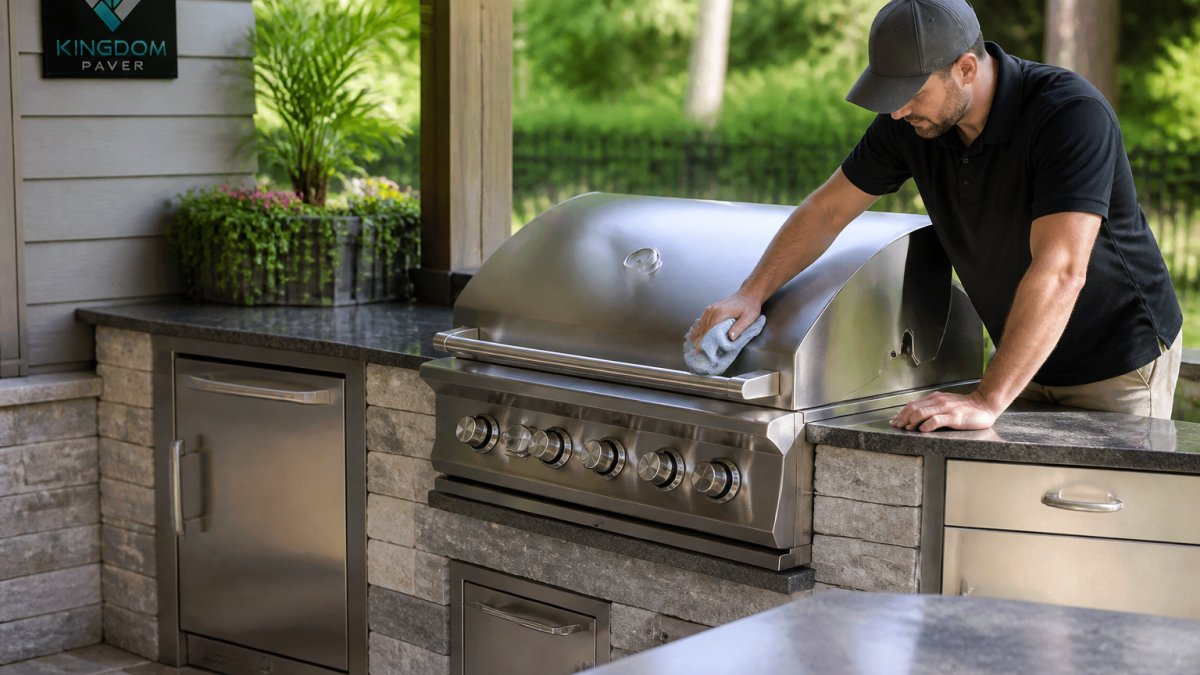
Your outdoor kitchen is an investment in your home’s entertainment value and curb appeal. Without proper care, grills, ovens, burners, and countertops deteriorate quickly. Rust spreads. Grease buildup causes fires. Utilities fail. What starts as a neglected grill becomes a safety hazard and an eyesore within a season or two.
Outdoor kitchen maintenance keeps your equipment functional, safe, and looking sharp for years. It’s the difference between a backyard centerpiece that hosts memorable gatherings and one that sits unused because nothing works.
Even the finest construction requires ongoing care. This guide walks you through the essential tasks that protect your investment.
How to Clean an Outdoor Grill After Every Use
Clean your grill immediately after cooking. Hot grates are easier to scrub, and you’ll prevent grease from hardening into stubborn buildup.
Homeowner cleaning outdoor grill grates with a wire brush after cooking, grease and food residue visible being removed from the grates
Cleaning Grill Grates and Interior Surfaces
Start with the grates. Brush them with a wire brush while the grill is still warm. This removes food particles and grease before they solidify.
Work the brush side to side across each grate, then flip it and repeat. Pay attention to gaps where debris collects. Wipe down the interior walls with a damp cloth. Food scraps and grease splatter accumulate on these surfaces and trap moisture, which accelerates rust and corrosion.
For stubborn buildup, use mild soap and warm soapy water on a cloth. Rinse thoroughly and dry with a clean towel.
Emptying and Cleaning Grease Trays
Locate your grease tray or drip pan beneath the grates. This is where grease buildup accumulates fastest. Empty it after every cooking session.
Slide the tray out carefully. Pour the grease into a disposable container, never down the drain. Wipe the tray with a cloth to remove residue. Rinse it with water, dry it, and slide it back into place. A clean grease tray prevents overflow, which can damage surfaces below and create fire hazards.
Deep Cleaning Your Outdoor Kitchen and Grill Oven
Monthly deep cleaning extends the life of your equipment and catches problems early. Set aside time to do this work thoroughly.
Remove your burners from the grill (consult your manual for the exact process). Inspect the burner tubes for clogs. Food particles and grease can block gas ports, causing uneven heat or flame failure.
Use a thin wire or paper clip to gently clear any blocked ports. Do not force it, you can damage the burner. Soak the burners in warm soapy water for 15 minutes, then scrub with a soft brush. Rinse completely and let them dry before reinstalling.
While burners are out, inspect the burner box underneath. Look for grease accumulation, debris, or signs of rust. Wipe it clean with a damp cloth.
Material-Specific Care for Countertops and Surfaces
Outdoor kitchen surfaces demand different care based on their material. Using the wrong cleaner or tool can damage finishes and shorten lifespan.
Stainless Steel Appliances and Trim
Wipe down all stainless steel surfaces with a soft cloth and mild soap. Dry immediately to prevent water spots. For stubborn marks, use a small amount of white vinegar on the cloth.
Natural Stone Countertops (Granite, Marble, Limestone)
Natural stone is porous and sensitive to acidic cleaners. Use only pH-neutral stone cleaner or mild dish soap with warm water. Avoid vinegar, lemon juice, and acidic products, they etch the surface and leave dull spots.
Tile and Grout
Tile is durable but grout is porous and prone to mold and mildew in humid outdoor environments. Clean tile with mild soap and warm water using a soft brush or cloth.
Concrete Countertops
Concrete is sealed at installation but the seal degrades over time. Clean with mild soap and warm water. Avoid acidic cleaners and vinegar, which can etch the surface.
Wood Surfaces (Cutting Boards, Shelving, or Trim)
Wood requires protection from moisture and UV damage. Clean with a damp cloth and mild soap, then dry immediately. Never soak wood or leave it wet.
Outdoor Kitchen Maintenance Checklist for Regular Upkeep
A simple checklist keeps you on track. Print it out and post it near your grill.
Weekly and After-Use Tasks
Brush grill grates while warm
Empty grease tray and wipe clean
Wipe down interior surfaces
Rinse and dry all stainless steel
Check for visible debris or damage
Monthly and Seasonal Inspections
Deep clean burners and inspect for clogs
Inspect burner box for grease and rust
Deep clean all countertops and appliances
Check gas lines for leaks (use soapy water, bubbles indicate a leak)
Inspect water lines for cracks or corrosion
Test all utilities to confirm they work
Task
Frequency
Time Required
Why It Matters
Clean grates and interior
After each use
10 minutes
Prevents grease buildup and fire hazard
Empty grease tray
After each use
5 minutes
Prevents overflow and surface damage
Deep clean burners
Monthly
20 minutes
Maintains even heat and prevents clogs
Inspect utilities
Monthly
15 minutes
Catches leaks and damage early
Wipe stainless steel
Weekly
10 minutes
Prevents water spots and corrosion
Outdoor Kitchen Cleaning Schedule and Frequency
Consistency matters more than intensity. A short weekly routine beats a chaotic deep clean once a year.
After every use: Brush grates, empty the grease tray, wipe interior surfaces. This takes 15 minutes and prevents 90% of maintenance problems.
Weekly: Wipe down stainless steel and countertops. Check for debris. This keeps your outdoor kitchen looking sharp.
Monthly: Deep clean burners, inspect gas and water lines, clean all appliances thoroughly. Catch rust, corrosion, and leaks before they become expensive repairs.
Seasonally: Before winter, perform a full inspection and winterization. Before summer entertaining season, deep clean everything and test all utilities.
Outdoor Kitchen Winterization: Protecting Your Investment
Winter is hard on outdoor equipment. Freezing temperatures, moisture, and salt air accelerate rust and corrosion. Proper winterization keeps your outdoor kitchen safe through the cold months and ensures a smooth restart in spring.
Pre-Winter Shutdown Checklist
Gas Lines
Turn off the main gas valve at the source. Allow pressure to release by turning on a burner briefly, then turning it off. Disconnect gas lines carefully and cap them with protective covers or threaded caps. This prevents moisture and debris from entering the lines.
Water Lines
Shut off the main water supply to your outdoor kitchen. Open all faucets and let them drain completely. If your system has a drain valve (often located at the lowest point), open it and allow water to drain fully.
Electrical Connections
If your outdoor kitchen has outdoor lighting, outlets, or appliances, turn off power at the breaker. Inspect all connections for corrosion or water intrusion. Cover any exposed outlets with weatherproof covers.
Appliances and Removable Components
Clean all appliances thoroughly before storage. Remove grates, burners, thermometers, and any other removable items. Wipe them dry and store indoors in a dry location. This prevents rust and extends their life. Leave cabinet doors slightly ajar to allow air circulation and prevent moisture buildup inside enclosed spaces.
Protecting Surfaces and Using Covers
Use heavy-duty outdoor covers on your grill, oven, and other major appliances. Covers should be made of weather-resistant material (canvas or vinyl) and fit snugly to prevent wind damage. Ensure covers have ventilation holes or mesh panels to allow air circulation underneath, trapped moisture promotes mold and rust. Avoid covers that are completely sealed, as condensation can form inside and damage equipment.
For countertops and other surfaces, apply a protective sealant appropriate to the material before winter:
Stone countertops: Apply a food-safe stone sealer to repel water and salt spray.
Stainless steel: Treat with a protective oil or wax designed for outdoor stainless steel.
Concrete: Reapply a concrete sealer to prevent water absorption and freeze-thaw damage.
Wood: Apply a weather-resistant wood sealant or oil.
If your outdoor kitchen structure has exposed wood framing or trim, inspect it for damage and apply a weather-resistant finish. This prevents rot and extends the life of the structure.
Spring Restart Checklist
Inspect for Winter Damage
Before reconnecting utilities, inspect all components for damage. Look for cracks in countertops, rust on metal surfaces, mold or mildew on covers or surfaces, and any signs of animal intrusion (rodents often nest in outdoor appliances). Clean away any debris, leaves, or standing water.
Reconnect and Test Utilities
Reconnect gas lines and test for leaks using soapy water, bubbles indicate a leak. Have a professional service your gas system if you find any issues. Reconnect water lines and run water through all faucets for 30 seconds to flush out debris. Check for leaks at all connection points.
Deep Clean Before First Use
Clean all grates, burners, and interior surfaces thoroughly. Soak burners in warm soapy water and inspect ports for clogs. Clean the grease tray and all countertops. Wipe down stainless steel and apply a protective oil. Test all appliances at low heat before cooking to ensure they operate normally.
Inspect Seals and Gaskets
Check door seals, grate seals, and any rubber gaskets for cracks or deterioration. Damaged seals allow heat and moisture to escape, reducing efficiency and promoting rust. Replace seals if needed, most are inexpensive and available from the appliance manufacturer.
Inspecting Utilities and Detecting Wear and Damage
Utilities are the backbone of your outdoor kitchen. Gas lines, water lines, and electrical connections need regular inspection.
Checking for Rust, Corrosion, and Structural Issues
Inspect all visible metal components monthly. Look for orange or brown discoloration on grates, burners, or metal trim. Early rust is easy to address. Scrub it away with a wire brush and apply a protective coating.
Check gas lines for corrosion or damage. Use soapy water to test for leaks, bubbles indicate escaping gas. Contact a professional if you find a leak. Never attempt to repair gas lines yourself.
Inspect water lines for cracks, leaks, or mineral buildup. Dripping faucets or weak water pressure may indicate blockages. Have a professional service your water system if you suspect problems.
Look at the structure of your outdoor kitchen. Check for loose bolts, cracks in countertops, or separation between components. Tighten bolts as needed. Small structural issues become big ones if ignored.
Test electrical connections (if your outdoor kitchen has lights or appliances). Ensure outlets work properly and there are no exposed wires. Have an electrician inspect any questionable connections.
Maintaining your outdoor kitchen protects both your safety and your investment. Regular cleaning, seasonal inspections, and winterization keep everything working properly and looking sharp.
Frequently Asked Questions
How often should you clean an outdoor kitchen?
Clean your grill grates and interior surfaces after every use to prevent grease buildup and food residue from hardening. Empty grease trays weekly, wipe down countertops and appliances after entertaining, and perform deeper cleaning monthly. Inspect utilities and check for rust or corrosion seasonally. A consistent outdoor kitchen cleaning schedule prevents performance issues and extends the life of your equipment significantly.
What should be included in an outdoor kitchen maintenance checklist?
Your outdoor kitchen maintenance checklist should cover: cleaning grill grates and burners, emptying and cleaning grease trays, wiping down stainless steel countertops and appliances, inspecting gas lines and water lines for leaks, checking electrical connections, scrubbing surfaces with mild soap and soapy water, removing debris and buildup, and inspecting for rust and corrosion. Include tasks for both weekly after-use cleaning and monthly deep cleaning to maintain functionality and longevity.
How do you winterize an outdoor kitchen?
Winterization protects your outdoor kitchen from weather damage during off-season months. Shut down gas lines and water lines, drain any remaining water from lines to prevent freezing, clean all surfaces thoroughly, cover appliances with protective covers, and ensure adequate ventilation to prevent moisture buildup. Store removable items indoors, inspect the grill oven and all utilities before closing down, and perform a final inspection before spring reopening to catch any wear and tear.
What is the best way to clean outdoor kitchen countertops and stainless steel appliances?
Use mild soap and soapy water with a soft cloth for routine cleaning of stainless steel countertops and appliances. For stubborn grease or buildup, apply a mixture of vinegar and water or baking soda paste, then scrub gently and rinse thoroughly. Avoid abrasive wire brushes on polished surfaces; use them only on grates. Dry surfaces immediately to prevent water spots and corrosion. Regular cleaning after entertaining prevents grease accumulation and keeps your outdoor kitchen looking new.