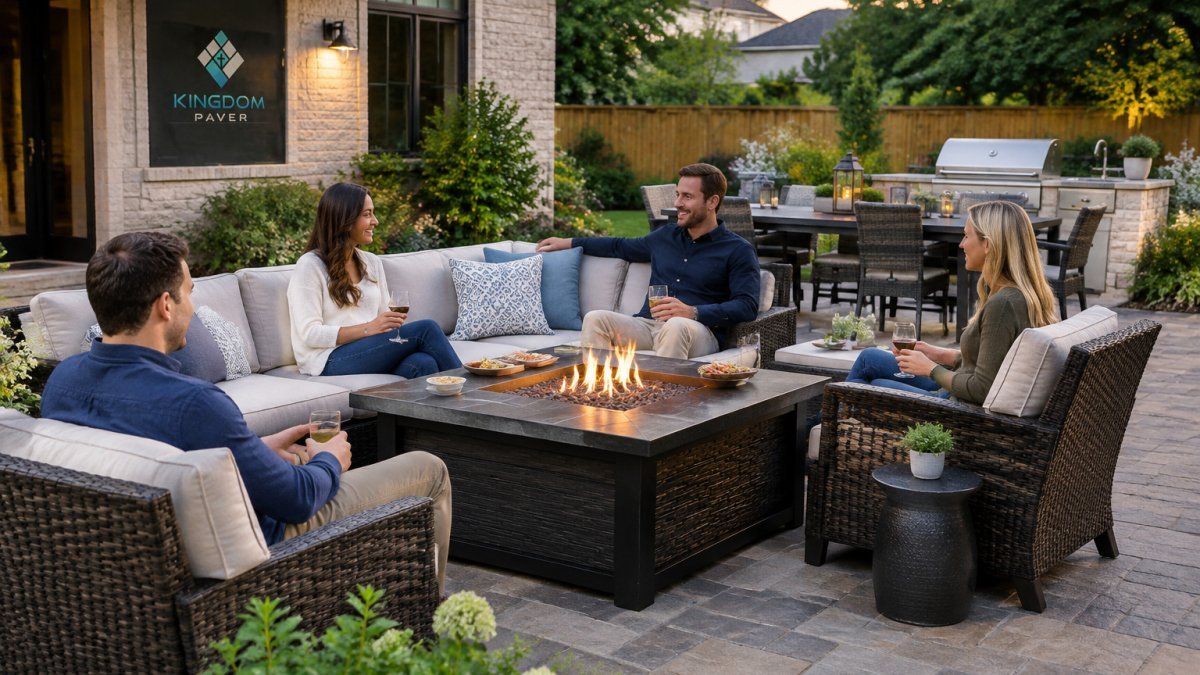
Choose outdoor furniture by first deciding how you will entertain, then measuring your space and matching seating to your guest list. Pick weather-resistant materials and cushions, and leave clear walkways and serving room between pieces. Spend most on the items guests touch every gathering.
Sort your gatherings into casual dining, lounging, larger parties, or mixed use before shopping.
Measure the usable space and mark furniture footprints with painter’s tape before you buy.
Plan one seat per guest at any meal, plus extra spots for people who stand or move.
Keep at least 36 inches of walkway and 36 inches behind seated diners.
Choose outdoor-rated, fade-resistant cushions with removable, washable covers.
Outdoor furniture for entertaining has to seat your guests, hold their drinks, and let people move without bumping into each other. Before comparing sofas or dining sets, decide what kind of gatherings you actually host.
Start by sorting your gatherings into a few common types:
Casual dining: Family meals and weekend barbecues, where people sit for a while and then drift.
Conversation and lounging: Evenings with drinks, where guests sit in a loose circle and stay for hours.
Larger parties: Birthdays or holiday gatherings, where you need seating, serving space, and room to stand.
Mixed use: Most households host a blend, so the furniture should adapt.
Once you know which events matter most, ask how many guests you usually host, whether they sit for meals or mingle, and whether you need a place to set food and drinks.
A common mistake is buying for an imagined party instead of the gatherings you really host.
Measure the Patio, Deck, or Pool Area Before You Shop
Measure your space before you look at a single product. For broader guidance on space planning, see the patio design guide for entertaining.
Start with the overall dimensions, then measure fixed features: the house wall, steps, a grill, planters, a pool edge, or a built-in bench.
Keep these measurements in your notes:
Total usable length and width of the space
Locations of doors, steps, and fixed structures
The footprint of each piece you are considering
Any areas to keep clear, such as a pool edge or a walkway
Measuring also helps you avoid buying too much furniture.
Pool areas need extra care. Keep furniture back from the edge so guests can walk safely, and check whether any local rules govern placement near the water.
Match Seating Capacity and Furniture Scale to Your Guest List
Once you know your space, match your seating to the number of guests you typically host.
Capacity depends on the piece.
Scale matters as much as capacity. Bulky pieces can dominate a small patio, while delicate pieces look lost in a large open area.
Think about how your guest list changes through the year. Here is a simple way to plan:
Everyday seating: Pieces that suit your typical household or small gatherings.
Occasional extra seating: Stools, folding chairs, or ottomans that can be added for bigger parties and stored afterward.
Serving space: A side table or sideboard for food and drinks, so guests are not balancing plates on their laps.
Flexible pieces let you host a crowd without buying a full set you will rarely use; lightweight stackable chairs are a practical choice.
Always verify dimensions with the manufacturer before you buy. Listed sizes can vary, and a few centimeters can change whether a table fits.
Plan Your Patio Furniture Layout Ideas Around Traffic Flow and Clearance
Layout determines whether your party feels relaxed or cramped. Compare layout ideas for outdoor living spaces to see how different arrangements handle traffic flow.
Diagram illustrating optimal clearance and traffic flow for outdoor furniture on a patio layout.
Main walkway: at least 36 inches wide for a single-file path, and 48 inches or more where two people may pass or where guests carry plates from the kitchen to the table.
Behind seated diners: 36 inches from the table edge to the nearest wall, planter, or rail so a guest can push back and stand without trapping the person behind them. Tighten to 30 inches only if the chairs tuck fully under the table.
Chair pull-back and side clearance: about 24 inches between chairs on the same side of a table, and 30 inches or more at the ends, so elbows and chair legs do not collide.
Sofa-to-coffee-table: 14 to 18 inches, close enough to set down a drink without leaning, far enough to stand up and step out.
Conversation distance: seat lounge chairs and sofas 8 to 10 feet apart, face to face, so guests can talk without raising their voices; beyond about 10 feet, people split into separate conversations.
Grill and serving buffer: keep 36 inches of clear space in front of a grill and a similar buffer around a buffet or sideboard so a serving line does not block the main path.
Build the plan around a serving route.
Two arrangements work well for entertaining:
Dining zone: a table near the kitchen door, with the chairs far enough from the table edge that people can stand up easily, and a sideboard or bar cart within arm’s reach of the host’s seat.
Lounge zone: sofas and chairs arranged around a central table or fire feature, facing each other rather than all facing the same direction, with side tables between seats so drinks do not end up on the floor.
If you have both zones, separate them clearly. Placing the lounge set too close to the dining table can make a small space feel busy and cause crowding between activities.
Plan for the standing crowd, too.
Test the layout with tape before you buy.
Compare Types of Outdoor Furniture Material for Durability and Upkeep
Material choice affects how your furniture looks, how comfortable it feels, and how much care it needs. To weigh the best materials for backyard patios against upkeep, review the options side by side.
Most outdoor furniture falls into a few material groups. Each has trade-offs:
Aluminum: Lightweight and naturally resistant to rust. It is easy to move, but it can feel less substantial than heavier options.
Powder-coated steel: Sturdy and typically rust-resistant when the coating stays intact. Scratches can expose metal, so touch up chips promptly.
Stainless steel: Strong and resistant to corrosion, though it can be heavy and expensive.
Treated solid wood: Warm and attractive. It needs regular sealing or oiling and can weather to gray without maintenance.
Wicker or resin wicker: Woven styles that look relaxed. Natural wicker needs shelter from rain, while synthetic all-weather wicker handles moisture better.
Weather-resistant materials and finishes, such as all-weather wicker, treated solid wood, and powder-coated steel, are worth looking for. Look for easy-clean surfaces, too, since spills and pollen are constant on an entertaining patio.
Consider upkeep honestly. A material that needs annual sealing may suit a homeowner who enjoys that work and not someone who wants to hose furniture off and move on.
Think about total cost over time, too. A cheaper set that needs replacement after a few seasons may cost more than a sturdier option you keep for years.
Choose the Best Material for Outdoor Furniture Cushions
Cushions take the most abuse outdoors. They absorb sun, rain, and spills, and can quickly look faded or feel damp.
Look for outdoor fabrics designed to resist fading and mildew. Solution-dyed acrylic and polyester are widely used for outdoor cushions because they hold color well and dry quickly.
Fill matters as much as the outer fabric. Quick-drying foam resists moisture, while some fills hold water and take longer to dry.
Here is what to check when shopping:
Fabric: Choose outdoor-rated, fade-resistant, and mildew-resistant options.
Fill: Prefer quick-drying foam or fills that do not trap moisture.
Covers: Removable, machine-washable covers make cleaning easier.
Storage: Plan where cushions will go during rain or winter.
Storage is a simple habit that extends cushion life. Bring cushions inside after heavy rain or a long party, or keep them in a deck box.
Finding the Best Budget Outdoor Furniture for Your Next Party
Budget decisions work best when you tie spending to how you use the space and to what the furniture will cost after you buy it. Before committing to furniture spending, review paver patio installation pricing for context on the overall project.
Start with a simple total-cost worksheet. For each set you are considering, list:
Purchase price for the frame, table, and any included cushions.
Cushions and slings, priced separately if they are not included; outdoor cushions are a recurring cost because fabric and fill break down in sun and rain.
Covers and storage, such as fitted covers or a deck box, which protect the investment and reduce replacement frequency.
Upkeep, including sealant or oil for wood, touch-up paint for coated metal, and cleaning supplies.
Expected replacement interval for cushions, slings, and any woven elements.
A cheaper set that needs new cushions every couple of seasons can cost more over five years than a sturdier frame that accepts replacement cushions. Ask whether replacement cushions and slings are sold separately and what they cost; a set with no replacement path becomes disposable the first time a cushion fails.
Then prioritize by touch frequency. Spend on the pieces guests use every gathering, the dining table and chairs, the main sofa, the cushions they sit on, and choose cheaper, flexible options for occasional overflow. A practical allocation looks like this:
Set your total budget first, including cushions, covers, and storage, so the accessories do not arrive as a surprise.
Prioritize the core piece, such as the dining table or main sofa, and buy quality there.
Fill gaps with flexible pieces, like stackable chairs, stools, or a folding table, which cost less and adapt to different party sizes.
Plan for accessories, including umbrellas, lighting, and a cover for off-season protection.
Watch for hidden costs at checkout. Some sets require separate cushions, some tables need an umbrella and base sold separately, and some dining sets are priced without the chairs.
Hosting logistics belong in the budget, too. A bar cart, a sideboard or buffet surface, a beverage tub, and a few side tables do more for a party than an extra sofa and cost far less.
For a quote tailored to your project, Kingdom Paver can help you think through layout, materials, and the outdoor living space around your furniture.
Compare what each set really costs over time, not just the sticker price.
Cost item
What to check
Why it matters
Purchase price
Frame, table, and any included cushions
Starting point for the total
Cushions and slings
Sold separately or included
Recurring cost from sun and rain
Covers and storage
Fitted covers or a deck box
Protects the investment
Upkeep
Sealant, touch-up paint, cleaning supplies
Ongoing cost of ownership
Replacement interval
How often cushions and slings need replacing
Shows the true five-year cost
Frequently Asked Questions
How much outdoor seating do I need for entertaining?
Plan roughly one seat per guest, then add a few extra for flexibility. Measure your dining table and count how many chairs fit with at least 36 inches of clearance behind each one so people can sit down and stand up without bumping into anything. If you expect a mix of dining and lounging, split the guest list between a table for meals and a sofa or lounge chairs for conversation. Check seating before the event by inviting a few people to sit in the chairs for ten minutes.
What is the best material for outdoor furniture cushions?
Solution-dyed acrylic and polyester fabrics are among the most common choices for outdoor cushions because they resist fading from sun exposure and dry quickly after rain. Look for removable, machine-washable covers and quick-dry foam cores. Cushions that are removable can be stored indoors during storms or long off-seasons, which extends their life.
How do I arrange patio furniture for a party?
Group furniture into zones, such as a dining area near the kitchen door, a lounge area with a sofa and chairs, and a drinks or serving station along one edge. Keep main walkways clear of furniture, and leave enough room for guests to pull chairs out without blocking the path. Position shade or heaters where people will sit most. Walk the layout yourself before guests arrive to confirm there are no pinch points.
What is the most durable material for outdoor furniture?
Powder-coated aluminum and powder-coated steel are common materials for outdoor furniture, and treated hardwoods need more upkeep. Wicker is attractive, but look for all-weather synthetic weave, since natural wicker breaks down outdoors. Choose the material that matches how much maintenance you are willing to do each season.