
Last Updated: November 3, 2026
Quick Summary
Paver installation cost depends on project size, material choice, site preparation, labor rates and design complexity. Published 2026 estimates put professional paver installation at roughly $8 to $25 per square foot installed, with labor accounting for $4 to $8 of that figure.
- Smaller projects often cost more per square foot because fixed expenses spread across fewer square feet.
- Material choice is usually the largest single swing in the budget, and quotes should list base specification and setting method.
- Labor typically runs $4 to $8 per square foot, and pattern complexity and site access add hours.
- Ask contractors to price utility relocation, root work, old surface removal, haul-off and drainage separately.
- Routine sealing, joint sand replacement and re-leveling keep pavers performing well over the long term.
Table of Contents
- How Project Size and Square Footage Drive Paver Installation Cost
- Paver Cost per Square Foot: How Material Choice Changes Your Budget
- Site Preparation Costs for Hardscaping: Excavation, Base, and Drainage
- Labor Cost to Install Pavers per Square Foot and Why Rates Vary
- Design Complexity, Site Access, and Hidden Costs to Plan For
- Paver Installation Timeline and Long-Term Maintenance Costs
- Getting an Accurate Quote for Your Paver Project
- Frequently Asked Questions
Paver installation cost is shaped by a handful of variables that most homeowners only discover once the first quote lands. Project size, material choice, site preparation, labor rates and design complexity each move the final number, sometimes sharply. Kingdom Paver builds patios, driveways, walkways and outdoor kitchens across Katy and Cypress, and the costs below reflect how those variables interact on real jobs. Published 2026 industry estimates put professional paver installation at roughly $8 to $25 per square foot installed, with labor alone accounting for $4 to $8 of that figure, according to Estimator Suite’s 2026 paver installation cost guide. The spread is wide for a reason, and understanding it is the first step to a realistic budget.
How Project Size and Square Footage Drive Paver Installation Cost
Project size is the factor that most often surprises homeowners. Smaller jobs carry fixed costs, such as equipment mobilization, machinery rental and base preparation, that do not shrink in proportion to the area being paved. As Breasy’s 2026 paver installation pricing guide explains, those fixed expenses spread across fewer square feet, so the per-square-foot price on a small patio often runs higher than on a larger one. Square footage still sets the baseline, but it is rarely the whole story.
Shape matters too. A simple rectangle is quicker to lay than a patio with curves, borders and multiple levels, even at the same total area.
Paver Cost per Square Foot: How Material Choice Changes Your Budget
Material is usually the largest single swing in the budget, and it is the one variable where published ranges actually help. Installed cost varies by material, and the same product can land at a lower or higher price depending on the layout and site access. Kingdom Paver’s pricing depends on project scope, quantity and timing, so for current prices or a quote, please visit the Kingdom Paver website.
The mechanism behind the spread is worth understanding because it explains why a cheaper paver is not always the cheaper project. Concrete pavers are pressed and cured to a consistent size, so they lay quickly and cut cleanly, which keeps labor hours down. Brick is smaller and heavier per square foot, so a crew sets more units per hour of labor and the material freight is higher. Natural stone varies in thickness and squareness from piece to piece, so the installer spends extra time sorting, back-buttering and cutting, and the base often has to be built to a tighter tolerance to hide the variation.
The base and edge restraints change with the material too. A sand-set concrete paver patio can use a compacted crushed-stone base with a plastic edge restraint. A porcelain or large-format stone installation often calls for a concrete slab or a cement-stabilized base, plus a bonding or setting layer, which adds both material and labor. That is why two quotes for the same square footage can differ by thousands of dollars even when the visible surface looks similar.
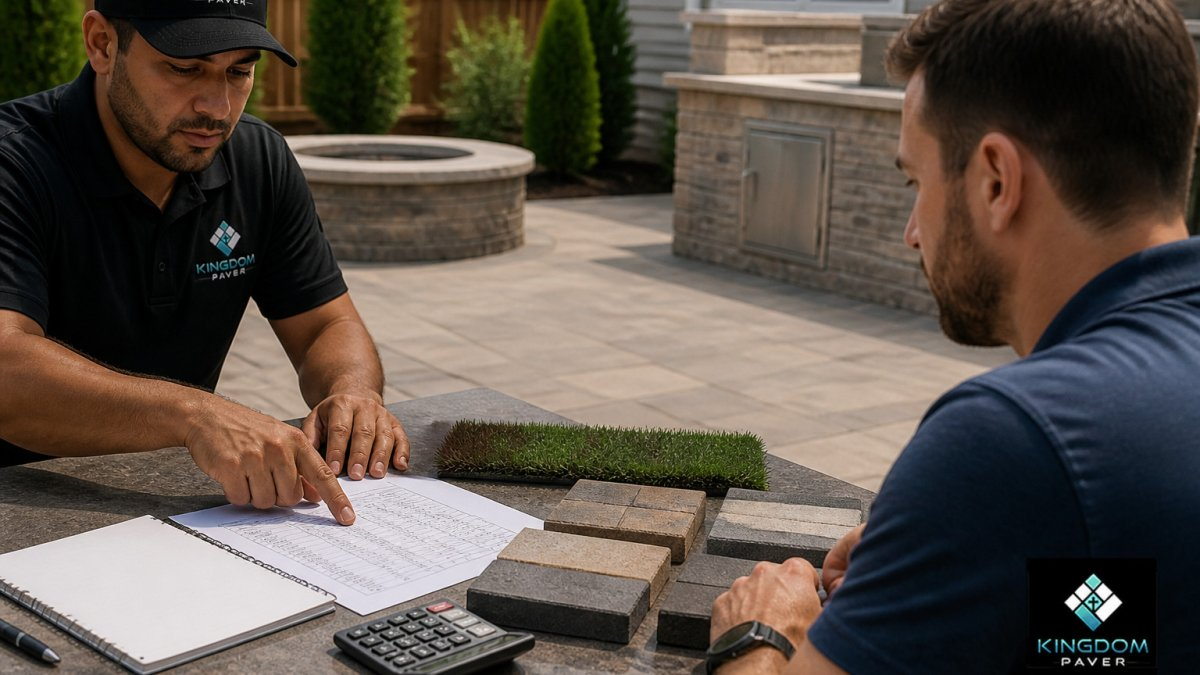
Upfront material cost can also exceed that of poured concrete or asphalt, a point noted in Cognitive Market Research’s paver market report. Pavers still tend to be a long-term choice because individual units can be replaced when damaged, and because the surface can be re-leveled without a full tear-out. Ask for material samples and line-item pricing so you can compare products on equal terms, and ask each contractor to state the base specification and setting method next to the material price.
Watch out: a per-square-foot price quoted without the base specification is the most common source of mid-project change orders, because the base is where material and labor differences actually show up.
The table below summarises how each material type affects the installed cost and setup, as the article describes.
| Material | Cost driver | Setup note |
|---|---|---|
| Concrete pavers | Consistent size, lays quickly | Sand-set on crushed-stone base |
| Brick | Smaller, heavier units; higher freight | More units set per labor hour |
| Natural stone | Uneven thickness and squareness | Extra sorting, cutting and tighter base |
| Porcelain | Thin, uniform, brittle at edges | Wet saw; stiffer base and setting layer |
Site Preparation Costs for Hardscaping: Excavation, Base, and Drainage
Before a single paver goes down, the ground has to be prepared. Excavation removes existing soil and any old surfaces, then a compacted base of crushed stone is built to carry the load. Geotextile fabric, edge restraints and proper grading keep the surface stable and direct water away from the structure.

Site conditions can shift this phase considerably. Soil stability, drainage needs and the demolition of an existing patio or walkway all add labor and material. Site conditions can often push a project beyond what a square-footage calculation predicts. A sloped yard that collects water in low spots may need additional grading or drainage work, which is worth raising at the estimate stage rather than mid-project.
Labor Cost to Install Pavers per Square Foot and Why Rates Vary
Labor typically runs $4 to $8 per square foot, according to the Estimator Suite figures cited above. Rates differ with local market conditions, a company’s overhead and the time of year, since demand and crew availability change through the season. Pattern complexity and site access also affect labor hours. Intricate herringbone or custom borders take longer to lay, and tight access that forces crews to hand-carry materials adds time to every day on the job.
Because labor is billed by the hour, a detailed scope of work is the best protection against surprise charges. Confirm how the crew will access the site and whether the quote includes material delivery.
Design Complexity, Site Access, and Hidden Costs to Plan For
Design choices carry cost beyond the visible surface, and the cleanest way to budget for them is to separate the visible design from the invisible site work. On the visible side, curved edges, mixed patterns, borders, inlays and built-in features such as fire pit surrounds or outdoor kitchen footings all require cutting, extra base work and more layout time. A herringbone or basketweave pattern takes longer to lay than a running bond at the same square footage, and a border with a mitered corner takes longer still. Those hours show up in the labor line.
On the invisible side, site access is the variable homeowners most often underestimate. If a crew can back a truck and a plate compactor up to the work area, material handling is a minor cost. If the only path is through a side gate, across a finished lawn, or up a slope, every ton of base and every pallet of pavers is moved by hand or by a small powered cart, and that time is billed. A common pattern is for access-limited jobs to add a meaningful percentage to the labor line even when the design is simple.
The hidden-cost checklist below is the part most guides skip. Ask each contractor to price these separately so you can see what is included and what is not:
- Utility line relocation or protection: gas, water, irrigation, electrical and low-voltage lines that cross the excavation. Relocating a line is a separate cost.
- Tree root removal or root protection: roots within the excavation zone may need cutting, and trees that must be protected may require a root barrier or a redesigned edge.
- Old surface removal and disposal: concrete, asphalt, decking or old pavers, plus dumpster and tipping fees.
- Haul-off of excess soil: excavation spoils have to go somewhere, and disposal is a line item.
- Grading and drainage corrections: a yard that slopes toward the house may need a swale, a French drain, a dry well or a retaining edge, any of which adds cost.
- Permits and inspection fees: local rules may require a permit for some hardscape work, and permit and inspection costs should be confirmed with your contractor.
- Resetting landscape features: irrigation heads, lighting, sod and plantings disturbed by excavation.
- Sealing and joint sand at completion: some contractors include an initial seal, some do not.
Permeable versus standard installation is the other design decision that moves the number and that most guides ignore. A standard installation sheds water to the edges or to a drainage point. A permeable installation uses open-graded base, a geotextile separator and permeable joint material so water passes through the surface and into the subgrade or a storage layer. Ask whether your site is a candidate for a permeable installation and whether any local stormwater rule applies before assuming either option is the more expensive path.
Other items often missed in early budgets include removal and disposal of old materials, permit fees where required, and resetting landscape features disturbed during excavation. Asking a contractor to list these separately makes the comparison between quotes far more reliable, and it turns the hidden-cost conversation into a line-item review rather than a surprise.
Paver Installation Timeline and Long-Term Maintenance Costs
Installation timelines depend on size, design and weather. Timelines depend on project size, design and weather, and your contractor can confirm a schedule for your project. Plan around your schedule, especially if you need the space ready for a particular event.
Maintenance is the cost many buyers overlook. Sealing, joint sand replacement and occasional re-leveling of settled areas keep pavers performing well for years. Skipping routine upkeep can lead to weed growth in joints and uneven surfaces, which become more expensive to correct later.
Getting an Accurate Quote for Your Paver Project
The most useful quote is a detailed one. Ask for square footage, material specifications, base depth, drainage plan, removal and disposal, permit handling, and a timeline. Vague totals make it hard to tell whether two bids cover the same work.
Kingdom Paver serves Katy and Cypress with patios, driveways, walkways, flowerbeds and custom outdoor kitchens. If you are ready to move forward, you can contact Kingdom Paver for a quote. We will walk through the variables above with you so the estimate reflects your actual site, not a generic average.
Frequently Asked Questions
How much does it cost to install a 20×20 paver patio?
A 20×20 patio covers 400 square feet. Installed paver costs vary widely depending on material, base depth, drainage work and design. Because Kingdom Paver has not published pricing, the most accurate figure for your yard comes from a site visit and written quote. Measure your planned area, note any slope or drainage concerns, and request a detailed estimate that itemizes excavation, base, pavers and labor.
What is the average labor cost for installing pavers per square foot?
Paver labor is a share of the total installed price that rises when the job involves demolition, tight access or intricate patterns. Labor is not a fixed rate across projects, since local market conditions, crew overhead and seasonal demand all influence what a contractor charges. When comparing quotes, confirm whether labor includes base preparation and cleanup so you are comparing the same scope of work.
How does site preparation impact the total cost of a paver project?
Site preparation often accounts for a substantial share of the budget because it sits beneath the surface. Excavation, removing old concrete or sod, installing a compacted base and adding geotextile fabric all add labor and materials before any pavers go down. Soil stability and drainage requirements can increase these steps. Ask any contractor to describe the base depth and compaction method they plan to use, since shortcuts here are a common cause of sinking and cracking later.
Does the complexity of the patio design increase the overall cost?
Yes. Intricate patterns, curved edges, borders and custom shapes require more cutting, more layout time and more careful joint work than a simple running-bond pattern. Design complexity raises labor hours, and it can also increase material waste. If budget is a concern, a simpler layout with a decorative border often delivers a strong look at a lower total cost. Discuss pattern options during the consultation so the quote reflects the design you choose.


