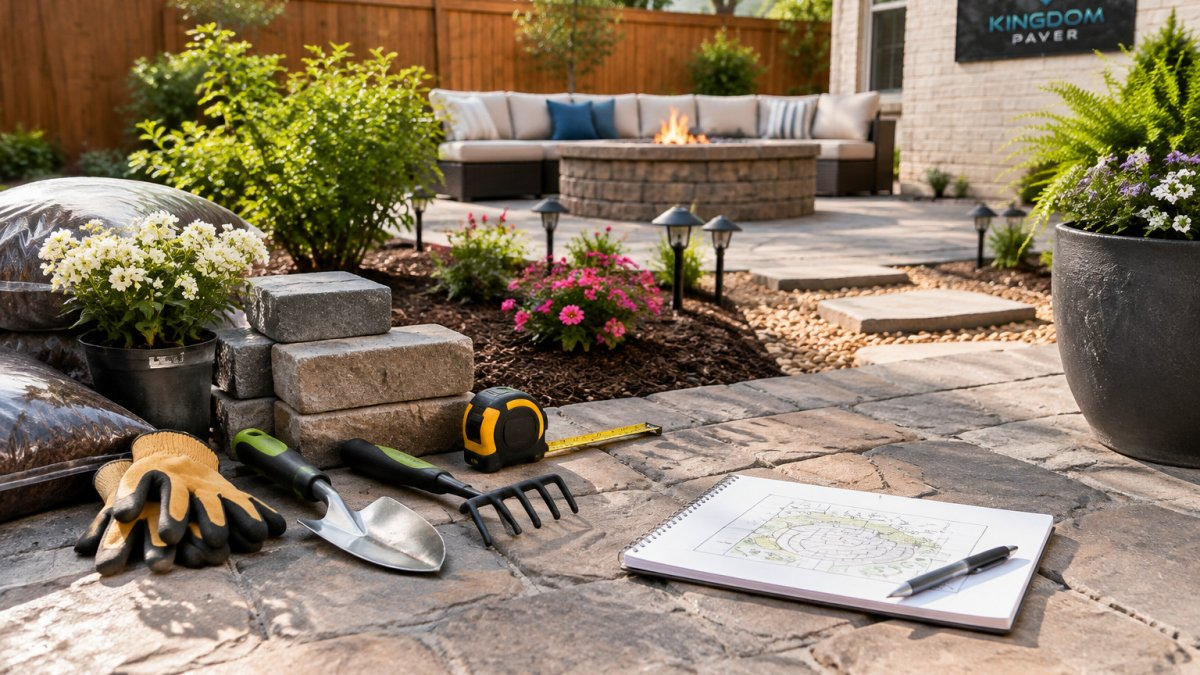
A cost effective backyard landscaping plan starts with a written list of priorities and a budget split into materials, labor, and a 10 to 15 percent contingency reserve. Using mulch, groundcover, and mixed planting beds instead of grass, and building patios in stages, keeps spending predictable.
Set aside roughly 10 to 15 percent of the total budget for surprises such as soil or drainage problems.
Price each idea at low, mid, and higher levels to see how the budget changes with scope.
Rank projects by how often you will use them divided by their estimated cost.
Replace high-traffic grass with mulch, gravel, or groundcover to cut mowing and water use.
Request an itemized written quote that includes base preparation, edging, disposal, and cleanup.
Ready to plan your backyard?Kingdom Paver builds patios, walkways, and outdoor kitchens across Katy and Cypress.
How to Set a Realistic Backyard Landscaping Budget
Most homeowners start a backyard project with a number in their head and no plan for how it gets spent. The projects that stay on budget almost always begin with a written list of priorities. A cost effective backyard landscaping plan starts with what you need to use the space, not with the most impressive photo you saved.
Break your budget into three buckets: materials, labor, and a contingency reserve. Labor is often the largest single line item, so a clear scope saves money before any dirt moves. Our guide to what factors affect the cost of paver installation explains the variables that drive that labor figure. Set aside roughly 10 to 15 percent for surprises such as soil problems, drainage fixes, or a material that arrives discounted but late.
Pricing for common backyard projects varies widely with scope, materials, and labor. See paver patio installation cost for a breakdown of current pricing. Request an itemized written quote before you commit, and contact Kingdom Paver for current pricing on any hardscape work.
Low-, Mid-, and Higher-Budget Versions
A useful way to plan is to price each idea at three levels. The low version uses salvaged or bulk materials and your own labor. The mid version upgrades one element, usually the hardscape base or the plant size. The higher version adds professional installation, lighting, or irrigation.
Low: mulch beds, container planters, a gravel path, and a block fire ring. Most of the cost is materials, and the work is reversible.
Mid: a paver walkway on a properly compacted base, mixed perennial beds, and a small patio zone. This is where base preparation and edging matter most.
Higher: a full paver patio, built-in seating, low-voltage lighting, and drip irrigation. Labor share rises sharply, so itemized quotes matter.
Rank Projects by Impact and Cost
Our recommended approach is to rank projects by impact and cost. A patio you use every day usually justifies more spending than a decorative feature you will look at from a window. A simple scoring method works: list each project, rate how often you will use it, and divide by its estimated cost. The highest score goes first.
Pricing depends on quantity, site access, and delivery, so request a written quote with itemized line items before you commit. Ask whether the quote includes base material, compaction, edging, disposal, and cleanup, because those line items are where budgets usually drift.
Watch out: a quote that omits base preparation or disposal can look cheaper than a complete one and end up costing more once the work begins.
The article breaks a budget into three cost levels, which can be scanned side by side.
Level
Typical contents
Key difference
Low
Mulch beds, container planters, gravel path, block fire ring
Mostly materials; work is reversible
Mid
Paver walkway on compacted base, mixed perennial beds, small patio zone
Base preparation and edging matter most
Higher
Full paver patio, built-in seating, low-voltage lighting, drip irrigation
Labor share rises sharply
1. Plant Mixed Beds with Perennials and Native Plants
Planting beds are one of the most affordable ways to change how a yard looks, and they remain a cost effective backyard landscaping choice for most homeowners. Browse native wildflower and meadow garden ideas for a deeper look at designing these beds. Mixed beds that combine perennials, shrubs, and native plants create color across seasons and need less replacement than annual flowers. Native plants suited to the Texas climate also tend to handle heat, humidity, and periodic drought better than many imported varieties.
Start small. Group plants with similar water and sun needs, and buy perennials in smaller nursery sizes to stretch your budget. Mulch the bed after planting to hold moisture and suppress weeds.
Watch out: planting too densely in a bed with poor drainage can lead to rot and plant losses, so check how water moves across the site first.
2. Use Mulch and Groundcover Instead of Grass
Lawn installation and upkeep can be expensive in both money and water. Many homeowners replace high-traffic grass areas with mulch, gravel, or groundcover plants that need less maintenance. Our alternatives to grass for backyard landscaping compare these options side by side. Groundcover in shaded or hard-to-mow areas can reduce mowing time while still softening the look of the yard.
Pea gravel and mulch beds are simple to install and easy to refresh. Plan edging so material stays where it belongs, and choose a mulch depth that suits your plants rather than adding more than you need.
3. Build a Low-Maintenance Backyard Landscape
Long-term costs matter as much as the upfront price. A low-maintenance design uses durable hardscaping, drought-tolerant plants, and efficient irrigation to reduce ongoing work. Hardscape surfaces are more durable when they are installed on a properly compacted base, while poorly prepared surfaces can shift and crack over time.
Consider how each choice will age. Fewer plant types and clear, simple layouts make routine care faster and cheaper, which helps your budget stay predictable year after year.
4. Add Affordable Paths, Walkways, and Patio Zones
Paths and patio zones give a backyard structure and usable space, and they do not require a large budget to start. A simple walkway can connect the driveway to the backyard and define areas for dining, lounging, or grilling. Breaking a project into zones lets you build the most important one first and add others as money allows.
Paver walkway winding through mulch and perennial beds for a cost effective backyard landscaping project
Choose the Material That Fits the Budget
Gravel path: typically the lowest material cost. Use a compacted base and edging to keep stone in place. Best for utility routes and low-traffic areas.
Mulch path: similar cost to gravel and easy to refresh, but it breaks down and needs topping up each year.
Stepping stones set in mulch or gravel: a middle option that looks intentional without a full paver installation.
Pavers: a durable choice. Cost rises with paver type, pattern complexity, and base depth; request a quote for current pricing.
Build Patio Zones in Stages
A patio does not have to be built all at once. Start with the zone you use most, such as a dining pad or a grill area, and leave room to extend later. Keep the base depth and edging consistent between stages so the finished surfaces match. A 10-by-10-foot pad is a common starter size and fits a small table and chairs.
Base Preparation Is the Cost Driver
Base preparation often matters as much as the surface material in how long a path or patio lasts. A properly compacted gravel base with the right depth for your soil and climate prevents sinking and shifting. Skipping that step to save money often leads to uneven surfaces within a few years, and repairs cost more than the original base would have.
Watch out: a path or patio installed over poorly drained soil can hold water against the house or heave in freeze-thaw cycles, so check how water moves across the site before you dig.
DIY Versus Professional Installation
A gravel path or stepping-stone walk is a realistic DIY project for a homeowner with basic tools. A paver patio on a compacted base is heavier work and benefits from rental compaction equipment and experience with slope and drainage. Professional installation makes sense when the surface is attached to the house, when the site slopes, or when you want a warranty on the base.
Kingdom Paver offers professional installation of patios and walkways, and our team can walk you through layout options for your yard. You can book your hardscape consultation directly.
5. Plan a Large Backyard on a Budget by Zone
A large backyard can feel overwhelming, so divide it into zones such as entertaining, play, planting, and utility. Work on one zone at a time, starting with the area you use most. This approach spreads costs across seasons and keeps the overall design consistent.
Creating a master plan first prevents expensive changes later. Mark where utilities, drainage paths, and sun exposure fall, then decide which zone gets priority.
6. Create a Kid-Friendly Backyard on a Budget
Kid-friendly backyards can be built with inexpensive, durable materials. Open lawn or gravel areas for play, shaded seating, and sturdy border edging all add function without high costs. Choose plants that are non-toxic and avoid thorny varieties near play areas.
Involve the family in planning. Children are often happy with simple features like a clear play zone and a shaded spot to rest, which can cost far less than elaborate play structures.
Booking Your Kingdom Paver Hardscape Consultation
If you are ready to turn a plan into a finished patio, walkway, or outdoor kitchen, Kingdom Paver can help you scope the project and build it to last. Our team serves Katy and Cypress with ten years of experience, and we can walk you through a quote for your project. Contact us to schedule your consultation and start planning a backyard you can use this season.
Frequently Asked Questions
What is the least expensive backyard landscaping?
Mulch, groundcover, and simple planting beds are usually the lowest-cost options because they require few materials and little labor. Replacing a section of lawn with mulch and perennials can often be done as a DIY project. Actual costs depend on the size of the area, the plants you choose, and whether you hire help. Request a quote from Kingdom Paver for current pricing on any hardscape work, since pricing depends on quantity, materials, and project scope.
How can I landscape a backyard with little or no grass?
Start by replacing turf with mulch beds, groundcover plants, and a gravel or paver path that defines walking areas. Group plants with similar water needs together to keep upkeep low. A small patio or seating area anchors the space so it still feels usable. Kingdom Paver can install patios and walkways that reduce the amount of lawn you need to maintain, and you can contact the team for a site-specific estimate.
What are the best low-maintenance backyard landscaping ideas?
Native and drought-tolerant perennials, mulched beds, groundcover, and hardscape features such as pavers and gravel all cut down on mowing and weeding. Choosing plants suited to your sun exposure and soil drainage prevents replacements later. Avoid high-maintenance features like large lawns or water-hungry annuals if you want a yard that needs little attention. Kingdom Paver can help plan hardscape elements that hold up over time.