
Table of Contents
- Why Homeowners Choose Alternatives to Grass
- Low Maintenance Ground Cover for Backyards
- Hardscape Options: Pavers, Gravel, and Stone
- Cost of Replacing Grass With Pavers and Other Options
- No-Mow and Low-Mow Grass Alternatives
- Synthetic Turf and Artificial Grass Solutions
- Meadow Gardens and Native Plant Landscaping
- How to Convert Your Lawn: Preparation Methods
- Frequently Asked Questions
Last Updated: October 3, 2026
Why Homeowners Choose Alternatives to Grass
Replacing a traditional lawn with alternatives to grass is a smart financial and practical decision for homeowners managing erosion, shade, or tired of weekly mowing and watering.
Alternatives to grass improve curb appeal, reduce water consumption, cost less to maintain, solve drainage problems, and support local pollinators and wildlife.
The key is matching the right alternative to your specific situation: your local hardiness zone, foot traffic patterns, sunlight exposure, and budget.
Below, we’ll walk you through the most practical alternatives to grass, from low-maintenance groundcovers to hardscape solutions that transform your outdoor space.
Low Maintenance Ground Cover for Backyards
If you want something living and green but without the constant upkeep of a traditional lawn, groundcover plants offer a middle ground. These low-growing options suppress weeds naturally, require minimal mowing, and often thrive in conditions where standard grass struggles.
Dutch White Clover and Microclover Lawns
Dutch white clover is a nitrogen-fixing groundcover that grows 4-6 inches tall, produces white flowers attracting pollinators, and requires minimal fertilizer or mowing. Microclover is a smaller-leafed variety offering the same low-maintenance benefits with a denser appearance.
Clover lawns handle moderate foot traffic, improve soil health, and cost around $30 per 1,000 square feet, making it an accessible entry point for lawn conversion.
Clover won’t tolerate heavy foot traffic and prefers well-draining soil, so it may not work alone in high-traffic or poorly drained areas.
Clover’s nitrogen-fixing properties mean you can skip fertilizer entirely. This saves money and reduces runoff that harms local waterways, a genuine environmental win that also cuts your maintenance time.
Creeping Thyme and Native Sedges
Creeping thyme is a fragrant, drought-tolerant groundcover that spreads into a dense mat, suppresses weeds, and handles moderate foot traffic in full sun and well-draining soil.
Native sedges are low-growing, grass-like perennials adapted to your region that excel in shade and moist conditions, supporting local insects and wildlife.
Both require less water and fertilizer than turf once established. Creeping thyme costs $3-$6 per plant; native sedges generally cost less.
Native sedges are your best choice for shaded, moist areas. They’re not “manicured” looking, but they’re authentically suited to your local environment in ways that imported turf grass never will be.
Dwarf Mondo Grass for Shade
Dwarf mondo grass creates a dark green carpet in deep shade, tolerates moderate foot traffic, and requires minimal maintenance once established.
Dwarf mondo grass spreads gradually, so it works best in smaller areas, borders, or transitions rather than full lawn replacement. It prefers well-draining soil.
For shaded corners and under trees, dwarf mondo grass eliminates the battle of growing traditional grass in low light. Contact local suppliers for pricing.
Hardscape Options: Pavers, Gravel, and Stone
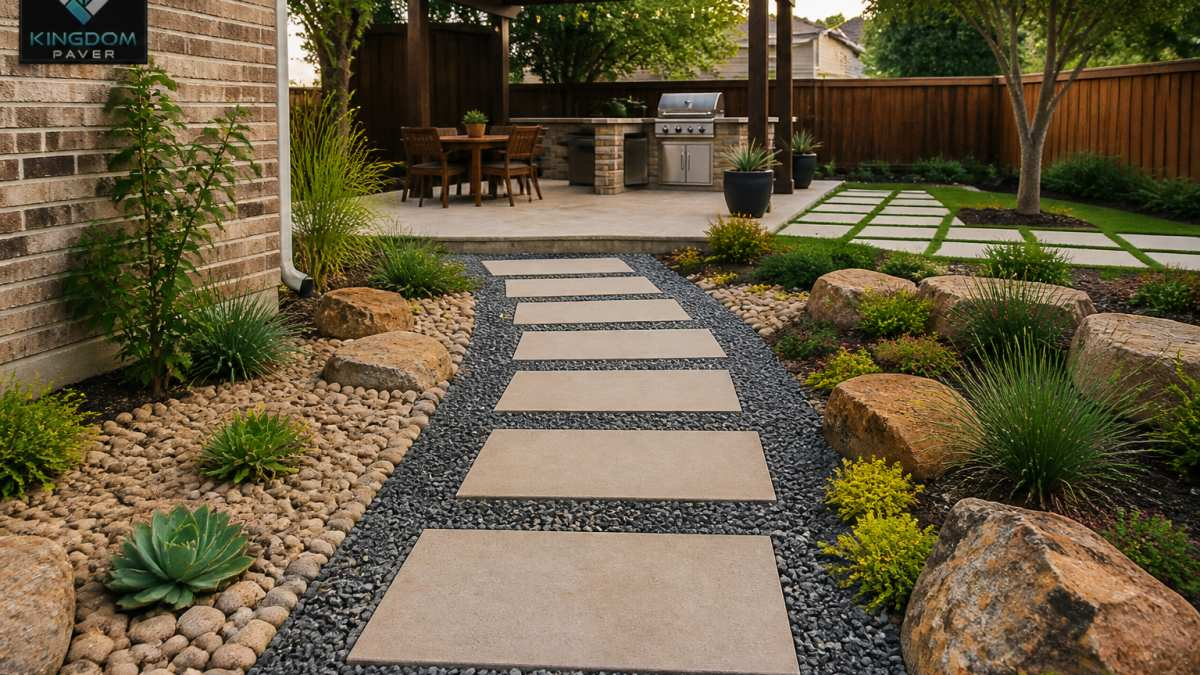
If you’re willing to move beyond living groundcovers, hardscape solutions offer the most dramatic reduction in maintenance. Pavers, gravel, and decorative stone create permanent outdoor spaces that require minimal upkeep and solve drainage problems that grass cannot.
Decorative Landscape Gravel and Stone
Decorative gravel and stone are the fastest, most cost-effective way to replace a lawn in high-traffic or problem areas, available in dozens of colors and textures.
Gravel offers permanence with zero watering, mowing, or fertilizing, provides excellent drainage for sloped yards, and suppresses weeds when combined with landscape fabric.
Drawbacks include debris accumulation, gravel migration in windy areas, and heat buildup in direct sun.
Gravel pricing depends on the type and quantity, so contact local suppliers for specific quotes on your project.
Gravel in high-traffic areas can shift and create uneven surfaces. If you have drainage problems or water pooling, poor preparation under the gravel will only make the problem worse, you need proper base preparation and possibly drainage solutions that go deeper than gravel alone.
Permeable Pavers and Decorative Surfaces
Permeable pavers allow water to drain through while providing a solid, attractive surface that solves drainage issues for patios, pathways, and driveways.
Decorative pavers create defined outdoor spaces, handle heavy foot traffic, resist weeds, and require only occasional sweeping or power washing.
Pavers cost more upfront than gravel or seed but last 25+ years with minimal maintenance and add resale value.
Installation quality matters enormously. Poor base preparation leads to settling, cracking, and uneven surfaces within a few years. This is where working with an experienced contractor makes a genuine difference, ensuring the foundation work keeps pavers stable long-term, not just the visible surface.
Cost of Replacing Grass With Pavers and Other Options
The cost of replacing grass with alternatives varies dramatically depending on the method and scale of your project.
Seed-based alternatives like clover or fine fescue blends run $30-$100 per 1,000 square feet and can be installed as a DIY project. Groundcover plants like creeping thyme cost more upfront per plant but create permanent living solutions.
When comparing costs, factor in the long-term maintenance: water bills, fertilizer, mowing equipment, and your time. A living groundcover eliminates mowing but may need occasional watering during establishment. Hardscape solutions eliminate water and mowing entirely but require occasional cleaning.
For a precise estimate on your specific project, whether you’re considering pavers or a hybrid approach, Kingdom Paver can evaluate your site, discuss your goals, and provide a detailed quote that accounts for soil preparation, drainage needs, and material costs.
No-Mow and Low-Mow Grass Alternatives
If you want something that looks and feels like a traditional lawn but requires far less maintenance, fine fescue blends and specialty grass varieties offer a practical compromise.
Fine fescue seed blends are specifically bred to grow slowly and tolerate both sun and partial shade. They require less frequent mowing than standard turf, some varieties can go weeks without cutting.
No-mow varieties are even more extreme: they’re designed to stay short naturally and rarely need cutting at all. These grasses are still relatively new to the residential market, but early adopters report that they reduce mowing time by 80-90%.
Fine fescue blends cost $30-$100 per 1,000 square feet for seed, making them an affordable option for converting large areas.
The learning curve is minimal: sow seed in spring or fall, water until established, and then let the low-growth habit do the work.
Synthetic Turf and Artificial Grass Solutions
Artificial grass has improved dramatically over the past decade. Modern synthetic turf looks and feels more natural than older versions, drains properly, and requires virtually no maintenance.
SYNLawn artificial grass uses UV-stabilized fibers that resist fading and includes drainage technology designed for pet areas and heavy use. The consistent appearance year-round appeals to homeowners who want a perfectly manicured look without the work.
The main advantage is simplicity: no watering, mowing, fertilizing, or seasonal management. The main drawback is that artificial grass can become uncomfortably hot in direct summer sun and lacks the environmental benefits of living plants.
Artificial grass makes sense if you have a small area to cover, extreme shade or drainage problems, or simply want zero-maintenance outdoor space. For larger areas or if you prioritize environmental benefits and pollinator support, living alternatives often provide better value.
Meadow Gardens and Native Plant Landscaping
A meadow garden or native plant landscape transforms your yard into a thriving ecosystem while dramatically reducing maintenance.
Native plants are naturally suited to your local climate, soil, and water patterns. They require minimal supplemental watering once established, support local pollinators and wildlife, and create seasonal interest with different blooms and textures throughout the year.
The aesthetic is intentionally less “manicured” than a traditional lawn, it’s a deliberate choice to embrace a more natural, meadow-like appearance. For some homeowners, this is the whole appeal.
Meadow gardens typically cost less than hardscape but more than simple groundcover, depending on the size and plant selection. The real investment is in the design and initial establishment; once established, a native planting requires minimal intervention.

How to Convert Your Lawn: Preparation Methods
Converting your lawn to alternatives to grass requires thoughtful preparation. The method you choose depends on the size of the area, your timeline, and which alternative you’re installing.
Sheet Mulching and Solarization Techniques
Sheet mulching, also called the cardboard method, is a DIY approach that uses layers of cardboard to smother existing grass and build organic matter. Lay cardboard directly over the grass, overlapping edges to prevent regrowth. Top it with 4-6 inches of compost or wood chips.
This method is free or nearly free if you source cardboard from local businesses. It’s also environmentally sound: you’re building soil while eliminating chemical herbicides. The main drawback is time, you’re waiting weeks or months before planting.
Solarization is faster. Cover the area with clear plastic for 4-6 weeks during hot weather. The trapped heat kills grass, weeds, and many soil pathogens. Once you remove the plastic, the area is ready for new plantings.
For large areas or when you need the space ready quickly, chemical removal or mechanical removal (sod cutting) are faster alternatives. These methods cost more but eliminate the grass immediately.
Regional Hardiness and Local Ordinance Considerations
Before committing to any alternative, verify that it’s suited to your hardiness zone and local climate. Native sedges, for example, vary dramatically by region, a sedge that thrives in one zone may struggle in another.
Local ordinances also matter. Some municipalities have restrictions on front-yard landscaping, artificial grass, or non-traditional plantings. HOA communities often have specific rules about lawn appearance.
If you’re in a master-planned community with strict aesthetic standards, work with your HOA early. Some communities are becoming more flexible about alternatives to grass, especially drought-tolerant options, but others remain rigid. Getting approval before installation prevents costly mistakes.
Converting your lawn to alternatives to grass is a practical way to reduce maintenance, save water, and often improve your property’s functionality. Whether you choose a living groundcover, hardscape solution, or native planting depends on your site conditions, timeline, and long-term vision for your outdoor space.
Frequently Asked Questions
What is the cheapest alternative to grass for a backyard?
Dutch White Clover seed is among the most budget-friendly options at approximately $30 per 1,000 square feet. Sheet mulching using recycled cardboard is essentially free if you source cardboard locally. Fine Fescue seed blends range from $30-$100 per 1,000 square feet and require less maintenance than traditional turf. For hardscape options, decorative gravel offers low cost compared to pavers, though pricing depends on quantity and delivery. Contact us for a custom quote on your specific project.
Which ground cover is best for high-traffic backyard areas?
Creeping Thyme handles moderate foot traffic well and provides a fragrant, pollinator-friendly surface. Dwarf Mondo Grass also tolerates moderate traffic in shaded spots. For heavy-traffic zones, permeable pavers or decorative gravel are more durable long-term solutions. Dutch White Clover can withstand some foot traffic but may thin in heavily used paths. SYNLawn Artificial Grass is specifically engineered for high-traffic areas with drainage technology for durability.
Can I replace my lawn with gravel or pavers?
Yes. Both are viable alternatives to grass for backyard landscaping. Decorative landscape gravel creates a modern, drought-tolerant look with zero water requirements and excellent drainage. Permeable pavers offer durability, design flexibility, and can be customized to your landscape style. Both require preparation: remove existing turf using sheet mulching or solarization, then install landscape fabric to suppress weeds. Kingdom Paver specializes in paver installation and can assess your site’s drainage and slope to ensure proper installation.
How do I choose the right landscaping alternative for my soil type and climate zone?
Identify your hardiness zone and soil drainage characteristics first. Native Sedges and Fine Fescue blends thrive in specific regional conditions and require minimal supplemental water once established. Creeping Thyme prefers well-draining soil in sunny locations. Dwarf Mondo Grass excels in shade with poor drainage. Clover lawns improve soil health naturally. For clay or poorly draining soils, gravel or permeable pavers prevent water pooling. Consult local extension services or a landscape professional to match plants to your zone and soil profile.
Do grass alternatives require less maintenance than a traditional lawn?
Most do. Clover lawns need minimal mowing and no fertilizer. Creeping Thyme and Native Sedges require very little water or upkeep once established. Fine Fescue blends need less frequent mowing than standard turf. Decorative gravel and pavers eliminate mowing entirely. Artificial Grass removes irrigation and mowing completely. The trade-off: hardscape options like gravel can accumulate debris, and planted groundcovers need initial establishment time. Choosing the right alternative depends on your tolerance for occasional maintenance versus upfront installation effort.


