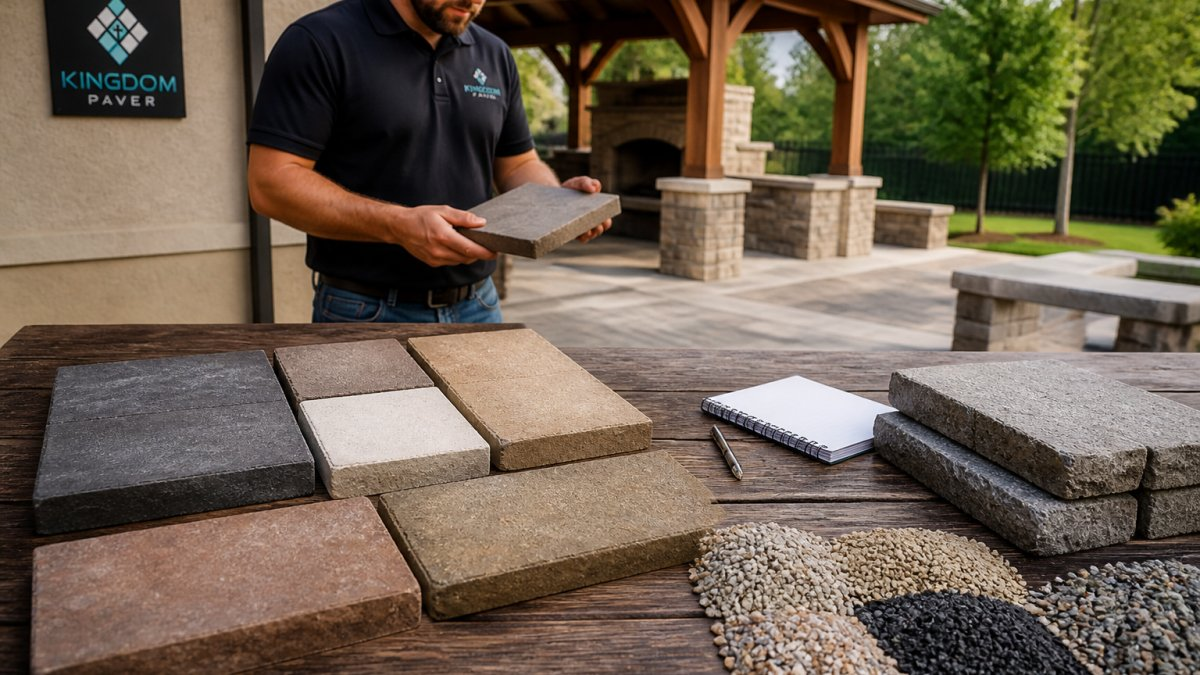
Understanding Durability Factors in Paver Selection
Understanding how to choose the best paver materials for durability depends on the material itself, how well it’s installed, and how suited it is to your climate. At Kingdom Paver, we help homeowners select paver materials that stand up to heavy use and harsh weather.
How Installation and Base Preparation Affect Durability
Your paver’s lifespan depends as much on what’s underneath as the material itself. A premium paver on a poor base will fail. A standard paver on a solid foundation will outlast it.
The base layer is critical. It needs:
Proper grading to direct water away
Compacted sand or gravel (4-6 inches minimum)
A geotextile fabric to prevent settling
Edge restraints to stop lateral movement
Poor installation causes the most common durability problems: uneven settling, cracking, water pooling, and surface instability within a few years.
Proper base preparation determines how long your investment lasts; rushing this step saves money today but costs thousands in repairs later.
Climate and Weather Resistance Considerations
Your local climate determines which materials survive best. Freeze-thaw cycles damage porous materials, heat and UV fade some finishes, and moisture penetration causes cracking in cold climates.
Dense, low-porosity materials handle freeze-thaw better because they absorb less water, preventing ice expansion damage. In hot climates, light-colored materials reflect sunlight and resist heat damage.
Consider your region’s challenges:
Freeze-thaw areas: Choose dense concrete, porcelain, or granite
High-moisture regions: Avoid porous brick; select sealed concrete or natural stone
Hot, sunny climates: Light colors and heat-resistant materials like porcelain perform best
Areas with heavy rain: Ensure proper drainage and select materials with low water absorption
Comparing the Most Durable Paver Material Options
Paver materials perform differently in specific conditions. Understanding their strengths and limitations helps you make the right choice.
Close-up view of four different paver material samples laid side by side on a work surface, showing texture and color variations of concrete, natural stone, brick, and porcelain
Durability Metrics: How to Compare Materials Objectively
Measurable standards help remove guesswork from material selection.
Load-Bearing Capacity (Compressive Strength)
Measured in pounds per square inch (psi), this indicates how much weight a paver can withstand before cracking.
Water Absorption Rate
Expressed as a percentage, this measures how much water the material absorbs. Lower absorption means better freeze-thaw resistance and stain resistance. Porcelain absorbs less than 0.5 percent.
Abrasion Resistance
This measures surface wear from foot traffic and weathering. The Mohs hardness scale ranks materials from 1 (softest) to 10 (hardest). Porcelain ranks 8-9. Granite ranks 7-8. Concrete ranks 4-6 depending on aggregate.
Freeze-Thaw Durability
In cold climates, pavers undergo repeated cycles of freezing and thawing. Water absorbed into the material expands when frozen, causing internal stress. Materials with low water absorption and high density resist this damage.
Expected Lifespan
This combines material durability with realistic maintenance. These ranges assume correct installation and climate-appropriate maintenance; poor base preparation or neglected sealing can reduce lifespan by half.
Concrete Pavers: Strength and Structural Stability
Concrete pavers are engineered for durability under controlled conditions with consistent strength and density, making them predictable and reliable for most residential applications.
Concrete pavers resist freeze-thaw cycles when sealed, handle heavy traffic, and come in endless colors and finishes. Standard pavers meet ASTM C936 specifications for compressive strength and water absorption.
Concrete is porous and absorbs water and stains easily without sealing. Unsealed concrete in freeze-thaw zones can fail within 5-10 years; sealed concrete typically lasts 15-25 years.
Best for:
Driveways with moderate to heavy traffic
Patios in freeze-thaw climates (when sealed)
Budget-conscious projects
Custom colors and patterns
Natural Stone Pavers: Longevity and Wear Resistance
Natural stone, granite, bluestone, limestone, offers unmatched longevity, often outlasting the structures around them.
Dense stone like granite resists weathering, staining, and wear while developing character over time. Granite’s low water absorption (under 1 percent) and high compressive strength (19,000+ psi) require minimal maintenance and last 50+ years even in harsh climates.
Natural stone costs significantly more than concrete. Porous stones like bluestone and limestone need sealing every 2-3 years in wet climates. Installation demands skilled masons, and repairs require replacing entire stones. Softer stones may show wear in high-traffic areas within 20-30 years.
Best for:
High-end patios and walkways
Long-term investments (40+ years)
Wet areas and pool decks (especially granite)
Projects where aesthetics matter as much as durability
Brick and Clay Pavers: Traditional Durability
Brick pavers are kiln-fired clay with centuries of proven use. They’re durable, absorb less water than concrete, and develop a warm, aged appearance.
Quality brick resists freeze-thaw damage better than concrete because it’s fired at high temperatures. Color deepens with age, and individual bricks can be reset. High-quality brick (rated SW) performs well in freeze-thaw climates; lower grades suit only mild climates.
Brick is more porous (8-15 percent water absorption) and softer (Mohs 3-5) than concrete, requiring sealing in wet climates and potentially showing wear in high-traffic areas within 20-30 years. Maintenance includes resealing every 2-3 years in damp climates.
Best for:
Traditional aesthetic projects
Areas with moderate freeze-thaw cycles (using SW-rated brick)
Walkways and patios with lighter traffic
Homeowners wanting warm, aged character
Porcelain Pavers: Premium Performance
Porcelain pavers deliver exceptional durability, fired at higher temperatures than brick (above 2,200°F) to create a non-porous surface with water absorption below 0.5 percent.
Porcelain resists staining, water absorption, freeze-thaw damage, and UV fading better than any other material. It’s harder than concrete (Mohs 8-9), requires no sealing, and outlasts all other residential paver materials in extreme climates.
Cost is 2-3 times that of concrete. Installation requires precision and skilled masons. Slip-resistant finishes are important for wet areas, and repairs are difficult because porcelain doesn’t blend seamlessly.
Climate zones with extreme weather or freeze-thaw cycles
Commercial applications where durability justifies cost
Concrete vs. Brick Pavers: Which Performs Better?
Concrete wins on cost, customization, and structural strength for driveways. Brick wins on aesthetics and longevity for patios. In freeze-thaw climates, both perform well if properly installed. Most homeowners choose concrete for driveways and brick or natural stone for patios.
Best Pavers for Driveways: Load-Bearing and Traffic Considerations
Driveway pavers face constant stress. Your vehicle’s weight, repeated freeze-thaw cycles, and thermal expansion all take a toll. The best driveway paver material combines strength, durability, and proper installation.
Concrete pavers are the top choice for driveways because they’re engineered for load-bearing and resist thermal stress.
Install a proper base, 6 inches of compacted gravel plus sand. Use edge restraints to prevent lateral movement. Seal the surface every 2-3 years to prevent water penetration.
Natural stone works for driveways but costs more. Brick is acceptable in moderate climates but softer than concrete. Porcelain is overkill for driveways unless durability in extreme climates is your priority.
The real durability factor for driveways isn’t the paver material, it’s the base preparation. A solid foundation prevents settling, cracking, and water damage. Kingdom Paver prioritizes base work.
Paver Material Cost Comparison and Long-Term Value
Cost matters, but long-term value matters more. A cheaper paver that fails in 10 years costs more than an expensive one that lasts 40.
Material
Typical Cost Range
Lifespan
Best For
Concrete
Budget-friendly
15-25 years
Driveways, patios
Brick
Moderate
25-50 years
Patios, walkways
Natural Stone
Premium
50+ years
High-end patios
Porcelain
Premium
30-40 years
Pool decks, wet areas
Concrete is the most affordable upfront. Natural stone and porcelain cost more initially but last longer and require less maintenance. Brick falls in the middle on both cost and lifespan.
Consider total ownership cost, not just purchase price. A paver that needs resealing every 2 years costs more over time than one that needs it every 5 years. A material that lasts 50 years spreads its cost across five decades.
For most homeowners, concrete offers the best value for driveways. For patios and walkways, brick or natural stone provide better long-term value despite higher upfront costs.
Selecting Pavers by Project Type: Patios, Walkways, and More
Different outdoor spaces have different durability needs. A patio handles less traffic than a driveway. A walkway needs slip resistance. A pool deck requires water resistance.
Patio Pavers: Balancing Aesthetics and Durability
Patios are where aesthetics and durability meet equally. You want the space to look beautiful while lasting decades.
Natural stone and porcelain excel for patios because they’re durable and visually stunning. Concrete works well if you want customization at a lower cost. Brick offers warmth and traditional appeal.
Traffic on patios is lighter than driveways, so you can prioritize appearance over load-bearing strength. The key is choosing a material suited to your climate and sealing it appropriately.
Walkway Pavers: Slip Resistance and Pedestrian Safety
Walkways need slip resistance. Wet pavers are dangerous, especially for children and elderly visitors.
Textured concrete and brick naturally provide slip resistance. Smooth porcelain needs a textured finish. Natural stone like bluestone has naturally slip-resistant surfaces.
Walkways also endure foot traffic and weather exposure. Choose materials that resist staining and wear. Seal walkways annually in wet climates to prevent algae growth and slipping hazards.
Maintenance and Care to Maximize Paver Lifespan
Even the most durable paver material requires maintenance. Regular care extends lifespan and keeps surfaces looking new.
Basic maintenance includes:
Sweeping debris regularly
Sealing pavers every 2-3 years (depending on material and climate)
Removing weeds between pavers promptly
Addressing standing water to prevent freeze-thaw damage
Cleaning stains quickly to prevent permanent discoloration
Sealed pavers resist water, staining, and weather damage far longer than unsealed ones. Sealing is the single most cost-effective maintenance step.
In freeze-thaw climates, ensure proper drainage. Water that pools and freezes will crack pavers and destabilize the base. Winter salt damage can be minimized by using non-chloride de-icers.
Learning how to choose the best paver materials for durability requires balancing material strength, climate suitability, installation quality, and your project’s specific demands. Concrete delivers strength for driveways. Natural stone offers timeless longevity for patios. Brick provides traditional beauty and reliable durability.
The real difference between a paver installation that lasts 10 years and one that lasts 40 is proper base preparation, correct material selection for your climate, and consistent maintenance. Kingdom Paver brings a decade of experience selecting and installing the right materials for the right projects.
Frequently Asked Questions
What is the most durable paver material for outdoor use?
Concrete and natural stone pavers rank among the most durable options. Concrete pavers offer excellent structural stability and wear resistance, lasting 25+ years with proper installation and maintenance. Natural stone options like granite and bluestone provide superior longevity, often lasting 30+ years. Porcelain pavers deliver premium durability with exceptional resistance to freeze-thaw cycles and moisture absorption. The best choice depends on your climate, traffic level, and budget. Installation quality and proper base preparation are equally critical to material selection.
How do concrete vs. brick pavers compare for durability?
Concrete pavers typically outperform brick in load-bearing applications like driveways, with higher structural stability and better resistance to heavy vehicle traffic. Concrete pavers resist freeze-thaw cycles more effectively and absorb less water. Brick pavers, made from clay, offer traditional appeal and good durability for patios and walkways in moderate climates, lasting 20-25 years. However, brick is more porous, absorbs more moisture, and can deteriorate faster in freeze-thaw regions. For driveways or high-traffic areas, concrete is the more durable choice; for aesthetic walkways in stable climates, brick performs adequately.
Are concrete pavers durable enough for a driveway?
Yes, concrete pavers are an excellent choice for driveways. They offer strong structural stability and load-bearing capacity to handle vehicle traffic consistently. Quality concrete pavers resist cracking, settling, and wear when installed over a properly compacted base with appropriate drainage. They perform well in most climates and require minimal maintenance beyond occasional sealing and cleaning. Ensure the installer uses adequate base preparation (4-6 inches of compacted gravel) and proper joint sand to maximize durability. With professional installation, concrete paver driveways typically last 25-30 years.
What factors affect how long pavers last?
Material selection is important, but installation and maintenance are equally critical. Key durability factors include: proper base preparation with compacted gravel and drainage, climate suitability (freeze-thaw resistance in cold regions), water drainage to prevent pooling, quality of joint sand and sealing, traffic level and load-bearing demands, and regular maintenance including cleaning and resealing every 2-3 years. Poor drainage, inadequate base preparation, or unsuitable material for your climate will significantly shorten paver lifespan regardless of material quality. Professional installation addressing all these factors ensures maximum longevity.