
Table of Contents
- Why Water Pools on Your Driveway (And Why It Gets Worse)
- Driveway Drainage Solutions: Matching the Fix to the Problem
- Step 1: Regrade the Slope to Move Surface Runoff
- Step 2: How to Fix Uneven Driveway Sections That Trap Water
- Step 3: Install a Trench Drain for Heavy Flow Areas
- Step 4: French Drains, Dry Creek Beds, and Downspout Fixes
- Troubleshooting Failed DIY Fixes and When to Call a Pro
- Frequently Asked Questions
Last Updated: September 16, 2026
Why Water Pools on Your Driveway (And Why It Gets Worse)
Fixing standing water on driveways starts with understanding that water follows the path of least resistance, and a pooling driveway shows exactly where that path has broken down. At Kingdom Paver, we’ve spent a decade transforming outdoor living spaces across Katy and Cypress, and we understand how water can impact driveways: a low spot becomes a puddle, the puddle softens the sub-base, and the pavement above fails.
The Four Root Causes of Driveway Pooling
Most driveway pooling traces back to one of four causes:
- Poor original grading, the driveway was built without enough slope to shed water
- Settlement, the sub-base compacted unevenly over time, creating depressions
- Clogged or missing drainage, downspouts dump water directly onto the driveway
- Soil composition, heavy clay soil, common in this region, drains slowly and holds water at the surface
What Standing Water Does to Asphalt and Concrete
Water is patient, and pavement is not. Asphalt softens when saturated, and freeze-thaw or heat cycles crack it into potholes. Concrete fares no better: moisture reaches the rebar, rust begins, and the expanding rust fractures the slab from the inside.
Ignoring a recurring puddle for one season often means replacing a section of driveway instead of repairing it. Once the sub-base saturates and loses compaction, patching the surface is a temporary fix at best.
Driveway Drainage Solutions: Matching the Fix to the Problem
The right driveway drainage solution depends on the root cause, not the symptom. A surface puddle from poor grading needs a different fix than water backing up from a saturated sub-base, and treating one as the other wastes money.
| Problem | Best Fix | Relative Effort |
|---|---|---|
| Water pools across a wide, shallow area | Regrading the slope | Moderate |
| One sunken section traps water | Mudjacking or section replacement | Moderate to high |
| Heavy concentrated flow across the driveway | Trench drain | High |
| Water arrives from gutters or uphill | Downspout extension, swale, or French drain | Low to moderate |
Step 1: Regrade the Slope to Move Surface Runoff
Regrading is the most direct fix when water pools because the driveway doesn’t slope enough. The goal is a consistent slope that carries surface runoff toward a curb, swale, or drainage point instead of letting it sit.
Step 2: How to Fix Uneven Driveway Sections That Trap Water
Fixing an uneven driveway section means addressing the sub-base, not just the surface. A depression that holds water almost always means the compacted gravel or soil beneath has settled, and the surface is following it down.

The repair sequence for a settled section:
- Mark the low area and measure its depth with a level and straightedge
- Cut and remove the affected pavement if it’s concrete or asphalt
- Excavate down to stable, well-compacted sub-base material
- Add and compact new gravel backfill in shallow lifts
- Reinstall the surface, matching the surrounding slope
Check the slope with a level before you commit to a fix. If the low spot is more than a couple of inches deep and the surrounding grade is flat, regrading the whole run beats patching one section.
Step 3: Install a Trench Drain for Heavy Flow Areas
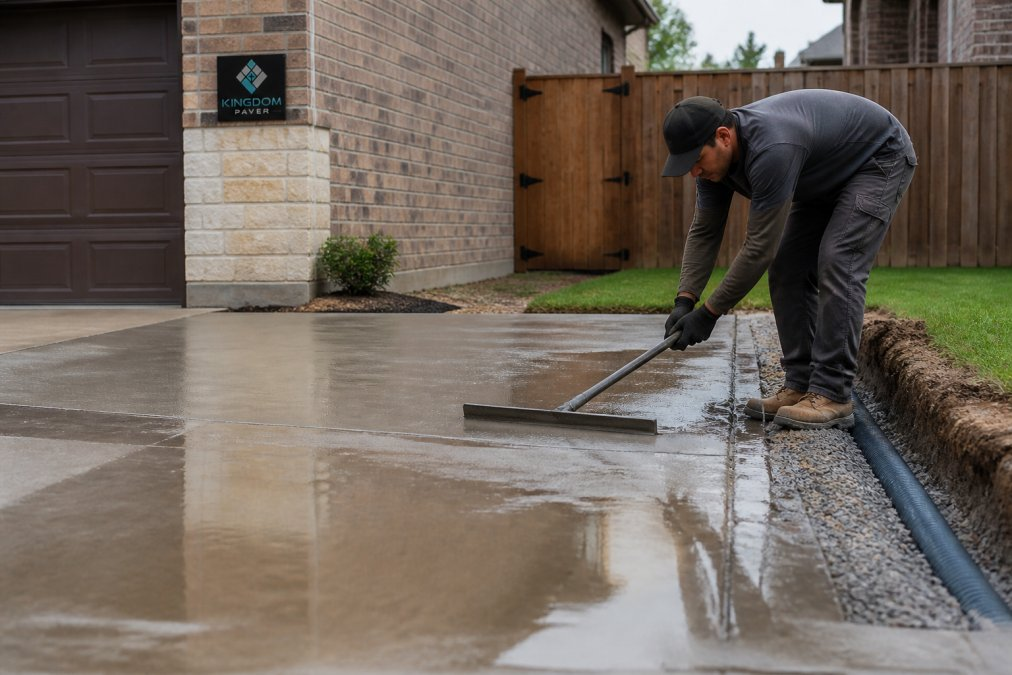
A trench drain is the right answer when water crosses your driveway in volume, usually from an uphill slope or concentrated gutter discharge. It’s a linear channel, typically set in concrete, with a grate that catches surface flow and routes it to a discharge point.
Sizing the Channel Before You Buy
The most common DIY failure with trench drains is undersizing the channel: a 2-inch-wide channel with a shallow invert overflows in a heavy storm even if perfectly placed. Size the channel to peak flow, not average flow, which means accounting for:
- Catchment area, the square footage of driveway, roof, and uphill slope draining toward the trench
- Surface type, asphalt and concrete shed water faster than pavers, so the same storm produces a sharper peak flow
- Storm intensity, local rainfall design values matter; a system sized for a light storm will back up during a 25-year event
Channel Material Trade-Offs: Plastic vs. Polymer Concrete vs. Stainless
The three channel materials sold for residential use behave very differently over 20 years:
- Plastic (PVC or HDPE), cheapest upfront, lightest to handle, and fine for light-duty residential driveways. The trade-off is UV degradation and deflection under repeated vehicle loads; a plastic channel that is not fully encased in concrete can bow and crack.
- Polymer concrete, the middle ground most residential installs land on. It is heavy, dimensionally stable, resistant to freeze-thaw cycling, and holds its invert shape far better than plastic. It costs more per linear foot but typically outlasts the driveway surface around it.
- Stainless steel or galvanized steel, the longest service life and the highest load rating, which is why commercial and municipal work specifies it. For a residential driveway, the premium is usually hard to justify unless the trench sits in a heavy-traffic apron.
Installation Sequence and Discharge
A trench drain only works if the water it collects has somewhere to go. The sequence is:
- Saw-cut the pavement along the trench line and remove the cut section
- Excavate the trench to the depth required by the channel plus its concrete encasement
- Set the channel to a consistent fall toward the discharge point, a flat trench holds water and silts up
- Pour concrete around the channel to lock it in place and transfer vehicle loads to the surrounding slab
- Connect the outlet to a discharge line, dry well, or approved stormwater point
- Set the grate and confirm it sits flush with the pavement surface
What Drives Trench Drain Cost
Trench drain installation cost depends on run length, channel material, grate type, and how much concrete cutting and discharge plumbing the job requires. The two variables that move the number most are the length of the run and whether the discharge point is close or needs a long underground line.
A trench drain that discharges onto a neighbor’s property or into the street without approval can create a legal problem on top of a drainage problem. Confirm where the outlet is allowed to go before you cut concrete.
Step 4: French Drains, Dry Creek Beds, and Downspout Fixes
A French drain is a buried perforated pipe in a gravel-filled trench, wrapped in geotextile fabric to keep soil out, that collects subsurface water and carries it away. It solves the saturated-sub-base problem rather than the surface puddle, so it’s right when water comes up from below or arrives from an uphill source.
Match the drainage tool to the water source: surface flow needs grading or a swale, subsurface saturation needs a French drain, and gutter discharge needs a downspout extension. Using the wrong one is why so many DIY fixes fail.
Troubleshooting Failed DIY Fixes and When to Call a Pro
Failed DIY drainage fixes almost always share one of three flaws: the wrong diagnosis, insufficient compaction, or no proper discharge point. If you regraded but water still pools, the sub-base was the real problem; if a French drain stopped working, the pipe likely clogged because the geotextile fabric was omitted or installed wrong.
Why Filling the Low Spot Never Works
The most common DIY fix, pouring cold patch or self-leveling compound into the puddle, fails predictably. Water pools because the surface is low relative to the surrounding grade, so filling the depression without changing the slope just relocates the low point a few inches away, and the thin, unbonded patch cracks under the first vehicle load. The puddle returns, now with a broken patch in it.
Soil Composition: The Variable Most Guides Ignore
Two driveways with identical slope and square footage can need completely different drainage systems because of what’s under them. Heavy clay has very low permeability, so a system sized for sandy soil will back up; sandy or gravelly soil drains quickly and may need only a shallow swale.
Permits and Stormwater Rules
Altering drainage so water flows onto a neighbor’s property or into the street is regulated in most jurisdictions, and enforced more often than homeowners expect. Check two things before you dig:
- Local stormwater ordinance, many municipalities restrict what can be discharged to the street or storm sewer, and some require an approved discharge point
- Grading and drainage permit, if the work changes the grade of the lot or redirects flow across a property line, a permit is often required
When to Call a Professional
Call a professional when the fix involves cutting concrete, correcting a structural sub-base failure, or routing water near utilities, jobs where a failed DIY attempt costs more than doing it right the first time. A contractor also brings the compaction equipment and discharge-point knowledge that separate a lasting fix from a one-season patch.
Frequently Asked Questions
What is the cheapest way to fix a muddy driveway with standing water?
The least expensive fix is usually extending downspouts and regrading low spots by hand with compacted gravel. A downspout extension kit costs under $50 and can redirect hundreds of gallons away from your driveway. If the low spot is shallow, adding 2 to 3 inches of compacted crushed stone and raking it to slope away from the slab often solves minor pooling without heavy equipment.
Does standing water actually damage concrete or asphalt driveways?
Yes. Standing water seeps into cracks and pores, then expands when it freezes, widening those cracks season after season. On asphalt, constant moisture softens the binder and leads to potholes and crumbling edges. On concrete, hydrostatic pressure from saturated sub-base soil can lift slabs and cause uneven settling. Fixing standing water on driveways early prevents structural damage that costs far more to repair.
Can I dig a hole and fill it with gravel to fix driveway drainage?
A gravel-filled hole, sometimes called a dry well, can work for small volumes of water if the soil drains well. Dig a hole 2 to 3 feet deep, line it with geotextile fabric, and fill with coarse gravel. However, if your soil has heavy clay content, the hole will fill up and stop working. Test drainage first by filling the hole with water and seeing how fast it disappears.
When should I call a professional for driveway drainage solutions?
Call a professional when water pools near your foundation, when regrading would affect your property line or require a permit, or when DIY fixes have failed twice. Trench drain installation and French drain systems require precise slope calculations and proper sub-base compaction. A contractor with drainage experience can diagnose whether the problem is surface grading, a high water table, or a blocked pipe before you spend money on the wrong fix.


