When deciding on flagstone vs pavers for your patio, you’re balancing aesthetics, durability, maintenance, and budget. Flagstone offers a high-end, natural look with unique character but requires more maintenance and carries a higher upfront cost. Pavers deliver consistency, easier installation, and lower maintenance demands, making them the practical choice for most homeowners. Here’s what you need to know to make the right decision for your outdoor space.
Feature
Flagstone
Concrete Pavers
Initial Cost
Higher material and labor
Lower overall cost
Installation
Complex, slower, often professional
Faster, DIY-friendly
Durability
20-30+ years with care
15-25 years typically
Maintenance
Regular sealing, staining risks
Minimal; occasional sand refresh
Aesthetic
Rustic, organic, unique variation
Uniform, geometric, modern
Freeze-Thaw Resistance
Varies by stone type
Engineered for cold climates
Best For
High-end design, visual impact
Practical, low-maintenance patios
What Is Flagstone?
Flagstone is a natural stone material split into flat slabs, typically 1 to 2 inches thick, used for patios, walkways, and outdoor surfaces. The stone comes from geological deposits, usually sandstone, limestone, or slate, and retains the organic surface variation that gives it distinctive character.
Flagstone’s appeal lies in its authenticity. Each slab is unique, with natural color variation and texture that create a rustic, high-end aesthetic. No two patios look identical. The stone weathers beautifully over time, developing a patina that many homeowners find desirable.
However, flagstone is porous. It absorbs water and can stain from oil, rust, and organic matter. This is where the maintenance burden starts. Without regular sealing, flagstone darkens, develops moss in shaded areas, and becomes slippery. The stone also varies in density, some types crack under freeze-thaw cycles in colder climates, while others hold up well.
Installation requires skilled labor. Slabs are heavy, irregular in size, and must be set on a solid base with proper drainage. Most homeowners hire professionals, which adds significant labor cost to the project.
What Are Concrete Pavers?
Concrete pavers are manufactured interlocking blocks made from a mix of Portland cement, aggregates, and pigments, engineered for consistency and load-bearing capacity. Unlike flagstone, every paver is identical in size, thickness, and finish.
The advantage is immediate: uniformity means faster, more predictable installation. Pavers interlock, distributing weight evenly across the sub-base. They’re designed to handle freeze-thaw cycles, heavy foot traffic, and vehicle loads. Modern paver technology includes options which mimic the appearance of natural stone while delivering the reliability of manufactured products.
Concrete pavers come in dozens of colors, textures, and shapes. You can create geometric patterns, herringbone layouts, or even designs that approximate the look of flagstone. The surface is engineered for slip resistance, which matters if your patio gets wet or icy.
The trade-off is aesthetic. Pavers look uniform and geometric. While this appeals to modern design sensibilities, it lacks the organic character of natural stone. Over time, pavers may shift slightly if the sub-base settles unevenly, though proper installation minimizes this risk.
Pro Tip Pavers designed to mimic natural stone offer a middle ground: the durability and consistency of concrete with the visual warmth of stone. This matters if you want the look without the maintenance headache.
Average Cost of Flagstone Patio Per Square Foot
Flagstone is the premium option. Material costs vary depending on the stone type and regional availability, but flagstone consistently runs higher than concrete pavers. Labor is the bigger expense: installation is slower, more technical, and requires experienced masons. Most flagstone patios require professional installation, which adds substantially to the total project cost.
Concrete pavers, by contrast, cost less upfront. Material is cheaper, and installation is faster. Many homeowners tackle smaller paver projects themselves, which eliminates labor costs entirely.
For a precise estimate on your project, contact Kingdom Paver for a custom quote. Our team assesses your yard layout, drainage needs, and design preferences to provide accurate pricing tailored to your specific situation.
Key Takeaway The real cost difference isn’t just the materials, it’s labor. Flagstone installation takes longer, demands skilled labor, and often requires site-specific adjustments for drainage and settling. Pavers go down faster, which is why they’re the default choice for budget-conscious homeowners.
Durability and Lifespan: Flagstone vs. Pavers
Both materials last decades when properly installed. Flagstone typically lasts 20-30+ years, sometimes longer. Concrete pavers average 15-25 years, depending on climate and maintenance. The difference isn’t huge, but flagstone edges ahead in raw longevity, assuming it’s sealed and maintained.
Here’s where it gets interesting: durability depends heavily on climate and installation quality.
Freeze-Thaw Cycles and Climate Performance
Flagstone’s weakness in cold climates is real. When water penetrates the stone and freezes, it expands, creating internal stress. Over multiple freeze-thaw cycles, the stone cracks and spalls. Softer stones like sandstone are particularly vulnerable. Harder stones like slate resist freezing better, but cost more.
Concrete pavers are engineered for freeze-thaw resistance.
Cracking, Settling, and Long-Term Wear
Both materials can crack if the sub-base settles unevenly. This is why proper sub-base preparation matters more than the surface material itself. A compacted, well-drained base prevents settling and keeps both flagstone and pavers stable for decades.
The installation gap between flagstone and pavers is substantial. This affects not just cost, but timeline and quality.
Flagstone Installation Complexity
Flagstone installation is a skilled trade. Here’s what’s involved:
The site must be excavated to proper depth, accounting for the base, sand, and the stone thickness. A compacted sub-base (typically 4-6 inches of gravel) is essential. On top goes a layer of sand or mortar.
Paver Installation and Sub-Base Requirements
Paver installation is more forgiving. The process is standardized:
Excavate and compact the sub-base (4-6 inches of gravel, depending on climate and traffic)
Add a leveling sand layer (1-2 inches)
Lay pavers in your chosen pattern
Sweep polymeric sand into joints
Compact the entire surface with a vibrating plate compactor
The uniformity of pavers makes this repeatable. Each paver sits at the same height, so leveling is straightforward. Joints are consistent, and the interlocking design distributes weight evenly.
Watch Out The most common mistake in both installations is skipping or rushing the sub-base. A poor sub-base causes settling, uneven surfaces, and premature failure within 3-5 years. This is where professional expertise matters most. Proper compaction and drainage prevent 90% of long-term problems.
Concrete Paver Patio Maintenance Tips
Pavers are low-maintenance by design, but they’re not maintenance-free. A few simple practices extend their lifespan significantly.
Sealing, Staining, and Efflorescence
Concrete pavers don’t require sealing like flagstone does, but sealing offers benefits. A quality paver sealer protects against staining, reduces water absorption, and enhances color. If you seal, do it every 2-3 years.
Weed Control and Joint Sand Management
Polymeric sand in paver joints prevents weeds from sprouting between blocks. Over time, sand compacts and may need topping up. Every 2-3 years, sweep additional polymeric sand into joints and re-compact.
Aesthetic Appeal and Design Versatility
This is where flagstone and pavers diverge most sharply.
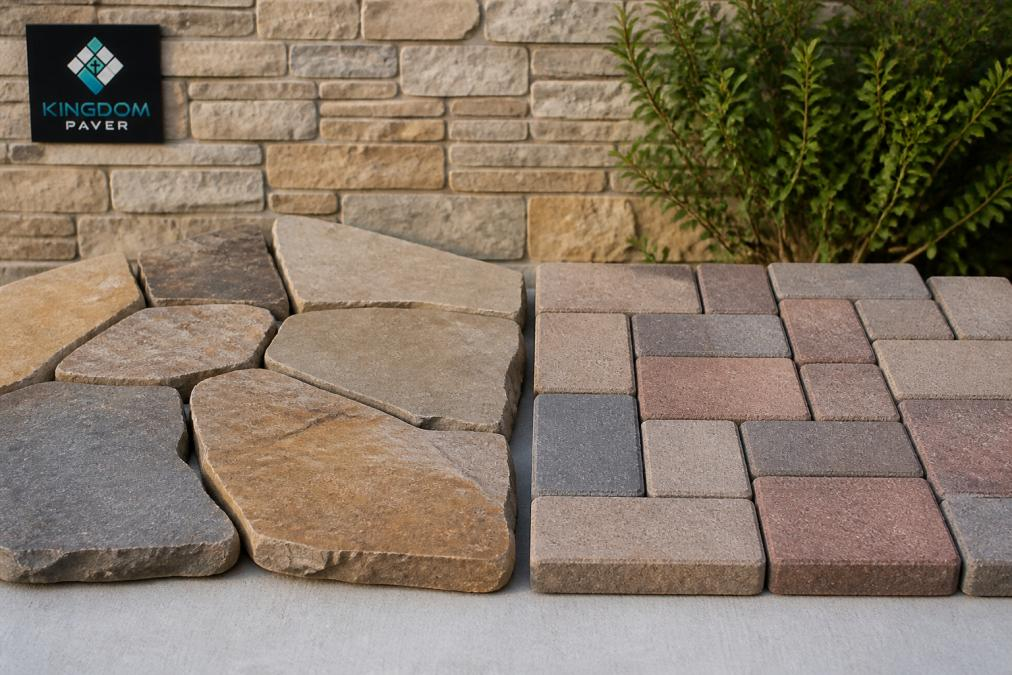
Comparison diagram of flagstone vs pavers showing natural stone textures alongside uniform concrete blocks.
Natural Stone Variation vs. Uniform Appearance
Flagstone’s irregular slabs, color variation, and organic edges create a rustic, high-end aesthetic. No two patios are identical. The natural surface variation catches light differently, creating visual interest and depth. For homeowners who want their patio to feel like a designed space, not a manufactured product, flagstone delivers.
Color Options, Patterns, and Rustic Aesthetic
Flagstone comes in regional stone types, sandstone, limestone, slate, each with its own color palette. Sandstone offers warm tans and reds. Limestone ranges from cream to gray. Slate delivers deep grays and blacks. The colors are natural and muted, aging beautifully over time.
Frequently Asked Questions
Which is better for my patio, flagstone or pavers?
Flagstone offers a high-end, organic aesthetic and excellent durability, but requires more maintenance and professional installation. Concrete pavers are more affordable, easier to install, and require less upkeep. Choose flagstone if you prioritize curb appeal and budget allows for higher material and labor costs. Choose pavers if you want a low-maintenance, budget-friendly option. Your climate and intended use also matter, pavers handle freeze-thaw cycles better in cold regions, while flagstone’s permeability suits areas with drainage concerns.
Do pavers or flagstone last longer?
Both can last 25-30+ years with proper installation and maintenance. Flagstone is a natural stone that resists wear exceptionally well and can last indefinitely in suitable climates. Concrete pavers are engineered for durability and hold up well if installed on a solid sub-base with proper compaction and joint sand. The key difference: flagstone performs best in dry climates, while pavers handle freeze-thaw cycles and moisture better. Improper installation or drainage issues will shorten either material’s lifespan significantly.
Is flagstone more expensive than concrete pavers?
Yes, flagstone is typically more expensive than concrete pavers in both material and installation costs. Flagstone requires skilled labor for mortar-set or dry-laid installation, while pavers use simpler, faster interlocking installation. Material costs for flagstone vary by type (limestone, sandstone, slate), but are generally higher than manufactured concrete. Total project cost depends on square footage, site preparation, and local labor rates. Contact Kingdom Paver for a custom quote to compare costs for your specific project.
What are the disadvantages of flagstone?
Flagstone requires regular sealing to prevent staining and moisture absorption. It can crack in freeze-thaw climates, especially if water penetrates and freezes beneath the surface. Uneven surfaces create tripping hazards and make furniture placement difficult. Mortar-set flagstone is harder to repair, replacing a single stone is costly and visible. Natural variation means color inconsistency, and some types are slippery when wet. Installation is labor-intensive, adding significant cost. Maintenance demands are higher than pavers, requiring periodic resealing and careful cleaning.
How much does a 20×20 flagstone patio cost?
A 20×20 flagstone patio (400 square feet) cost depends on flagstone type, installation method, site preparation, and local labor rates. Material costs, labor, sub-base preparation, and sealing all factor into the total. Since pricing varies significantly by project, contact Kingdom Paver for a detailed quote. They can assess your site, recommend the best flagstone type for your climate, and provide an accurate estimate based on your specific needs and yard conditions.