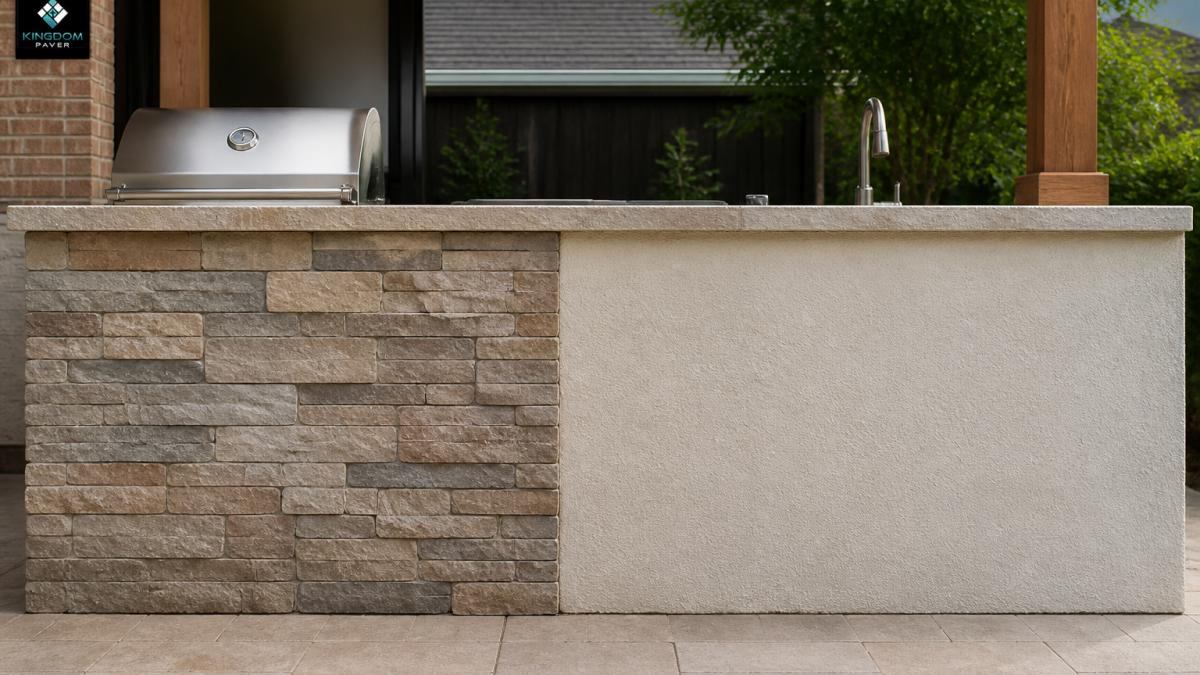
When building an outdoor kitchen island or barbecue surround, the choice between stone veneer vs stucco for outdoor kitchen finish determines how your space looks and performs for years. Both materials offer distinct advantages, but they excel in different scenarios. Stone veneer delivers the textured, high-end aesthetic of natural stone with engineered durability. Stucco provides a clean, modern monolithic finish with excellent fire resistance and color versatility.
The decision hinges on three factors: your budget, your aesthetic preference, and your long-term maintenance tolerance. Here’s what separates them in real-world installation and performance.
Aspect
Stone Veneer
Stucco
Material Cost
Higher ($5-$22 per sq ft)
Lower ($6-$12 per sq ft installed)
Installation Complexity
Moderate to high
Moderate
Weather Resistance
Excellent
Good (prone to cracking)
Heat Resistance
Superior
Good
Maintenance
Minimal
Moderate (periodic resealing)
Aesthetic Depth
High texture and dimension
Smooth or textured finish
Lifespan
25+ years
15-20 years
Best For
Premium finish, durability
Budget-conscious, modern look
Durability, Weather Resistance, and Heat Performance
Stone veneer and stucco handle outdoor conditions differently, and performance varies significantly by climate zone. Understanding how each material responds to specific environmental stressors is critical for long-term success.
Freeze-Thaw Cycle Performance
In regions experiencing freeze-thaw cycles (common in northern climates where winter temperatures drop below 32°F and thaw above freezing), stucco is more vulnerable. When moisture penetrates surface cracks and freezes within the cement matrix, ice expansion exerts outward pressure that widens cracks and accelerates deterioration. This cycle repeats seasonally, compounding damage year after year. Manufactured stone veneer resists this mechanism because the individual units are non-porous or low-porosity, and water cannot easily penetrate the stone itself. Mortar joints can still absorb moisture, but the veneer units themselves remain stable.
High-Humidity and Wet Climate Performance
In humid coastal regions, subtropical areas, or climates with frequent rain, both materials face moisture challenges, but differently. Stucco absorbs moisture through its porous finish coat, creating conditions for mold, algae, and efflorescence (white mineral deposits). The underlying substrate can retain moisture for extended periods, weakening the bond between coats. Stone veneer sheds water more effectively due to its sloped surface and mortar joints that channel water downward. However, if the moisture barrier behind the veneer fails, trapped water can damage the substrate and mortar. High-humidity climates demand rigorous waterproofing for both materials.
Arid and Desert Climate Performance
In low-humidity regions with intense UV exposure and temperature swings between day and night, both materials perform well. Stucco does not crack from moisture-related freeze-thaw cycles, and its lighter colors reflect heat, reducing surface temperature. Stone veneer maintains its color and structural integrity indefinitely. The primary concern in arid climates is thermal expansion and contraction, daily temperature swings of 40°F or more can stress mortar joints. Both materials require proper joint spacing and flexible mortar to accommodate movement. In deserts, neither material has a significant durability advantage; the choice becomes aesthetic and budgetary.
Heat Resistance Near Grills and Pizza Ovens
Manufactured stone veneer excels in direct heat exposure. The material absorbs and dissipates heat without degradation, even when exposed to grill temperatures of 400-600°F at close range. The mortar joints may discolor slightly over decades, but structural integrity remains unaffected. Stucco can handle moderate radiant heat (typical grill placement 18-24 inches away), but prolonged exposure to high temperatures causes micro-cracking in the finish coat and can lead to color fading or yellowing. If your outdoor kitchen includes a wood-fired pizza oven or high-output grill positioned close to the cladding, stone veneer is the more reliable choice. Stucco requires greater clearance distances and may need protective heat shielding.
Fire Resistance
Both materials are non-combustible and fire-rated. Stucco is inherently fire-resistant due to its cement composition, making it the preferred choice if fire safety is a primary concern (e.g., outdoor kitchen built adjacent to a wooden deck or structure). Stone veneer is equally fire-safe; the stone itself does not burn, and the mortar is non-combustible. Fire rating is not a differentiator between the two.
Stucco vs Stone Veneer Maintenance Requirements
Maintenance differences are significant. Stone veneer requires minimal upkeep, occasional cleaning with mild soap and water keeps it looking new.
Stucco demands more attention. The finish coat can absorb moisture, especially in areas with high humidity or frequent rain. Cracks, even small ones, can expand over time. Mold and algae growth is possible in damp climates, requiring periodic cleaning.
If you prefer a “set it and forget it” finish, stone veneer is the practical choice. If you’re willing to maintain your outdoor kitchen‘s cladding, stucco is manageable but requires vigilance.
Installing Stone Veneer on BBQ Islands and Outdoor Kitchens
Installation complexity differs between the two. Stone veneer application requires a substrate, typically concrete block, cement board, or metal stud framing, plus a moisture barrier and metal lath. Each piece is set in mortar, requiring skilled masonry labor. The process is slower but produces a durable, professional result.
Stucco installation is more straightforward. A base coat is applied over the substrate, followed by a finish coat. The application is faster, which reduces labor costs. However, achieving a uniform, professional appearance requires experience. Poorly applied stucco shows inconsistencies in texture and color.
Both materials demand proper substrate preparation. A moisture barrier is essential for outdoor kitchens exposed to rain and humidity. Without it, water infiltration can damage the underlying structure, regardless of whether you choose stone veneer or stucco.
For DIY-friendly projects, neither material is ideal. Both require professional installation to ensure longevity. Hiring a contractor familiar with outdoor kitchen construction, like the team at Kingdom Paver, ensures your cladding is properly installed with correct waterproofing and structural support.
Outdoor Kitchen Veneer Cost and Budget Considerations
Cost is where these materials diverge most. Stucco is cheaper upfront.
Stone veneer costs more. Manufactured stone ranges depending on the product line and complexity.
However, cost-per-year changes the math.
Aesthetic Appeal, Design Versatility, and Long-Term Repairability
Stone veneer wins decisively on visual impact and long-term repairability, two factors that compound in value over the life of an outdoor kitchen.
Aesthetic Depth and Design Options
Stone veneer creates dimension, texture, and character that stucco cannot replicate. The mortar joints add shadow lines that enhance visual depth, especially in afternoon sunlight. Color and profile variety is extensive: fieldstone (irregular, multi-colored), ledgestone (thin, stacked appearance), river rock (rounded, smooth), ashlar (geometric, cut-stone look), and custom blends. This range allows seamless integration with traditional, rustic, contemporary, or transitional home architectures. Manufactured stone veneer products offer a wide range of color options and profiles, enabling precise aesthetic matching.
Stucco offers a cleaner, more modern aesthetic. It can be painted any color and textured to match contemporary design preferences (smooth trowel finish, dash finish, or knockdown texture). If your home has minimalist, Mediterranean, or Southwestern style, stucco aligns naturally. The monolithic appearance is sleek and uncluttered. However, stucco’s visual impact relies heavily on color and finish quality; poorly applied stucco shows trowel marks, color inconsistencies, and texture variations that are difficult to hide.
Completed outdoor kitchen island with textured stone veneer cladding showing warm earth tones and varied surface texture, built-in stainless steel grill, granite countertop, and comfortable seating area in natural afternoon sunlight
Long-Term Repairability: A Critical Advantage for Stone Veneer
Repairability is where stone veneer’s long-term value becomes apparent. Outdoor kitchens experience heavy use, heat cycling, grease splatter, impact from tools or furniture, and weathering. After 5-10 years, damage is inevitable. Stone veneer repairs are invisible; a damaged unit can be carefully removed by chiseling out mortar, and a replacement stone set in fresh mortar blends seamlessly with surrounding pieces.
Stucco repairs are visible and problematic. Small cracks (hairline to 1/8 inch) can be sealed with flexible caulk, but this is a temporary fix that may need renewal annually. Larger cracks require patching with stucco compound, which almost always shows a color or texture mismatch.
Repair Cost and Timeline Comparison
Color Matching and Weathering
Which Material Should You Choose for Your Outdoor Kitchen?
Choose stone veneer if you prioritize durability, minimal maintenance, and premium aesthetics. It’s ideal for outdoor kitchens you plan to use for 20+ years. The initial cost is higher, but the finish outlasts stucco significantly.
Frequently Asked Questions
Is stone veneer more durable than stucco for outdoor kitchens?
Stone veneer generally offers superior durability and weather resistance for outdoor kitchen applications. Manufactured stone veneer resists UV fading, freeze-thaw cycles, and heat exposure better than stucco. Stucco can develop hairline cracks over time, especially if the underlying structure shifts or experiences freeze-thaw stress. However, both materials can perform well when properly installed over a moisture barrier and cement board substrate. The choice depends on your climate and maintenance commitment.
What is the difference in maintenance between stucco and stone veneer?
Stucco requires periodic resealing and repainting to prevent moisture infiltration and color fading. Cracks must be caulked promptly. Stone veneer is more maintenance-free; it rarely needs repainting and resists staining better. Mortar joints between veneer pieces may need occasional repointing if they crack or erode. Stone veneer’s textured surface can trap debris, requiring occasional pressure washing, while stucco’s smooth finish is easier to clean. Overall, stone veneer demands less active maintenance.
How much does stone veneer cost compared to stucco for an outdoor kitchen?
Stucco is the more budget-friendly upfront option, but stone veneer’s lower long-term maintenance and superior durability can offset the initial cost difference. Labor costs vary based on substrate preparation and local installation rates. Contact Kingdom Paver for a detailed quote tailored to your specific project size and material preferences.
Can you install stone veneer directly over concrete block or do you need special preparation?
Stone veneer requires proper substrate preparation for outdoor kitchens. Apply a moisture barrier and cement board over concrete block, then install a metal lath and scratch coat before applying mortar and veneer. This layered approach prevents water infiltration and allows the veneer to properly adhere. Stucco follows a similar base coat and finish coat process. Improper substrate preparation is the leading cause of veneer failure, so professional installation with attention to waterproofing is critical for long-term performance.
Ready to build the outdoor kitchen you’ve been imagining? Kingdom Paver handles the entire process, from selecting the right cladding material to professional installation with proper waterproofing and structural support. With a decade of experience serving the area, we deliver custom outdoor kitchens and fire pits built to last. Contact Kingdom Paver today for a consultation and quote.