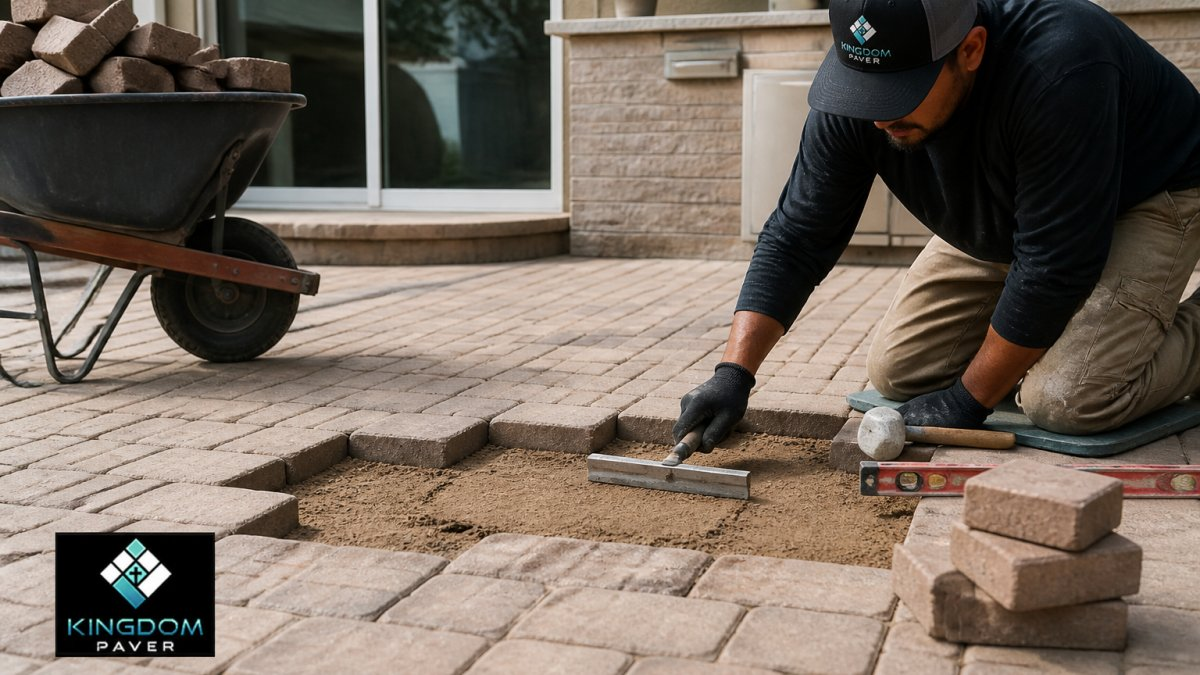
Sunken paver repair means lifting the affected pavers, scraping out the soft base, and rebuilding it with angular crushed stone compacted in 2-inch lifts before resetting the pavers on about 1 inch of bedding sand. Fix the cause first, whether that is water, soil movement, or a failed base, or the dip will return.
Mark the repair area one row beyond the visible low spot on each side.
Build pedestrian patio base 4 to 6 inches deep, measured after compaction.
Loose aggregate compacts by roughly 20 to 25 percent, so measure depth after compacting.
Run two to four plate compactor passes per lift at a steady walking pace.
Patios should slope 1/8 to 1/4 inch per foot away from the house.
Paver Patio Sinking Causes You Need to Diagnose First
Fixing sunken paver patio sections starts with one question: why did the surface drop? A low spot rarely appears without a cause, and lifting pavers before you know that cause almost guarantees the problem returns.
Paver patio sinking causes fall into three groups: water, soil, and base failures. Each one leaves a different signature.
Water, Soil, and Base Failures
Water is the usual suspect. Rain hits the patio, runs toward the house because the slope is wrong, and soaks into the base.
Soil movement works the same way, just slower. Clay-heavy soil expands when wet and shrinks when dry.
Base failures are the most common and the most missed.
Watch out: if you see a cracked paver or a joint washing out, the base below is likely already failing.
Tools and Materials for the Repair
You need a small set of tools for a typical sunken section repair. Most homeowners already own half of them.
Flat pry tool or paver extractor for lifting pavers without chipping edges
Rubber mallet for resetting pavers
Plate compactor (rentable) for compacting the base
Rent the plate compactor. A hand tamper alone won’t get base material dense enough, and loose base is the number one reason a repair fails.
Close-up of a homeowner’s hands using a flat pry bar to lift a paver from a patio, with a small stack of removed pavers and a bucket of sand nearby on a sunny day
Marking the Low Spot and Removing Pavers
Set a straightedge across the dip. Mark where the gap starts and ends, then add one row beyond it on each side.
Work from the edge of the repair area inward. Slide the pry tool under each paver and lift slowly. Stack the pavers in the order you remove them so they go back in the same pattern.
Rebuilding and Compacting the Base
Scrape out the loose, soft base material until you reach firm ground. Add crushed stone in thin layers, no more than 2 inches at a time. Compact each layer before adding the next.
Check the surface with your straightedge as you build up. The base should sit about 1 inch below the finished paver height to leave room for bedding sand.
Paver Base Repair: Depth, Gravel, and Compaction Specs
Paver base repair succeeds or fails on three numbers: depth, material, and compaction. Get them right and the section stays put. Get them wrong and the dip returns within a season.
Base Depth: Why 4 to 6 Inches Is the Starting Point
For a pedestrian patio, most practitioners specify 4 to 6 inches of compacted base. The lower end suits sandy or gravelly soil with good drainage; the upper end suits clay-heavy soil that holds water and moves with freeze-thaw cycles. Driveways and areas that take vehicle traffic need 6 to 8 inches. The number matters because base depth spreads the load: a thin base transmits foot traffic directly to soft subsoil, which is how a section settles unevenly.
Measure depth after compaction, not before. Loose aggregate compacts by roughly 20 to 25 percent, so a 2-inch loose lift becomes about 1.5 to 1.6 inches of compacted base. If you build to the finished number with loose stone, you will end up shallow.
Aggregate: Angular Crushed Stone, Not Rounded Gravel
Use crushed stone with angular edges, typically a graded aggregate such as crushed granite or trap rock. Angular faces interlock under compaction and resist lateral movement. Rounded river gravel rolls and shifts under load, which is why patios built on it settle early. A common specification is a well-graded base material with a mix of coarse and fine particles so the fines fill the voids between larger stones.
Compaction: Thin Lifts and Mechanical Effort
Compact each lift before adding the next. Two-inch lifts are the practical maximum for a plate compactor; thicker lifts leave loose material at the bottom that later settles.
Moisture helps. Bone-dry aggregate can stay loose; bone-wet aggregate turns to mud. Aim for damp, not soaked, a handful squeezed in your fist should hold shape without dripping.
After the base is compacted, add about 1 inch of bedding sand and screed it flat. The compacted base should sit roughly 1 inch below the finished paver height to leave room for that sand layer. Set the pavers, check the surface level with a straightedge, then seat each one with the rubber mallet. For a full breakdown of base layers and aggregate gradation, the paver installation guidance from the Interlocking Concrete Pavement Institute is a solid technical reference.
Pro Tip If you hit soft, dark, or wet soil while scraping out the old base, stop and diagnose. That is a drainage or subsoil problem, not a base problem, and new gravel over wet soil will sink again.
Soil-Type Caveats
Clay-heavy soil expands when wet and shrinks when dry, so a base that sits directly on clay can move even when compacted correctly. In that case, a geotextile separator fabric between the subsoil and the base helps keep fines from migrating and maintains drainage.
The base rebuild comes down to a few hard numbers for depth, material, and compaction.
Item
Value
Note
Compacted base depth, pedestrian patio
4 to 6 inches
Lower end for sandy or gravelly soil
Compacted base depth, driveways and vehicle areas
6 to 8 inches
Areas that take vehicle traffic
Maximum loose lift thickness
2 inches
Compact each lift before adding the next
Compaction shrinkage
Roughly 20 to 25 percent
Measure depth after compaction, not before
Aggregate type
Angular crushed stone
Rounded river gravel rolls and shifts
Plate compactor passes
Two to four per lift
At a steady walking pace
Bedding sand layer
About 1 inch
Compacted base sits about 1 inch below finished paver height
Fixing Drainage, Slope, and Edge Restraints
Water is what started the problem, so the repair has to send it somewhere else. A patio should slope away from the house at roughly 1/8 to 1/4 inch per foot. That is a small drop, about 1 to 2 inches over a 10-foot run, but it is enough to move surface water without making the patio feel tilted underfoot.
How to Measure Patio Fall
Set a 4-foot level on the pavers with one end against the house and check the bubble.
If the patio slopes toward the house, do not simply reset the low pavers, correct the base grade so the finished surface falls away. A patio that drains toward the foundation is a bigger problem than a sunken section.
Edge Restraints: The Hidden Cause of Lateral Movement
Edge restraints matter just as much as slope. Without a solid edge, pavers creep outward and joints open. That lets water in and starts the cycle again. Inspect the restraint along the repair area: look for loose spikes, cracked or tilted restraint, and gaps between the restraint and the pavers. Reset loose restraints and re-seat any that have pulled away.
Downspouts and Surface Water
Also check your downspouts. A downspout dumping water at the patio edge soaks the base all season. A simple downspout extension moves that water away and costs almost nothing. Look for other sources too: gutter overflow, a sump pump discharge, or a slope from the lawn that directs water onto the patio. The repair will not hold if water keeps arriving.
Watch Out If water pools against the house or the patio slopes toward the foundation, fix the drainage before resetting pavers. A surface-level reset over a drainage problem is a temporary fix.
Diagnosing Water as the Root Cause
Before you lift pavers, ask where the water goes. If the sunken section is at the low corner of the patio, near a downspout, or along the edge where water runs off, drainage is likely the cause. If the dip is in the middle of a flat area with no obvious water path, base compaction or soil movement is more likely.
Sunken Paver Repair Cost: DIY vs. Hiring a Pro
Sunken paver repair cost depends on how much base work the section needs and who does it. DIY repair means renting a compactor and buying base material and sand.
DIY makes sense when the sunken area is small, the cause is clear, and you can rent a compactor. Before you call anyone, review these tips for hiring local patio contractors.
One honest note: the cheapest quote often skips compaction or base depth. That’s how patios end up sunken again in two years.
Common Mistakes That Cause Repeat Settlement
Repeat settlement almost always traces back to one of these:
Skipping compaction between base layers
Using too little base because the old material looked fine
Replacing pavers on soft, wet soil without fixing drainage
Joint filling is the last line of defense. Polymeric sand hardens in the joints and blocks water. Skip it and the same section will sink again. To keep the problem from coming back, read how to prevent sinking pavers.
Get a Repair Assessment from Kingdom Paver
Some repairs are worth doing yourself. Others need a crew, a compactor, and someone who can read the drainage. If your patio has a large low spot, water pooling near the foundation, or a section that’s already been repaired once, that’s the point to call in help.
Kingdom Paver has spent 10 years building and repairing patios, driveways, and walkways in the Katy and Cypress area. We diagnose the cause before we lift a single paver, so the fix holds. Our team handles the full job, from base rebuild to joint sand. You can also browse our projects to see completed paver work.
Get started with Kingdom Paver and contact us for a repair assessment for your sunken patio section.
Frequently Asked Questions
Can I fix sunken pavers without removing the whole patio?
Yes. In most cases you only need to lift the pavers over the low spot plus one or two rows around it. Mark the sunken area, pull those pavers with a flat pry tool, repair and compact the base beneath them, then reset the same pavers on fresh bedding sand. The rest of the patio stays untouched, which keeps the job small and the cost down.
Why do sections of a paver patio sink in the first place?
The usual causes are water and base failure. Poor grading lets runoff pool under the pavers, washout carries away bedding sand, and soil movement or an under-compacted gravel base lets the surface settle. A missing or loose edge restraint also lets a course of pavers creep outward. Diagnosing which of these applies before you lift anything is what stops the same spot from sinking again.
How much does sunken paver repair cost?
Repair pricing depends on the size of the affected area, the cause, and whether the base needs a full rebuild. Kingdom Paver can give you an exact quote after assessing the sunken section.
What base material and depth should I use under patio pavers?
Use crushed stone or gravel compacted in lifts, topped with about 1 inch of bedding sand. A common specification is 4 to 6 inches of compacted base for a patio, deeper where the subsoil is soft or the patio takes heavy foot traffic. Compact each lift with a plate compactor before adding the next, and check the surface with a straightedge as you go.
A sunken patio section is a symptom, not the problem itself. Find the cause, rebuild the base right, and fix the drainage, and the repair lasts. Kingdom Paver brings 10 years of experience, custom building solutions, and affordable pricing to every assessment. Contact us to schedule yours and get your patio back to level.