
Last Updated: November 27, 2026
Quick Summary
You maintain an outdoor gas fire pit by cleaning the burner and ports, checking gas lines and ignition parts, covering it between uses, and winterizing it before cold weather. This routine keeps your gas fire pit lighting fast and burning clean all year.
- Clean burner ports with a soft brush or paper clip, and never enlarge a port with a drill bit.
- Run a soapy-water leak check monthly during burn season, mixing one part dish soap to three parts water.
- Cover the pit after each use once it cools to keep leaves and rain out.
- Disconnect and store portable propane tanks upright, outdoors, and away from heat for winter.
- A dirty or misaligned electrode is the usual reason a pit clicks but won’t light.
Table of Contents
- How Do You Maintain an Outdoor Gas Fire Pit?
- Routine Cleaning and Debris Removal
- How to Clean a Gas Fire Pit Burner
- Checking Gas Lines, Connections, and Ignition Components
- Outdoor Fire Pit Seasonal Maintenance
- Gas Fire Pit Winter Care and Off-Season Storage
- How Long Does a Propane Tank Last in a Fire Pit?
- Troubleshooting Common Fire Pit Problems
- Frequently Asked Questions
How Do You Maintain an Outdoor Gas Fire Pit?
You maintain an outdoor gas fire pit by cleaning the burner and ports, checking gas lines and ignition parts, covering it between uses, and winterizing it before cold weather. This guide covers the full routine so your fire pit lights fast and burns clean all year.
A gas fire pit is a permanent or portable outdoor feature that burns propane or natural gas through a burner pan and decorative media. It needs less work than a wood pit, but it still needs a schedule.
Below, you’ll find how to maintain an outdoor gas fire pit, step by step.
Routine Cleaning and Debris Removal
Start with the simplest job: get the junk out. Debris is the number one cause of weak flames and clogged ports. Leaves, ash, and spider webs collect in the burner pan and block airflow.
Do this before every season and after heavy use:
- Turn off the gas and let the unit cool completely
- Lift out fire media and set it aside in a bucket
- Scoop out leaves, twigs, and loose ash with a gloved hand
- Wipe the pan with a dry cloth
- Check the drain holes or weep holes for blockages
A common mistake is hosing the whole unit down. Water traps in the pan and speeds up rust. Keep water exposure to a minimum.
Cleaning the Fire Pit Surface and Burner Pan
Wipe the exterior with a soft brush and mild soapy water, then dry it right away. Stone and paver surrounds hold moisture, so dry them thoroughly to prevent stains.
Stone fire pit maintenance in Texas weather covers how to protect the surrounding masonry through heat, humidity, and heavy rain.
How to Clean a Gas Fire Pit Burner
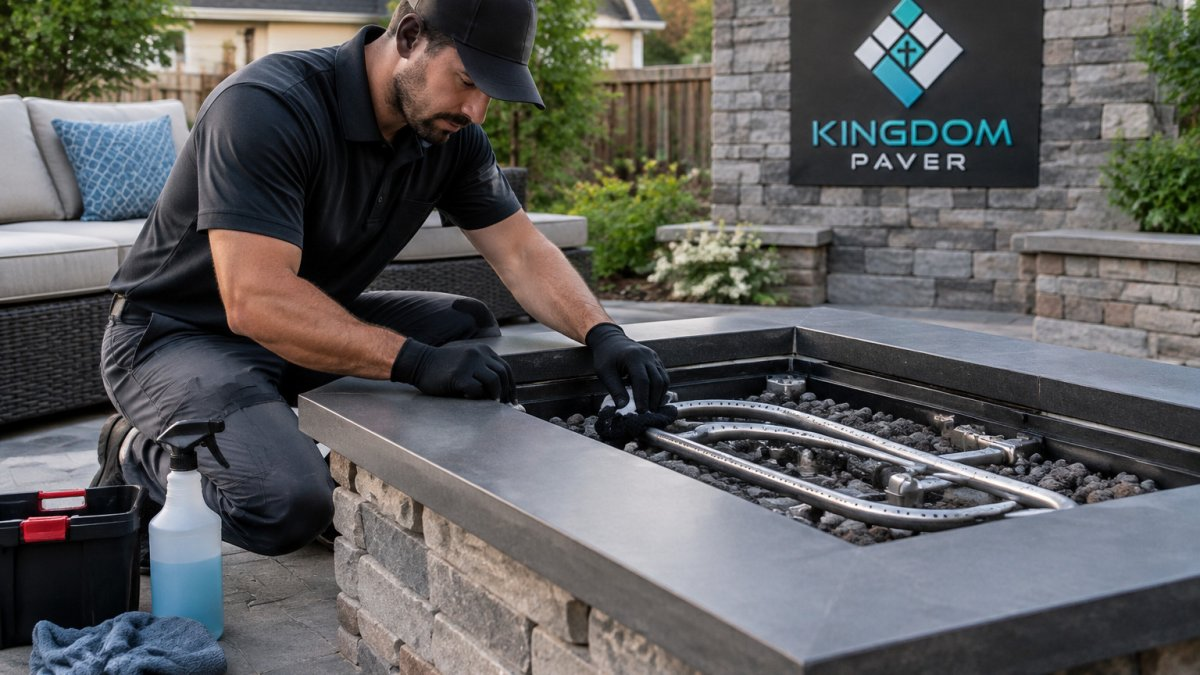
Cleaning a gas fire pit burner means clearing every port so gas flows evenly. Here is the process:
- Shut off the gas supply at the tank or the shutoff valve
- Remove the fire media and set it aside
- Lift out the burner and inspect the ports
- Scrub each port with a soft brush or wire brush
- Clear stubborn clogs with a paper clip or pin
- Wipe the burner with a dry cloth and reinstall it

The woman is American.
Never enlarge a port with a drill bit. That changes the gas-to-air mix and can cause a dangerous flame.
Inspecting Burner Ports for Clogs and Corrosion
Look for rust, flaking metal, and uneven color on the burner. Corrosion narrows ports and causes a sputtering flame. Replace a burner that shows heavy rust or cracks. It’s a cheap part and a cheap fix.
Checking Gas Lines, Connections, and Ignition Components
Gas lines and connections deserve a real inspection, not a glance. Do this monthly during the burn season and again at spring startup.
Inspect the hardware first:
- Run a hand along the hose or supply line and feel for cracks, stiffness, or kinks
- Check that fittings are snug, not cross-threaded, and free of corrosion
- Look at the regulator for dents, debris in the vent, or a loose connection
- Confirm the air shutter and vent openings are clear of spider webs and insect nests
Run a soapy-water leak check:
- Mix one part dish soap to three parts water in a spray bottle
- Turn the gas on slowly at the tank or shutoff valve, with the burner off
- Coat every connection, the regulator, and the shutoff valve
- Watch for growing bubbles, which indicate escaping gas
- Tighten the fitting a quarter turn and retest
- If bubbles persist after one retighten, shut the gas off at the source and call a licensed technician
Fuel-specific differences:
- Propane: Check the tank-to-regulator connection and the hose for cracking; keep the tank upright and never store it indoors or near heat. A regulator that trips after a rapid tank swap is common, close the valve, wait a few minutes, and reopen slowly.
- Natural gas: Check the shutoff valve and the flexible connector to the burner; know where the main shutoff is and confirm it turns freely. Supply-line work and any pressure adjustment belong to a licensed technician.
Ignition components: Clean the electrode and thermocouple with a dry cloth and check the spark gap against the manufacturer’s spec, a dirty or misaligned electrode is the usual reason a pit clicks but won’t light.
For local rules on hookups and clearances, review the gas fire pit installation requirements in Katy.
Per U.S. Consumer Product Safety Commission guidance on outdoor fuel-burning products, always operate a gas appliance outdoors and away from flammable materials.
Outdoor Fire Pit Seasonal Maintenance
Outdoor fire pit seasonal maintenance works best as a schedule, not a scramble. Use four checkpoints, after each use, monthly, seasonal startup/shutdown, and annual service, so small jobs never pile into one spring repair.
After each use (2 minutes):
- Turn the gas off at the tank or valve
- Let the unit cool completely before covering
- Cover the pit to keep leaves and rain out
- Clear any debris that landed on the media or pan
Monthly during the burn season (15 minutes):
- Lift the media and check the burner ports for clogs
- Brush the ports and wipe the pan dry
- Inspect the hose, fittings, and regulator
- Run a soapy-water leak check at the connections
- Test the ignition and confirm a steady flame
- Clear the surrounding area of flammable materials
Spring startup checklist:
- Clear debris from the pan and ports
- Inspect the hose and connections
- Run a soapy water leak check
- Test the ignition
- Clean the fire media
- Confirm clearance from furniture and plants
Fall shutdown checklist:
- Deep-clean the burner and pan
- Dry all parts fully
- Cover the unit
- Store portable tanks safely
Annual service (once a year, before the season):
- Have a qualified technician inspect the gas supply, regulator, and ignition system
- Replace a burner that shows heavy rust or cracks
- Replace a cracked hose or worn regulator rather than patching it
- Recheck clearances if furniture, fencing, or plantings have moved
Cleaning fire media is part of both seasonal checkpoints. Rinse lava rock and fire glass in a bucket, spread them on a towel, and let them dry in the sun before they go back in. Replace media that is cracked, chipped, or coated with soot that won’t rinse off.
Material-specific care:
- Stainless steel: Wipe with mild soapy water and dry immediately; avoid abrasive pads that scratch the finish
- Painted metal: Use a soft cloth and mild soap; touch up chips before rust starts
- Stone and concrete surrounds: Dry thoroughly after cleaning to prevent stains and freeze-thaw damage
- Burner pans: Keep weep holes clear and never let water stand in the pan
Weather and climate notes:
- Rain and humidity: Use a fitted cover that sheds water rather than trapping it, and check after storms
- Snow and freeze-thaw: Disconnect portable tanks, cover the unit, and confirm no water sits in the pan before a freeze
- Coastal salt air: Rinse exterior metal with fresh water and dry it promptly; inspect for corrosion more often
If your fire pit sits beside an outdoor kitchen, the same cold-season care applies to both. Our outdoor kitchen maintenance tips for longevity cover the appliances nearby.
Gas Fire Pit Winter Care and Off-Season Storage
Gas fire pit winter care comes down to one rule: keep moisture out. A wet burner pan rusts fast, and a rusted pan is the start of every spring problem.
- Cover the pit with a fitted protective cover
- Make sure the cover sheds water and doesn’t trap it
- Disconnect and store portable propane tanks upright, outdoors, and away from heat
- Shut off the natural gas line at the valve
- Check the cover after storms
If your fire pit sits beside an outdoor kitchen, the same cold-season care applies to both. Our outdoor kitchen maintenance tips for longevity cover the appliances nearby.
How Long Does a Propane Tank Last in a Fire Pit?
Propane tank runtime varies with flame height, wind, and burner size.
A few habits stretch runtime:
- Run a lower flame on mild nights
- Shield the pit from wind
- Keep the burner ports clean for efficient burn
- Store a spare tank for long evenings
If you’re still weighing the cost of ownership, our homeowner review of whether outdoor fire pits are worth it walks through the upkeep side.
Troubleshooting Common Fire Pit Problems
Most fire pit problems trace to three things: a clogged port, a dirty ignition part, or a gas supply issue. Match the symptom to the fix.
| Symptom | Likely Cause | Fix |
|---|---|---|
| Weak or uneven flame | Clogged burner ports | Clean ports with a brush or pin |
| Clicks but won’t light | Dirty or misaligned electrode | Clean the electrode and reset the gap |
| Flame goes out | Low gas or a tripped regulator | Check the tank and reset the regulator |
| Yellow, lazy flame | Blocked airflow or dirty media | Clean the pan and rinse the media |
Watch out: a strong gas smell with no flame means stop. Shut the gas off, don’t relight, and call a professional.
If you’re planning a new build or a design refresh, our custom fire pit design ideas for your Katy backyard show how to match the pit to your patio and stonework.
Maintaining a gas fire pit is a short list of small jobs done on a schedule. Skip them, and you’ll spend spring fighting clogs, rust, and weak flames. Kingdom Paver builds custom outdoor kitchens and fire pits for homeowners in Katy and Cypress, with a decade of experience.
Frequently Asked Questions
How often should you clean an outdoor gas fire pit?
Give the fire pit a light surface cleaning and debris removal before each use, and do a deeper clean every two to three months during the burn season. If you live around trees that drop leaves or in a windy area, check the burner pan and ports monthly. A full inspection of gas lines, connections, and ignition components once a year keeps the system safe and the flame pattern even.
Do gas fire pits need maintenance in winter?
Yes. Gas fire pit winter care matters even when the pit sits unused. Disconnect the propane tank or shut off the natural gas line, clean out debris, and cover the unit with a protective cover that vents moisture. In freezing weather, trapped water can crack fire glass and corrode burner parts. Check the cover after storms and remove any standing water so the fire pit is ready for seasonal startup in spring.
How long does a propane tank last in a fire pit?
Propane tank runtime depends on the burner’s BTU rating and flame setting. Higher output burners drain the tank faster. Keep a spare tank on hand for gatherings, and store it upright in a well-ventilated area away from the fire pit. A tank that empties much faster than usual can signal a clogged burner or a leak worth checking.
What causes a gas fire pit to produce an uneven flame?
Uneven flames usually trace back to clogged burner ports, debris in the burner pan, or moisture in the gas line. Turn off the gas supply, let the components cool, and clear the ports with a soft brush or wire brush. Check that lava rock or fire glass is not blocking the ports. If the flame pattern stays weak or sputters after cleaning, perform a soapy water leak check on the connections and call a professional if you find a leak.


