
Table of Contents
- Stone Fire Pit Maintenance in Texas Weather: What Actually Matters
- How to Clean a Stone Fire Pit After Every Burn
- Inspecting Stone and Mortar for Cracks and Wear
- How to Seal a Stone Fire Pit for Long-Term Protection
- How to Protect a Fire Pit From Rain and Freeze-Thaw Damage
- Your Fire Pit Maintenance Schedule, Season by Season
- Troubleshooting Stone Damage: When to Repair and When to Call a Pro
- Frequently Asked Questions
Last Updated: October 19, 2026
Stone Fire Pit Maintenance in Texas Weather: What Actually Matters
A stone fire pit in Texas takes a beating that most maintenance guides never account for.
This guide covers how to maintain a stone fire pit in Texas weather, step by step. Below, we will show you exactly how to clean, inspect, seal, and protect your pit through every season.
Stone fire pit maintenance is the routine of clearing ash, checking mortar and stone for damage, sealing surfaces, and shielding the structure from moisture and temperature swings.
The single biggest killer of stone fire pits in this climate is trapped moisture, not fire. Water soaks into stone and mortar, then expands when temperatures drop. That freeze-thaw cycle is what cracks joints and spalls surfaces.
How to Clean a Stone Fire Pit After Every Burn
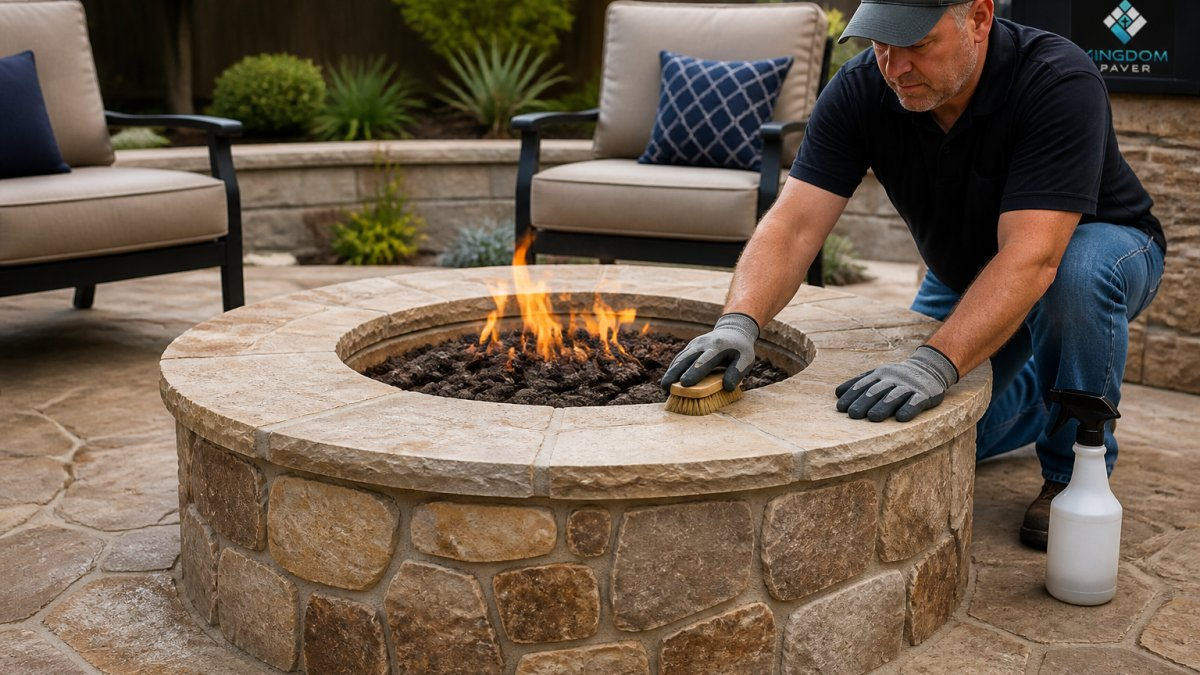
Cleaning a stone fire pit starts with one rule: never touch it until the fire is completely out and the stone is cool. That usually means waiting at least 24 hours after your last burn.

Removing ash, soot, and debris safely
Wait for full cooldown, then work in this order:
- Scoop out bulk ash with a metal shovel or scoop. Leave a thin layer on the fire bowl floor as a natural base.
- Sweep soot off the stone rim and interior walls with a stiff brush.
- Clear leaves, twigs, and debris from around the base and any nearby joints.
- Dump ash into a metal container, never a plastic bag or trash can.
A common mistake is dumping ash while it still holds heat. Embers can stay live under ash for a full day. Store the container away from your house for at least 48 hours before disposal.
Choosing a cleaning solution that won’t damage stone
Most stone fire pits need nothing stronger than warm water and a mild dish soap. Mix a few drops into a bucket of water, scrub with a soft brush, and rinse.
Skip muriatic acid unless a masonry professional tells you otherwise. It can etch stone, eat mortar, and burn skin. For soot stains, a paste of baking soda and water works well and stays safe for most stone surfaces.
Never power-wash a stone fire pit. High pressure forces water into mortar joints and hairline cracks, which is exactly how freeze-thaw damage starts.
Inspecting Stone and Mortar for Cracks and Wear
Inspect your stone fire pit twice a year, plus after any big storm. Walk the full structure with a flashlight and check for three things:
- Cracks in the stone wider than a hairline
- Crumbling or missing mortar between stones
- Loose bolts or fittings on screens, doors, and lids
- Rust on metal inserts, grates, or the fire ring
- Spalling, where stone faces flake or peel
Small hairline cracks in mortar are normal and easy to patch. Cracks that run through a stone block, or joints you can push a screwdriver into, need real repair. Loose components should be tightened or replaced before the next burn.
If you spot a crack that worries you, stop burning until it is fixed. A cracked fire bowl can let heat reach parts of the structure that were never built for it.
How to Seal a Stone Fire Pit for Long-Term Protection
Sealing is the step most homeowners skip, and it is the one that matters most here. A good sealer blocks liquid water from soaking into stone and mortar while still letting vapor escape, which is the root of most weather damage. The wrong sealer, a film-forming coating that traps moisture, can be worse than no sealer at all.
Match the sealer to the stone
Not every stone takes the same product. Before you buy, identify what your pit is built from:
- Limestone and sandstone are porous and softer. They need a breathable, penetrating siloxane or silane sealer. Avoid film-forming acrylics, which can trap moisture and haze the surface.
- Granite is dense and less absorbent. A penetrating sealer still helps at the mortar joints and any sawn faces, but expect lower absorption and longer reapplication intervals.
- Manufactured or cast stone varies by manufacturer. Check the product literature first; some cast products are pre-sealed and should not be coated again until the factory finish wears.
- Mortar joints are the most absorbent part of any stone pit and should be treated along with the stone.
A common pattern among masons is to test a small hidden area, the back of a block or the underside of a rim, before committing to the whole structure. Apply a sample, let it cure, and check that the color and texture are acceptable.
Surface preparation and application
- Clean the pit fully and let it dry for at least 48 hours. Sealer applied over damp stone traps moisture.
- Check the forecast. You want two dry days with mild temperatures and no rain in the window; most labels specify a minimum and maximum application temperature.
- Choose a breathable, penetrating masonry sealer, not a film-forming coating. Breathable sealers let trapped moisture escape.
- Apply with a brush or low-pressure sprayer, following the product label. Work in thin, even coats rather than one heavy pass.
- Recoat according to the label, usually within a few hours while the first coat is still tacky.
- Let it cure fully before the next fire, often several days. Cure time matters more than dry time.
Reapplication intervals and testing
Most practitioners find a breathable sealer on a stone fire pit needs refreshing every 12 to 24 months, with porous stone like limestone and sandstone at the shorter end and dense granite at the longer end. Rather than guessing, test with water: sprinkle a few drops on a vertical face. If it beads and rolls off, the seal is holding. If it soaks in and darkens the stone, it is time to reseal.
Do not seal the inside of the fire bowl. Sealer on the burn surface can smoke, smell, or burn off. Seal the exterior and rim only.
Never apply a sealer over a dirty, sooty, or damp surface, and never use a film-forming coating on exterior stone in this climate. Trapped moisture is what drives spalling and joint failure.
How to Protect a Fire Pit From Rain and Freeze-Thaw Damage
Water is the enemy, and this climate delivers it in bursts, heavy spring rains, humid summer air, and the occasional hard freeze that turns trapped moisture into expanding ice. Protecting a stone fire pit is mostly about managing where water goes and giving it a way out.
Drainage and moisture management
- Keep the base clear. Soil, mulch, and leaf litter piled against the base hold moisture against the stone and mortar. Maintain a clear band around the structure.
- Confirm the pit sits on level, well-draining ground. If water pools at the base after rain, regrade or add drainage rather than waiting for it to soak away.
- Watch the joints. Mortar joints wick water into the structure. Any joint you can push a screwdriver into is a channel for moisture and should be repointed before the rainy season.
- Let the stone breathe after rain. Remove the cover on the first dry day so trapped humidity can escape instead of sitting on the surface.
Cover strategy
A fitted, breathable cover is the simplest protection you can buy. Use it whenever the pit is not in use, and make sure it sheds water rather than pooling it. A cover that collects water in a sagging center is worse than none, it keeps the stone wet and adds weight that can stress the rim. Brush off standing water after storms and let the cover dry before replacing it.
Hail, intense sun, and heat
Hail can chip rims and spall soft stone faces. After a hailstorm, inspect the rim and any exposed blocks for fresh chips and check that no fragments landed in the bowl. Intense summer sun bakes mortar and can accelerate surface fading on some stone; a breathable sealer helps, and shade from nearby plantings or a pergola reduces direct exposure on the most exposed faces.
Freeze-thaw protection
Freeze-thaw damage happens when water in cracks and pores expands as it turns to ice. It pushes stone apart from the inside. Before a freeze warning:
- Make sure no water is pooled in the bowl or on flat surfaces.
- Confirm the cover is secure and shedding water, not collecting it.
- Check that drainage away from the base is clear.
- Do not seal or patch during a freeze window; wait for mild, dry weather.
Sealing and drainage are your two best defenses. A pit that stays dry inside its pores has little to freeze.
Gas fire pit components
For gas fire pits, disconnect and store the propane tank safely, and cover the burner and fire glass so moisture does not sit on the components. Check the burner ports and igniter after heavy rain before the next use.
The goal is not to keep the pit perfectly dry, it is to make sure water that gets in can get back out before temperatures drop. Drainage, breathable sealing, and a cover that sheds water do most of that work.
Your Fire Pit Maintenance Schedule, Season by Season
A simple calendar keeps the work small. Here is the schedule we give our clients:
| Season | Key Tasks | Frequency |
|---|---|---|
| After every burn | Clear ash, sweep soot, cover the pit | Each use |
| Monthly | Full visual inspection, tighten loose parts, clear debris | Monthly |
| Spring | Deep clean, check winter damage, patch mortar | Once |
| Early fall | Reseal stone, replace rusted parts, prep for rain | Once |
| Before freezes | Confirm drainage, secure cover, drain pooled water | As needed |
Write it down or set phone reminders. A pit that gets a little attention every month rarely needs major repair.
Troubleshooting Stone Damage: When to Repair and When to Call a Pro
Some damage you can fix yourself. Some you should not touch.
DIY-friendly fixes:
- Repointing small mortar cracks with masonry patch
- Wire-brushing surface rust and recoating metal parts
- Replacing a worn cover or loose screen
Call a professional when you see:
- Cracks running through stone blocks
- A fire bowl or fire ring that has shifted or tilted
- Widespread spalling or crumbling across the structure
- Any damage near a gas line or burner assembly
Stone damage gets worse fast once water is inside. A small crack patched this month is cheap. A rebuilt fire bowl next year is not.
A stone fire pit rewards a little routine with years of reliable service, but Texas weather will find every weak joint if you let it.
Frequently Asked Questions
How often should you clean a stone fire pit?
Empty the ash after every two or three burns, or whenever the ash layer reaches about an inch deep. Deep ash blocks airflow and makes fires burn unevenly. Give the stone and fire bowl a fuller scrub once a month during heavy use, and do a complete deep clean at the start and end of each season. In Texas, where summer entertaining can mean weekly fires, monthly scrubbing keeps soot from staining porous stone.
Should you seal a stone fire pit?
Yes, sealing is worth it for most stone fire pits. A breathable masonry sealer slows water absorption, which is the main cause of cracks and mortar breakdown during Texas rain and occasional freezes. Seal only fully cured, clean, dry stone, and reapply every 12 to 24 months depending on exposure. Avoid film-forming products that trap moisture.
How do you protect a stone fire pit from rain?
Fit a fitted, waterproof cover once the fire pit is completely cool, and tilt it so water runs off instead of pooling. Keep the surrounding patio graded so water drains away from the base, and clear debris from any drainage channels. During storm season, check the cover after heavy rain and remove standing water from the fire bowl. A covered fire pit stays drier, which limits soot staining and freeze-thaw cracking.
Can heat or sudden temperature changes crack fire pit stone?
Yes. Rapid temperature swings, like a hot fire followed by cold rain, stress stone and mortar. Trapped moisture is the bigger risk: water inside porous stone expands when it freezes and can crack the surface. Build moderate fires, avoid dousing a hot fire pit with water, and let the fire pit cool completely before covering it. Sealing and covering between uses reduce how much moisture gets in.


