
Table of Contents
- The Verdict: Are Outdoor Fire Pits Worth It in 2026?
- Portable Fire Pits vs. Built-In Features: A Side-by-Side Comparison
- How Much Does a Backyard Fire Pit Cost?
- Fire Pit Installation Requirements You Need to Know
- Custom Fire Pit Design Ideas That Fit Your Backyard
- Do Fire Pits Increase Home Value and Resale Appeal?
- Insurance, Liability, and Maintenance: The Hidden Costs
- Frequently Asked Questions
Last Updated: September 20, 2026
The Verdict: Are Outdoor Fire Pits Worth It in 2026?
For most homeowners, outdoor fire pits are worth it: they extend backyard use into cooler months and add a focal point patios and decks often lack. But “worth it” depends on how you build and where you live.
An outdoor fire pit is worth it when you use it at least twice a month and you plan to stay in the home for several years. If either condition fails, a portable unit is the smarter buy.
Who Gets the Most Value From a Fire Pit
Families who entertain regularly see the clearest return. A fire pit turns a patio into a destination after dark and works in spring, fall, and mild winter evenings, not just summer. Households with kids also get a gathering spot that keeps people off screens and outside.
Portable Fire Pits vs. Built-In Features: A Side-by-Side Comparison
Portable fire pits win on cost and flexibility; built-in features win on permanence, resale appeal, and patio integration. The choice comes down to whether you’re furnishing a space or constructing one.
| Factor | Portable Fire Pit | Built-In Fire Feature |
|---|---|---|
| Typical upfront cost | Low to moderate | High, project-based |
| Installation | None, set it down | Requires masonry, gas, or both |
| Portability | Moves anywhere | Fixed in place |
| Fuel options | Wood, propane | Propane, natural gas, wood |
| Maintenance | Empty ash, cover it | Clean burners, inspect stone |
| Resale impact | Minimal | Can add measurable appeal |
| Best for | Renters, small patios | Long-term owners, entertaining |
A built-in wood-burning pit placed under a covered patio or near low tree limbs creates a real fire risk. Check clearances before you finalize the design, not after the masonry is set.
How Much Does a Backyard Fire Pit Cost?
Backyard fire pit cost splits into two ranges. A portable unit is a one-time purchase you carry home; a built-in feature is a construction line item including materials, labor, fuel connections, and surrounding hardscape.
| Category | Typical upfront cost | What drives the number |
|---|---|---|
| Portable wood-burning bowl | $75-$300 | Steel gauge, size, included spark screen |
| Portable smokeless unit | $250-$600 | Double-wall design, brand, accessory bundle |
| Portable propane table | $150-$500 | BTU output, table finish, ignition type |
| Built-in gas or propane pit | $1,500-$6,000 | Burner, surround material, gas line run |
| Built-in wood-burning pit | $1,000-$4,000 | Masonry, fire-rated base, cap stone |
| Full hardscape package | $6,000-$20,000+ | Seating wall, paver apron, lighting, landscaping |
Total Cost of Ownership Over Five Years
Think past the purchase price. A fire pit’s five-year cost includes fuel, covers, cleaning, and hardscape repairs. Here’s how the categories stack up over five years of regular use, twice a month in season, roughly 60 to 80 sessions.
- Portable wood unit: $75-$300 upfront, plus firewood at roughly $5-$8 per bundle or $200-$400 per cord. At two fires a month you’ll burn several cords over five years, so budget $600-$1,500 in fuel, plus $30-$60 for a cover. Total five-year cost: roughly $700-$1,900.
- Portable propane unit: $150-$500 upfront. A 20-pound tank refill runs about $20-$25 and delivers roughly 8-10 hours of burn at moderate output. Two fires a month at three hours each means about 7-8 refills a year, or $150-$200 annually. Five-year fuel cost: $750-$1,000. Total: roughly $900-$1,500.
- Built-in gas feature: $1,500-$6,000 installed, plus natural gas consumption most homeowners barely notice, often $5-$15 a month in heavy-use months. Add $100-$200 a year for burner inspection and cleaning if you hire it out. Five-year total: roughly $2,000-$7,500.
- Built-in wood feature: $1,000-$4,000 installed, plus the same firewood math as the portable wood unit ($600-$1,500 over five years) and more frequent surround cleaning because ash and creosote stain stone. Five-year total: roughly $1,800-$6,000.
If you’ll use the pit fewer than 20 times a year, a portable wood or propane unit almost always wins on five-year cost. If you’ll use it weekly and stay in the home, a built-in gas pit spreads its installation cost across enough sessions to come out ahead on convenience per dollar.
Current residential natural gas rates by state
Fire Pit Installation Requirements You Need to Know
Fire pit installation requirements vary by fuel type and location, but every project needs a level, stable base, clearance from structures and overhanging branches, and a surface that won’t scorch or crack under heat.
HOA Rules and Local Ordinance Navigation
Many master-planned communities restrict open burning, set quiet hours, or require approval before adding a permanent hardscaping feature. Some prohibit wood-burning pits outright, allowing only gas or propane.
Ask your HOA for written approval before construction starts, not after. A one-page approval letter prevents a much more expensive removal later.
Custom Fire Pit Design Ideas That Fit Your Backyard
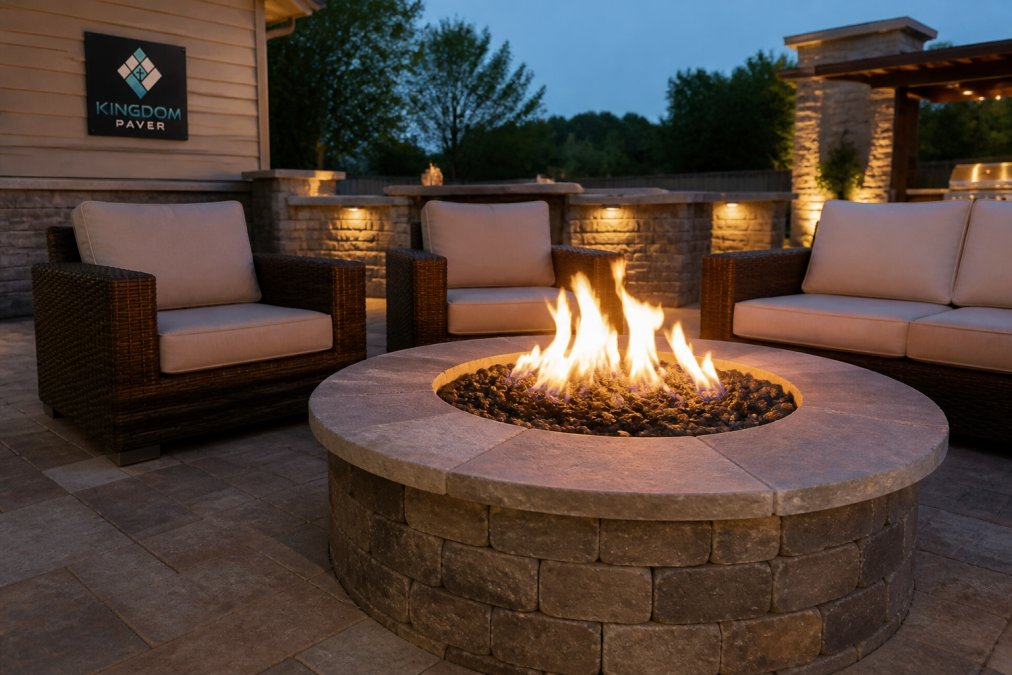
The best custom fire pit design ideas start with how you actually use the space, not a photo from a design app. A pit for two on a small patio looks nothing like one built for a crowd.

Do Fire Pits Increase Home Value and Resale Appeal?
Fire pits can increase home value, but the effect is indirect. Appraisers don’t assign a fixed dollar figure the way they might to an extra bathroom; a well-built pit contributes to the impression of a finished, usable outdoor living space, which is what buyers pay for.
A fire pit supports resale appeal most when it’s part of a cohesive patio design. A standalone pit in an unfinished yard adds little.
Insurance, Liability, and Maintenance: The Hidden Costs
This is the part most guides skip, and it flips “worth it” to “not worth it” for some homeowners. Your policy may not specifically exclude a fire pit, but an open flame feature can affect coverage or premiums depending on fuel type and construction. Call your agent before you install, not after.
How a Fire Pit Touches Your Homeowners Policy
A few patterns show up again and again:
- Disclosure matters. Most standard policies don’t require you to report a portable fire pit, but a permanent built-in feature, especially one tied to a gas line, is the kind of improvement an insurer expects reflected in your dwelling coverage. Underinsuring an added structure can leave you short at claim time.
- Fuel type changes the risk profile. Open wood-burning pits generate floating embers and ash, the exposure insurers care about most. Gas and propane units burn clean with no ember throw, and most carriers treat them as lower risk.
- Placement can trigger a surcharge or a rider. A pit within a certain distance of the home, a detached garage, or a wood fence raises the loss exposure. Some carriers ask about it on a renewal questionnaire; others only find out after a claim.
- A separate rider is sometimes the answer. If your carrier is uneasy about an open wood pit, ask whether a scheduled personal property rider or an endorsement can cover it rather than dropping the feature entirely.
The practical move: call your agent, describe the fuel type, distance from any structure, and whether it’s portable or built-in, and get the answer in writing. A five-minute call beats discovering a coverage gap after a fence fire.
Liability Exposure Beyond Your Own Yard
Liability matters too. An open wood fire near a fence line, low tree canopy, or structure increases risk; gas and propane units reduce it because there’s no floating ember and no ash to dispose of.
Never leave a wood-burning fire unattended, and keep a spark screen in place whenever the pit is lit. Most liability disputes after a fire pit incident turn on whether basic precautions were followed.
Maintenance: The Quiet Recurring Cost
Maintenance is the quieter cost. Wood-burning pits need regular ash removal and a cover to keep moisture out; gas burners need periodic cleaning so ports don’t clog; stone surrounds need the same care as any paver surface, seal, clean, and address cracks before water gets in and freezes.
A realistic annual maintenance budget:
-
Wood-burning: 15-30 minutes of ash cleanup after every few fires, a $30-$60 cover, and an annual inspection of the fire-rated base and surround.
-
Gas or propane: burner port cleaning once or twice a season, a cover, and a professional burner inspection every year or two to protect the warranty.
-
Stone or paver surround: resealing every 2-3 years, plus crack repair before freeze-thaw cycles.
-
Confirm coverage with your insurance agent before installation
-
Get the fuel type and placement cleared in writing
-
Check HOA covenants and local burn rules
-
Choose a fuel type that matches your maintenance tolerance
-
Set the pit on a heat-rated, level base
-
Keep a cover on hand to protect it between uses
-
Schedule annual burner or surround inspections
Frequently Asked Questions
Does a backyard fire pit increase home value?
A built-in fire pit can add measurable resale appeal, especially in markets where outdoor living space is a priority. Appraisers often view permanent hardscaped features as part of the property’s overall landscaping investment. Portable fire pits typically do not add value because buyers see them as removable furniture. For the strongest return, integrate the fire pit into a patio or outdoor kitchen so it reads as a permanent upgrade rather than an accessory.
Does having a fire pit increase your insurance?
It can. Many homeowners insurance policies require you to disclose permanent fire features, and some carriers raise premiums or add exclusions for wood-burning units. Gas and propane fire pits usually have less impact because they lack open flames and flying embers. Before installing, call your insurer to confirm coverage and ask whether a spark screen, cover, or distance-from-structure requirement applies. Liability coverage matters most if guests gather around the fire.
What are the maintenance requirements for a permanent fire pit?
Permanent fire pits need seasonal attention. Wood-burning units require ash removal after every few burns, plus annual inspection of the fire brick, mortar, and spark screen for cracks. Gas and propane models need burner cleaning, lava rock replacement every few years, and a cover to protect the ignition system from rain. In humid climates, stone and masonry surrounds should be sealed periodically to prevent weather damage and preserve the finish.
How do custom fire pits compare to portable fire bowls?
Custom fire pits are built into your hardscaping, so they add resale value, anchor the patio layout, and offer a larger heat coverage area. They cost more upfront and require professional installation. Portable fire bowls cost far less, can move with you, and need no permits. The trade-off is heat radius, stability, and permanence. If you entertain often and plan to stay in your home, a custom build usually delivers better long-term value.
Are outdoor fire pits still a popular landscaping trend?
Yes. Fire pits remain a top request in backyard renovation projects because they extend the usable season for outdoor living space. Smokeless technology, propane gas, and natural gas options have made them cleaner and easier to use than traditional wood-burning pits. Homeowners increasingly pair them with hardscaping, seating walls, and outdoor kitchens, turning the fire pit into the focal point of the yard rather than a standalone purchase.


