
Last Updated: November 25, 2026
Quick Summary
You stop weed seeds in garden soil by blocking light, avoiding soil disturbance, and killing seeds before they sprout. Mulch, sheet barriers, solarization, and careful timing each target weed seeds at different stages. The seeds already buried in your soil matter more than the ones blowing in.
- Tilling brings buried seeds to the surface where light and warmth trigger germination.
- Pull weeds weekly while small, and bag any seed heads instead of dropping them.
- Clear plastic solarization heats the top 6 to 8 inches of soil over several weeks of summer sun.
- Apply 2 to 3 inches of organic mulch in beds, keeping it a couple of inches back from stems.
- Apply pre-emergent before germination starts, and never where you plan to direct-sow crops.
Table of Contents
- How Do You Stop Weed Seeds in Garden Soil?
- Clear Existing Weeds Before They Set Seed
- Soil Solarization: Step-by-Step With Clear Plastic
- How to Stop Weed Seeds in Garden Soil Naturally
- Composting to Kill Weed Seeds
- Pre-Emergent Weed Control and Corn Gluten Meal
- Which Method Fits Your Garden Situation and Season
- Planning a Weed-Free Bed Before Your Paver Project
- Frequently Asked Questions
How Do You Stop Weed Seeds in Garden Soil?
You stop weed seeds in garden soil by blocking light, avoiding soil disturbance, and killing seeds before they sprout. That means mulch, sheet barriers, solarization, and careful timing.
The soil under your feet is not empty. Every square foot holds a soil seed bank, a reserve of dormant seeds waiting for light, warmth, and moisture.
Why the Soil Seed Bank Decides Everything
The soil seed bank is the store of viable seeds sitting in your soil right now.
Here is the part most guides skip: the seeds already in your soil matter more than the ones blowing in.
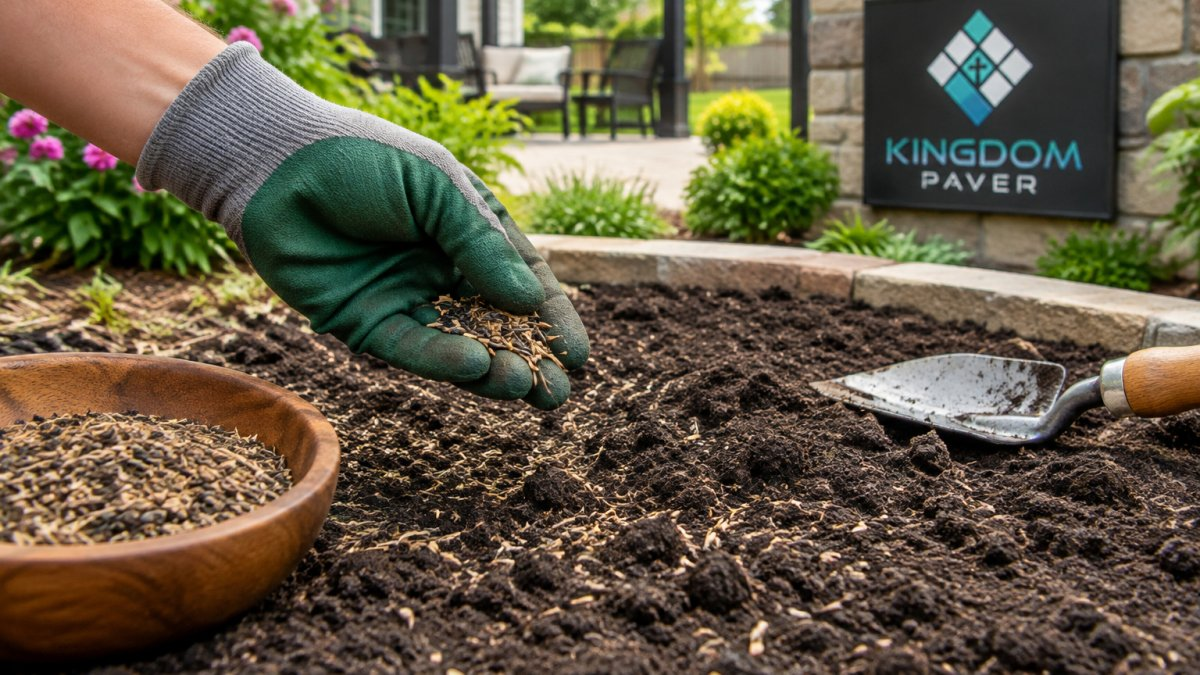
Digging, tilling, or turning soil brings buried seeds to the surface. Once they hit light and warmth, germination starts.
So the first rule of weed prevention is simple: disturb the soil as little as possible.
How Long Weed Seeds Stay Viable
Weed seeds stay viable in soil for years, and some species last for decades.
Long viability changes how you plan. You are not just killing this year’s weeds but managing a reserve that refills whenever mature weeds drop seed heads.
The practical takeaway: stop seed production first, then work on the seed bank. A weed that goes to seed undoes months of work.
Clear Existing Weeds Before They Set Seed
Pull, cut, or smother mature weeds before they flower and drop seed.
Walk your beds weekly during the growing season. Catch weeds while they are small. A young weed seedling pulls out easily.
Watch out: letting a single weed go to seed in a corner of the bed can undo a season of mulch and hand-pulling.
Hand-Pulling, Seed Heads, and Safe Disposal
Hand-pulling works best on small weeds in loose, moist soil. Water the bed the night before and the roots release more easily.
Grab the weed at the base, not the top. Pull straight up with a slow, steady motion.
For weeds already in flower or seed, do not drop them on the soil.
- Pull when soil is moist
- Grip at the base
- Bag seed heads, don’t compost them casually
Stop Tilling: Soil Disturbance Wakes Buried Seeds
Tilling feels productive. It also flips buried seeds to the surface where they sprout.
Every pass with a tiller or cultivator brings a fresh batch of buried seeds into the light.
Use a hoe to slice weeds off at the soil surface instead. Cut the top, leave the soil alone. The seed bank stays asleep.
For readers dealing with weeds between hardscape, our guide on removing weeds from paver joints covers the tools that work without tearing up the base.
Soil Solarization: Step-by-Step With Clear Plastic
Soil solarization uses clear plastic and summer sun to heat the top layer of soil until weed seeds and pathogens die.

What Solarization Actually Does to Weed Seeds
Clear plastic traps solar energy and raises soil temperature in the top 6 to 8 inches. Sustained high temperatures for several weeks can weaken or kill many weed seeds near the surface. The heat also stresses soilborne pathogens and some nematodes.
The effect is not uniform. Deeply buried seeds and heat-tolerant species can survive. Solarization reduces the active seed bank in the treated layer; it does not sterilize the soil.
Step-by-Step Solarization Instructions
- Clear the area. Remove existing weeds, roots, and large clods. Pull or hoe them out rather than tilling deeply, which brings fresh seeds up.
- Level and water the soil. Moist soil conducts heat better than dry soil. Rake the surface smooth and water until the top few inches are damp but not muddy.
- Choose clear plastic, not black. Clear polyethylene lets sunlight through to heat the soil. Black plastic blocks light but does not heat the soil as effectively. A common thickness is 1 to 4 mil, though thicker sheeting resists tears better.
- Stretch the plastic tight. Bury the edges in a shallow trench and pack soil over them so no air escapes. Loose plastic insulates the soil and defeats the purpose.
- Leave it for the hottest weeks. Killing weed seeds this way takes a full summer of sun, not a weekend. Plan on several weeks during the hottest part of the season.
- Remove and plant. Disturb the soil as little as possible afterward. Every turn of the spade brings buried seeds back to the surface.
Solarizing in partial shade or cool weather may not reach the temperatures needed to kill seeds.
When Solarization Works and When It Doesn’t
Solarization works best in full sun, in summer, on prepared ground. It struggles in shade, in cool seasons, and on large areas where the plastic is hard to seal.
It also kills beneficial soil organisms along with the bad ones. That trade-off is real. Use it where you have a serious weed or disease problem, not as routine upkeep.
Crop-Safe Solarization Around Established Plantings
Solarization is a whole-bed treatment. It is not safe to lay plastic over growing vegetables or ornamentals, because the heat will damage or kill the plants you want to keep.
For established plantings, solarize only empty beds or strips between rows, and keep plastic away from crowns and trunks. If you cannot take a bed out of production, choose mulch, sheet barriers, or hand removal instead.
How to Stop Weed Seeds in Garden Soil Naturally
You can stop weed seeds in garden soil naturally by blocking light, smothering the surface, and keeping soil covered year-round. Mulch and sheet barriers do most of the work.
Light is the trigger for most weed seeds. Cut the light and you cut germination.
Mulch Depth and Light Exclusion
Mulch blocks light and keeps the soil surface cool, which slows germination.
Depth recommendations vary, so there is no single magic number.
A layer of 2 to 3 inches of organic mulch suits many flower beds. Go deeper for serious weed pressure. Keep mulch a couple of inches back from stems so plants do not rot.
Reapply as it breaks down. A thin, patchy layer lets light through and weeds win.
For raised beds, our step-by-step guide on preventing weeds in raised flower beds walks through mulch and barrier layers together.
Cardboard, Sheet Barriers, and Living Mulch
Cardboard and other sheet barriers smother weeds by cutting light completely.
Cardboard breaks down over a season, which is fine. It feeds the soil as it goes. Avoid glossy or heavily inked cardboard.
Living mulch works the same way with plants instead of paper. A dense ground cover shades the soil and outcompetes weed seedlings for water and light.
- Cardboard: cheap, effective, breaks down
- Landscape fabric: longer lasting, less soil benefit
- Living mulch: shades soil, needs water and care
Composting to Kill Weed Seeds
Composting kills weed seeds only when the pile gets hot enough, long enough. A cool, lazy pile will not do it.
Hot compost reaches high internal temperatures that break down seeds and pathogens.
Watch out: adding mature weeds with seed heads to a cool compost pile spreads viable seeds right back into your beds.
Pre-Emergent Weed Control and Corn Gluten Meal
Pre-emergent weed control stops seeds from sprouting, but it has to go down before germination starts. Timing is everything. Apply too late and the seeds have already sprouted; apply too early and the product may break down before the target window.
How Pre-Emergents Work
Pre-emergent products form a chemical or physical barrier in the top layer of soil that prevents germinating seeds from establishing. They do not kill existing weeds.
A common pattern is to apply pre-emergent in early spring, before soil temperatures reach the range where target weed seeds germinate. For many summer weeds, that means late winter to early spring, depending on your climate.
Corn Gluten Meal as a Natural Option
Corn gluten meal is a natural option some gardeners try as a pre-emergent. Apply it early in the season, before weed seeds germinate.
Corn gluten meal is a byproduct of corn processing and is often used as a nitrogen-rich soil amendment.
Watch out: corn gluten meal can suppress germination of desirable seeds too, so do not apply it where you plan to sow grass or vegetable seed in the same season.
Timing and Trade-Offs
Pre-emergents are most useful on established beds, lawns, and paths where you are not replanting. They are a poor fit for beds where you plan to direct-sow crops, because the barrier does not distinguish between weed seeds and crop seeds.
Compare the options by situation rather than stacking them. On an empty bed with serious weed pressure, solarization or sheet mulch may do more than a pre-emergent.
Which Method Fits Your Garden Situation and Season
Match the method to your situation instead of stacking every technique at once. Here is how we would choose:
| Situation | Best Method | Why |
|---|---|---|
| Empty bed, full summer sun | Solarization | Heat kills seeds in the top layer |
| Established flower bed | 2-3 inch mulch | Blocks light, low effort |
| Raised vegetable bed | Cardboard plus mulch | Smothers weeds, safe for planting |
| Weeds in flower | Hand-pull and bag | Stops seed production now |
| Large open area | Living mulch or ground cover | Shade and competition |
Season matters too. Solarize in the hottest weeks. Mulch in spring before weeds start. Pull weekly through summer.
When you are ready to build hardscape around a clean bed, our team at Kingdom Paver can help with patios, walkways, and flowerbed edging.
Planning a Weed-Free Bed Before Your Paver Project
Plan the bed before the pavers go down, not after. A little prep up front saves years of weeding between stones.
Start by clearing and leveling the area. Decide where soil meets stone, and leave room for edging.
If you are building the bed yourself, our guide on building a raised flower bed with pavers walks through the layers. Before any hardscape work begins, it also helps to know how to prepare your backyard for construction.
At Kingdom Paver, we have 10 years of experience building patios, driveways, walkways, and flowerbeds in the Katy and Cypress area. Our builds are tailored to your space.
Kingdom Paver also offers custom outdoor kitchens and fire pits.
Weeds will always test your beds.
Frequently Asked Questions
How do you kill weed seeds in soil before planting?
Start by removing mature weeds and their seed heads, then avoid tilling, which brings buried weed seeds to the surface where they germinate. For a full bed reset, soil solarization with clear plastic during the hottest weeks of summer can reduce viable weed seeds in the top few inches. For planted beds, a 2 to 3 inch organic mulch layer blocks light and stops most weed seedlings from establishing. Pre-emergent products and corn gluten meal are options where the label allows.
Does soil solarization kill weed seeds?
Soil solarization uses clear plastic stretched tight over prepared, moist soil to trap heat and raise soil temperature in the top layer, which reduces viable weed seeds and some soilborne pests. It is not a quick fix: killing weed seeds with clear plastic requires a tightly stretched cover over a properly prepared area for an entire summer. Results depend on sunlight, moisture, and how well the plastic seals to the soil.
Can composting kill weed seeds?
Composting to kill weed seeds depends on heat. A hot compost pile that reaches sustained high temperatures in the core, turned regularly so outer material cycles through the center, breaks down many weed seeds. Cool or lazy piles often never get hot enough, and seeds can survive and sprout when you spread the compost. Keep mature weeds with seed heads out of cool piles, and use finished hot compost as a mulch or soil amendment.
What mulch helps prevent weeds in garden soil?
Organic mulch such as shredded bark, straw, or leaves blocks sunlight from reaching the soil surface, which stops many weed seedlings from germinating. Depth recommendations vary across sources. A layer deep enough to exclude light, kept away from plant stems, gives the best weed suppression without smothering desirable plants.


