
Last Updated: October 22, 2026
Quick Summary
To remove oil stains pavers, first absorb fresh spills with cat litter or baking soda within 24 hours, then apply household cleaners like baking soda paste or laundry detergent. For stubborn or old stains, use a commercial degreaser or create a poultice with powdered clay and degreaser, repeating treatments over several days if needed.
- Fresh oil stains respond to absorbents and simple cleaners within hours; old stains soaked for weeks or months need several rounds of treatment.
- Sealed pavers trap oil on the surface making it easier to remove, while unsealed pavers let oil soak deep making removal harder.
- Pressure washing should be a finishing step only, using 1,200-1,500 PSI on sealed concrete and 40-degree nozzles, to avoid driving oil deeper or damaging joints.
- Contain oily wash water with curbs or sandbags before it reaches storm drains, as discharge violates local stormwater ordinances in most jurisdictions.
- Dispose of heavily oiled absorbents and wash water from degreasers as household hazardous waste, never down drains or onto soil.
Table of Contents
- Identify the Oil Stain and Assess Its Age
- Step 1: Absorb Fresh Oil with Absorbent Materials
- Step 2: Apply Household Cleaners and Powders
- Step 3: Choose the Best Oil Stain Remover for Pavers
- Step 4: Make and Apply a Poultice for Stubborn Stains
- Removing Old Oil Stains from Pavers
- Pressure Washing Oil Stains from Pavers Safely
- Safety and Environmental Precautions
- Frequently Asked Questions
Identify the Oil Stain and Assess Its Age
Fresh oil stains look dark and wet; older stains appear faded and dry.

Fresh Oil Stains vs. Set-In Stains
A fresh oil stain has been on your pavers for less than a week.
A set-in stain has sat for weeks or months, looks dull and dry, and has penetrated the paver surface.
Fresh stains take hours to treat; old stains take days or weeks.
Check Your Paver Material and Finish
Your paver type affects which removal method works best.
Concrete pavers are porous and absorb oil easily. Natural stone pavers (granite, slate, limestone) are also porous but more delicate. Porcelain pavers are less porous, so oil sits on top rather than soaking in.
To check for sealer, run water on the surface: if it beads up, the pavers are sealed; if it soaks in, they’re unsealed.
Sealed pavers trap oil on the surface (easier to remove); unsealed pavers let oil soak deep (harder to remove). Some cleaners damage sealer or joint sand.
Step 1: Absorb Fresh Oil with Absorbent Materials
Act fast on fresh oil stains. The first 24 hours are critical.
Spread the absorbent material thick. Cover the entire stain.
Remove the material with a broom or shovel. Dispose of it in the trash.
Common absorbent options:
- Cat litter (clay-based works best)
- Diatomaceous earth (food-grade)
- Baking soda
Repeat if oil remains. Some fresh spills need two applications.
Don’t skip this step for fresh spills. Absorbing oil immediately prevents it from soaking into the paver. This saves you hours of scrubbing later.
Step 2: Apply Household Cleaners and Powders
After absorbing loose oil, use household cleaners. These break down the remaining residue.
Using Baking Soda and Dish Soap
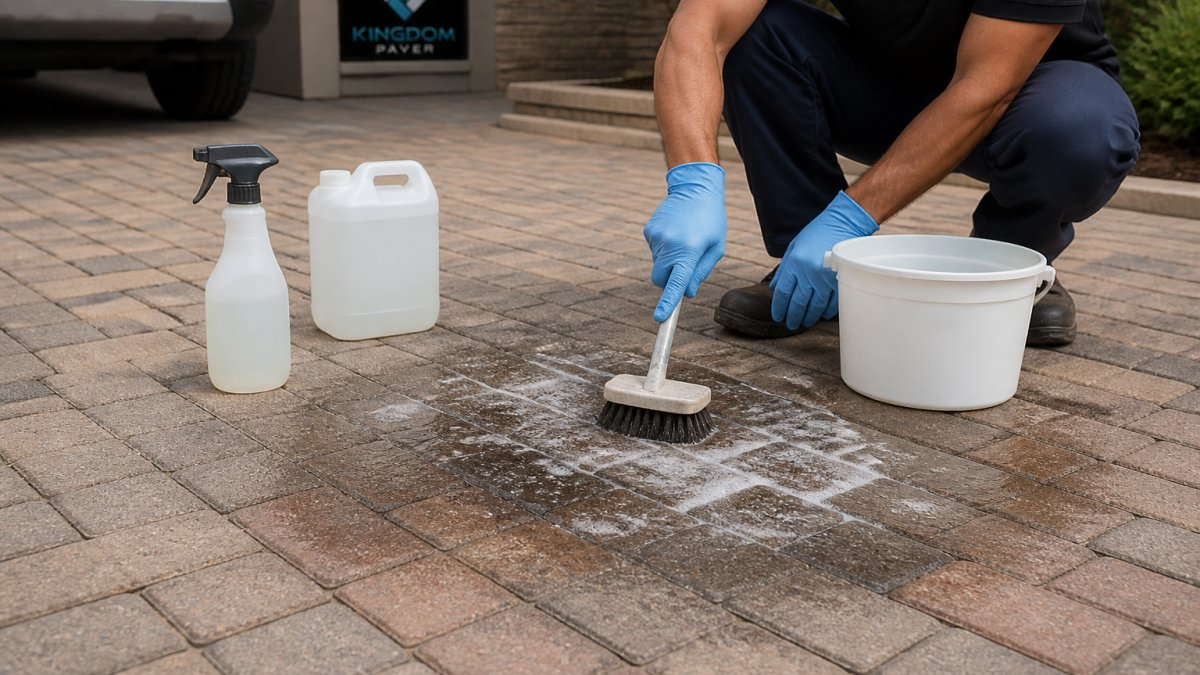
Mix three parts baking soda to one part dish soap into a paste, adding water if needed. Spread it over the stain, let it sit 30 minutes, scrub with a stiff-bristled brush in circular motions, then rinse with hot water. Repeat if the stain remains.
Using Laundry Detergent
Laundry detergent works on set-in stains. Mix one part detergent powder with three parts water.
Let it soak for one hour. The detergent breaks down oil molecules.
Scrub hard with a brush. Rinse thoroughly with hot water.
This method works better on older stains than baking soda alone.
Don’t use too much detergent. Excess soap leaves residue that attracts dirt. This makes the paver look darker than before.
Step 3: Choose the Best Oil Stain Remover for Pavers
Household methods work for light stains. Heavy stains need commercial degreasers. The best oil stain remover for pavers depends on stain severity.
Commercial Degreasers and Oil Cleaners
Commercial degreasers break down petroleum products faster than household cleaners. Read the label (some damage sealer or joint sand) and test on a hidden area first. Apply as directed, soak 15-30 minutes, scrub, and rinse completely. Heavy-duty degreasers cost more but save time on old, stubborn stains.
Trisodium Phosphate (TSP) Solutions
Trisodium phosphate, or TSP, is a strong cleaning agent. It removes oil, grease, and dirt.
Mix TSP powder with water per package directions. Apply to the stain.
Scrub with a stiff brush. Rinse with plenty of water.
TSP is effective but harsh. Wear gloves and eye protection.
For most homeowners, a mid-range commercial degreaser balances cost and effectiveness. It removes old stains faster than household methods without the harshness of TSP.
Step 4: Make and Apply a Poultice for Stubborn Stains
A poultice is a paste that sits on the stain and pulls oil outward from deep within the paver.
Mix a poultice:
- 1 part powdered clay (or talc)
- 1 part degreaser or solvent
- Water to reach thick paste consistency
Spread the paste at least half an inch thick over the stained area and let it dry completely (24-48 hours) as it pulls oil from the paver.
Removing Old Oil Stains from Pavers
Old stains are the hardest to remove. They’ve had time to soak deep into the paver material.
Why Older Stains Need Repeated Treatment
Oil that’s been sitting for months penetrates the porous surface and bonds to the paver material, so a single treatment won’t remove it. American Family Insurance notes that older, dried stains may require several rounds of treatment, each loosening a little more oil. Give each treatment time to work.
Extended Soak Times and Multiple Applications
For old stains, let cleaners sit 45-60 minutes instead of 15-30, longer contact breaks down more oil, and warm cleaner works faster than cold. Apply, soak, scrub, rinse, and repeat 2-3 times, spacing treatments a day apart and letting the paver dry completely between them.
Pressure Washing Oil Stains from Pavers Safely
Pressure washing can strip an oil stain in minutes, or drive it deeper, blast out joint sand, and etch the paver face. The difference is almost entirely in setup. Treat pressure washing as a finishing step after absorption and chemical treatment, not as the first move on a fresh spill.
Why Pressure Washing Can Make an Oil Stain Worse
A pressure washer does not neutralize oil, it moves it. On a porous paver, a narrow high-pressure stream pushes oil-laden water sideways and downward into the paver matrix and joint channels, and the stain can reappear a day later as a wider, fainter halo. On sealed pavers, high pressure can breach the sealer film, letting oil wick into the exposed paver underneath and turning a surface stain into a subsurface one.
Three damage mechanisms to watch for:
- Joint sand displacement. The sand between pavers is the weakest part of the system. A 25-degree nozzle held close will excavate joint sand in seconds. Once joints are hollow, pavers rock, edges chip, and weeds and water intrusion follow.
- Sealer erosion. Most film-forming sealers are not designed for direct high-pressure contact. Even at moderate PSI, holding the wand in one spot dulls the sheen and creates a visible patch that will not match the surrounding surface.
- Surface etching. Concrete and some natural stone pavers can be etched by a concentrated stream, leaving a lighter, rougher spot that looks worse than the original stain.
PSI, Nozzle, and Distance by Paver Type
There is no single correct PSI. Match the setting to the paver and the finish, and always test on a spare paver or a hidden corner first.
| Paver type / finish | Starting PSI | Nozzle | Working distance |
|---|---|---|---|
| Sealed concrete pavers | 1,200-1,500 | 40° or wider | 12-18 in |
| Unsealed concrete pavers | 1,500-2,000 | 40° | 12-18 in |
| Clay brick pavers | 1,000-1,500 | 40° | 18 in |
| Natural stone (granite, slate) | 1,000-1,500 | 40° | 18 in |
| Limestone, sandstone, travertine | 800-1,200 | 40°+ / fan tip | 18-24 in |
| Porcelain pavers | 1,200-1,800 | 40° | 12-18 in |
Rules that apply across the table:
- Never exceed 2,000 PSI on residential pavers, and stay under 1,500 PSI on anything sealed or stone.
- Use a 40-degree (white) or wider nozzle. Turbo nozzles and 0-degree tips are for concrete slabs, not pavers.
- Keep the wand moving in overlapping passes. A stationary wand is what etches and strips.
Protecting Joint Sand and Sealer During Washing
Joint sand is the part homeowners most often destroy. Sweep the surface clean and note any joints already low or hollow, those wash out first.
For sealed pavers, test a small area first and compare the sheen after it dries. If the test patch looks duller than the surrounding surface, the sealer is being eroded, drop the PSI or switch to a chemical-only approach.
When to Skip the Pressure Washer
Skip pressure washing, or hand it to a professional, when:
- The pavers are already loose, chipped, or have hollow joints.
- The surface is limestone, sandstone, travertine, or any soft stone.
- The sealer is older and already failing (flaking, cloudy, or worn in traffic lanes).
Pressure washing oily runoff onto a driveway apron, street, or storm drain can violate local stormwater rules in many jurisdictions. Contain and collect the wash water before it leaves the property, see the safety and environmental section below.
Pressure washing is a finishing tool, not a first response. Use the lowest PSI that lifts the residue, keep the nozzle off the joints, and plan to re-sand and possibly re-seal afterward. If the paver type or sealer condition is uncertain, a chemical poultice is slower but far less risky.
Safety and Environmental Precautions
Oil-stain cleanup produces two waste streams: the oil itself and the water and chemicals used to lift it. Both need to be managed before they leave the property, the part most guides skip, and the part that determines whether a DIY job is legal, safe, and actually finished.
Containing Oily Wash Water Before It Reaches a Storm Drain
In most U.S. municipalities, storm drains discharge directly to local waterways without treatment, so anything you rinse off the driveway, oil, degreaser, detergent, poultice residue, can end up in a creek, river, or lake. Many jurisdictions treat illegal discharge to a storm drain as a violation under local stormwater ordinances, and some impose fines.
Practical containment methods, in order of effort:
- Absorb first, rinse last. The more oil you remove with cat litter, sawdust, or a poultice before rinsing, the less oil is in the wash water, the single biggest reduction you can make.
- Block the apron. Use a rubber curb, sandbag, or rolled towel across the bottom of the driveway to keep wash water on the property.
- Work in sections. Clean and collect one small area at a time instead of flooding the whole driveway.
Protecting Soil, Plants, and Groundwater
Oil and degreasers that soak into soil can migrate toward groundwater, and plants are sensitive to both petroleum residue and detergent surfactants. A few habits reduce the risk:
- Pre-wet adjacent planting beds so dry soil is less likely to wick up runoff, then flush beds with clean water afterward if spray drifted.
- Keep poultice and absorbent debris off lawns and mulch; bag it rather than sweeping it into beds.
- Do not use TSP or solvent-based degreasers near wells, cisterns, or surface water. Check the label for groundwater warnings.
Product Handling, PPE, and Chemical Compatibility
Read the label on every product and follow it over any general advice. Basic precautions:
- Gloves and eye protection for all cleaners; chemical-resistant gloves (nitrile) for degreasers and solvents.
- Ventilation when working with solvent-based products, even outdoors, avoid enclosed garages and carports.
- No mixing. Never combine bleach with ammonia, acid, or TSP; the reaction can release toxic gas. Rinse thoroughly between products and use one chemistry at a time.
Disposing of Contaminated Absorbents and Wash Water
Disposal rules vary by state and municipality, so confirm with your local solid waste or household hazardous waste program. General guidance:
- Lightly oiled absorbents (cat litter, sawdust, baking soda) that are fully saturated and drained can usually go in regular trash in a sealed bag. Check local rules first.
- Heavily oiled or solvent-soaked absorbents and poultice residue should be treated as household hazardous waste. Many communities run collection days or permanent drop-off sites.
- Collected wash water from degreaser or solvent use should go to household hazardous waste, not the storm drain, sanitary sewer, or yard.
Never pour leftover degreaser, solvent, or oily wash water down a storm drain, sink, toilet, or onto the ground. Storm drains typically discharge untreated to local waterways, and many jurisdictions treat illegal discharge as a violation.
The cleanup is not done when the stain fades, it is done when the oil, absorbents, and wash water are contained and disposed of properly. Absorb as much oil as possible before rinsing, block the driveway apron, vacuum up standing water, and route anything chemical to household hazardous waste.
Frequently Asked Questions
Can oil stains be completely removed from pavers?
Yes, but success depends on the stain’s age and depth. Fresh oil stains are easier to remove with absorbents and cleaners. Older, set-in stains may require repeated treatment with commercial degreasers or poultices over several days. Some deeply penetrated stains may lighten significantly but leave faint discoloration. PROSOCO notes that heavy stains benefit from diluted cleaner and degreaser solutions applied to the paver surface.
What is the best oil stain remover for pavers?
The best choice depends on stain severity. For fresh stains, cat litter or baking soda work well. For moderate stains, dish soap mixed with hot water or commercial degreasers are effective. For heavy or set-in stains, trisodium phosphate (TSP) or specialized paver degreasers deliver stronger results. Always test any cleaner on an inconspicuous area first to ensure it won’t discolor or damage your specific paver material.
Can pressure washing damage paver driveways?
Yes, if used incorrectly. High pressure can erode paver surfaces, dislodge joint sand, and damage sealer. Use a wide-angle nozzle, and keep the wand moving to avoid concentrating pressure on one spot. Never aim directly at joints. Always apply pressure washing after chemical treatment has had time to work, and consider professional help if your driveway has decorative finishes or aged pavers.
How long should I let a cleaner sit on an oil stain?
Fresh stains need 15-30 minutes of soak time. Older stains benefit from 2-4 hours or even overnight soaking. American Family Insurance notes that dried, set-in stains may require a few rounds of treatment, so extended soak times between applications improve results. Always follow the product label’s recommended contact time, and reapply if the stain remains after the first treatment.


