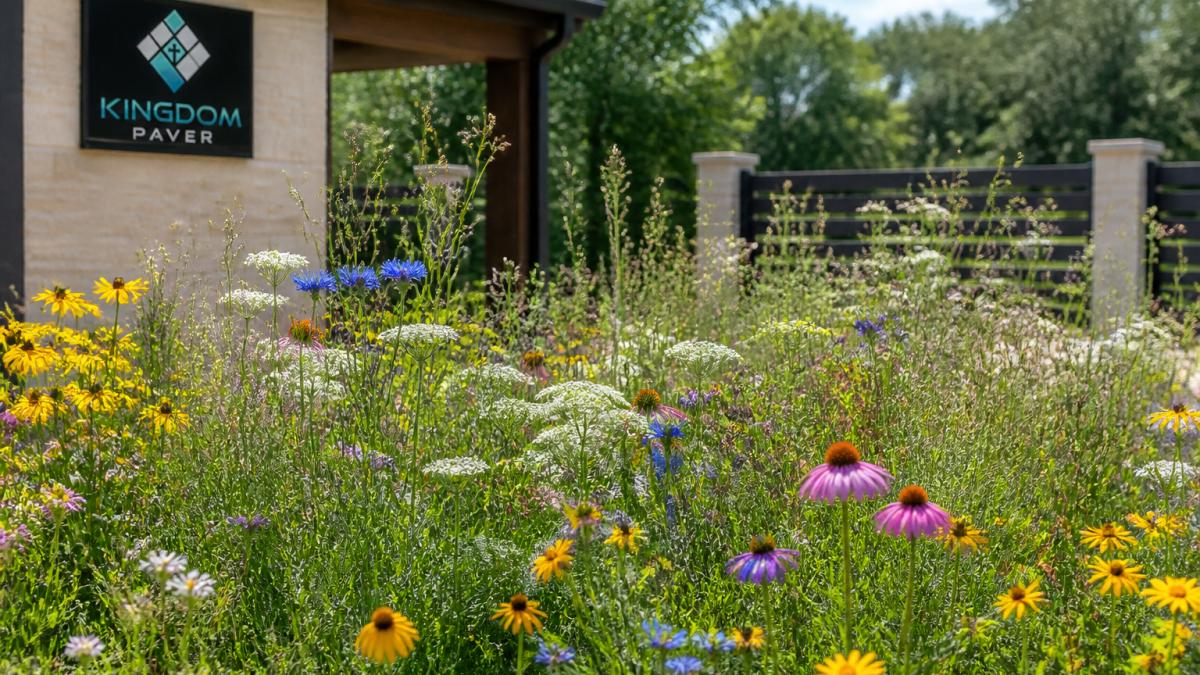
A native wildflower meadow is a low-maintenance planting of regionally native grasses and flowers that replaces part of a traditional lawn, feeding pollinators and needing far less water and mowing than turf once established. Plant it by clearing all existing vegetation, sowing regional seed onto bare soil, and steering the patch through its first two seasons.
Most meadow flowers want six or more hours of sun and ground that doesn’t hold water.
Sowing too deep is the most common reason a wildflower meadow seed mix fails to sprout.
A good native mix is perennial-dominant, with a small annual component for first-year color.
Mow an established meadow once a year in late winter or early spring, cutting to about 4 to 6 inches.
Seed is cheaper up front, while plugs cost more but establish faster and bloom sooner.
How to Plant a Wildflower Meadow: Site Prep to First Sprout
Learning how to plant a wildflower meadow comes down to two phases: kill the existing vegetation completely, then sow seed that touches bare soil. Skip either step and you get weeds, not wildflowers. Here’s a possible sequence.
Clearing and Prepping the Site
Start with a site assessment. Check sun, slope, and soil drainage. Most meadow flowers want six or more hours of sun and ground that doesn’t hold water.
Then clear the ground. Smother turf with cardboard weighted down, or strip it with a sod cutter. Give it several weeks. Weed seeds and roots need to die, not just get flipped under.
Test soil drainage before you plant
Remove all turf and roots
Let the cleared site sit and re-sprout, then remove regrowth
Sowing Techniques That Actually Germinate
Broadcast seeding works best on a small yard. Mix seed with sand or sawdust so you can see where it lands, then rake it in lightly.
Seed needs soil contact, not burial. Press it in with a roller or your feet. Water gently and keep the surface damp until germination.
Many native seeds need cold dormancy, so fall sowing is often the easiest route.
Choosing a Wildflower Meadow Seed Mix for Your Region
The best wildflower meadow seed mix is one built for your region, not a national blend. Regional mixes match plants to your rainfall, soil, and winter cold.
Most guides stop at “buy regional seed.” That advice is useless if you don’t know what region you’re in or how to read a seed label. Here’s the framework that actually works.
Find Your Ecoregion, Not Your State
State lines don’t match plant ranges. A single state can span three or four distinct ecoregions with different rainfall, soil, and winter cold. The U.S.
A practical shortcut: look at what grows in the nearest remnant prairie, meadow, or roadside natural area within a few miles of your yard. Those species are already proven in your soil and climate.
Read the Seed Tag Before You Buy
Every seed lot sold in the U.S. should carry a seed analysis tag. The tag lists four things you need to compare:
Pure seed percentage, how much of the bag is actually seed by weight
Germination percentage, how much of that seed is viable
Inert matter, chaff, stems, and filler
A mix labeled “wildflower” with no species list and no germination data is a gamble. Look for named species, a stated germination rate, and a stated percentage of perennial vs. annual seed. A good native mix is perennial-dominant, with a small annual component for first-year color.
Match Species to Your Site, Not Just Your Region
Two yards in the same ecoregion can have very different planting conditions. Before you buy, sort your site into one of three buckets:
Full sun, well-drained soil, prairie and savanna species: black-eyed Susan, purple coneflower, little bluestem, butterfly milkweed
Full sun, clay or wet soil, wet meadow species: swamp milkweed, Joe-Pye weed, New England aster, switchgrass
Part shade or dry shade, woodland edge species: wild columbine, woodland phlox, heartleaf foamflower, Pennsylvania sedge
Buying a “sun mix” for a shady yard is one of the most common reasons a meadow fails. Match the mix to the site, not the other way around.
What to Avoid in a National Blend
Big-box “wildflower” mixes often include non-native species marketed as wildflowers, cornflower, cosmos, shasta daisy, and California poppy outside its native range. Some also include species that behave aggressively in your region. Check every species on the label against your state’s noxious weed list and your extension office’s invasive plant list before you sow.
Pro Tip Ask your extension office or native plant society for a seed-mix recommendation by county. Many publish one-page lists of species that establish reliably in local soils, that list is worth more than any national blend.
The Xeriscape plant guides from regional extension services are a solid starting point for species lists by climate, and the USDA PLANTS database is the reference to confirm native status by county.
Native Wildflower Garden Ideas for Small and Large Spaces
Small yards can still host a meadow. A micro-meadow is simply a compact wildflower patch, often a few square metres, tucked into a corner or along a fence.
Wildflower Meadow Maintenance: Mowing, Weeding, and Patience
Wildflower meadow maintenance is lighter than lawn care, but it isn’t zero. The main jobs are one annual mow, early weed control, and patience while perennials establish. Most meadows look sparse in year one.
The first two seasons are where meadows are won or lost. After that, the planting mostly steers itself. Here’s what to do, season by season.
Year One: Weed Control Is the Whole Job
In the first growing season, your meadow is competing with a weed seed bank that has been waiting in your soil for years. Expect weeds to outpace wildflowers for the first few months.
Spring: water the new seeding gently to keep the surface damp until germination. Don’t let it dry out for more than a day or two at a time.
Early summer: identify and pull or spot-treat weeds before they set seed. Focus on the biggest offenders first, thistle, bindweed, pigweed, and anything on your state’s noxious weed list.
Mid-summer: mow the meadow to about 4 to 6 inches if weeds are outpacing flowers. This sets back weeds and lets light reach wildflower seedlings.
A common pattern: the first year looks weedy, the second year looks patchy, and the third year is when the planting starts to read as a meadow.
Year Two: Thin, Fill, and Steer
By the second season, you can see what established and what didn’t. This is the year to steer the planting rather than fight it.
Spring: mow or trim the previous year’s standing stems to about 6 inches, then rake off the clippings so they don’t smother new growth.
Early summer: fill bare patches with plugs of species you want more of. Plugs establish faster than seed and let you target specific spots.
Mid-summer: keep pulling or spot-treating any aggressive weeds before they seed. By year two, weed pressure should be dropping.
Year Three and Beyond: The Annual Mow
Once the meadow is established, maintenance drops to one mow a year, timed for late winter or early spring, after stems have stood through the cold.
Some practitioners mow in sections, half the meadow one year, half the next, so overwintering insects always have refuge. That’s a good pattern for small yards where the whole meadow is visible at once.
Weed Management Without Herbicides
Many homeowners want to avoid herbicides entirely. That’s workable in a small meadow if you stay ahead of the weeds:
Pull weeds by hand when the soil is damp, getting as much root as possible
Smother patches of aggressive weeds with cardboard weighted down, then replant
Mow before weeds set seed, timing matters more than technique
If weeds are winning despite your efforts, the fix is usually more site prep, not more herbicide. Our guide to preventing weeds in raised flower beds walks through the same early-control method that works in a meadow.
Watch Out The most common first-year mistake is cutting the meadow back in fall. Standing stems are winter habitat for insects and seed for birds. Wait until late winter or early spring.
Key Takeaway Meadow maintenance is front-loaded. The first two seasons need active steering, weeding, watering, and filling bare spots. After year three, one annual mow is most of the work.
Seed vs. Plugs: A Cost-Benefit Breakdown
Seed is cheaper up front. Plugs cost more but establish faster and bloom sooner. The right pick depends on your budget and how fast you want results.
Option
Upfront Cost
Speed to Bloom
Best For
Seed
Lower
Slow, often year two
Larger areas, tight budgets
Plugs
Higher
Faster, same season
Small patches, quick color
Seed + plugs
Mixed
Medium
Micro-meadows, key sightlines
For a big backyard, seed makes sense. For a small micro-meadow where you want color fast, plugs earn their cost. A mix of both is often the smartest play.
Troubleshooting Common Meadow Failures
Most meadow failures trace to a few fixable mistakes. The top culprits are poor site prep, seed sown too deep, and weeds that win the first season.
Nothing sprouts: seed buried too deep or dried out. Re-sow shallow and keep it damp.
Weeds take over: prep was incomplete. Clear harder and weed early.
Patchy growth: poor soil contact. Rake and press seed in better.
Planning Your Meadow With a Hardscape Designer
A meadow looks best when it’s framed. Paths, edging, and patios give a wild planting structure, so it reads as designed rather than neglected. That framing is where a hardscape designer earns their keep.
At Kingdom Paver, we specialize in patios, walkways, and flowerbeds. With a decade of experience serving Katy and Cypress, we offer custom building solutions.
How do you start a native wildflower meadow from scratch?
Start by clearing the site of grass and weeds, then loosen the top few inches of soil without adding rich compost, since native wildflowers prefer lean ground. Choose a wildflower meadow seed mix suited to your region and sun exposure, sow it in fall or early spring, and keep the area moist until germination. Expect slow establishment in year one; most meadows fill in by year two or three as perennials and biennials mature.
What native wildflowers are best for a meadow garden?
The best choices depend on your region’s climate and soil, but common meadow staples include black-eyed Susan, purple coneflower, butterfly weed, wild bergamot, and native bunch grasses like little bluestem. Pair early bloomers with late-season species so something is flowering from spring through fall. A regional native seed supplier can recommend a mix matched to your USDA hardiness zone and soil drainage.
Do native wildflower meadows need to be mowed?
Yes, but far less than a lawn. Most meadow maintenance calls for one or two mowings a year: a late-winter cut to knock back dead growth and scatter seed, and sometimes a mid-summer trim if weeds are gaining ground. Set the mower high and remove clippings to avoid smothering new growth. Skipping mowing entirely lets woody shrubs and invasive species take over within a few seasons.
Can you create a wildflower meadow in a small backyard?
A micro-meadow works in spaces as small as a few square metres. Pick a sunny patch with decent drainage, use a compact seed mix of low-growing perennials and grasses, and edge it with stone or pavers to keep it looking intentional rather than overgrown. Small meadows are easier to weed by hand and give pollinators a habitat island even in a tight suburban lot.
A wildflower meadow rewards the homeowner who preps well and stays patient. Kingdom Paver can build the patios, walkways, and borders that make yours look intentional. Get started with Kingdom Paver and turn your outdoor space into something worth hosting in.