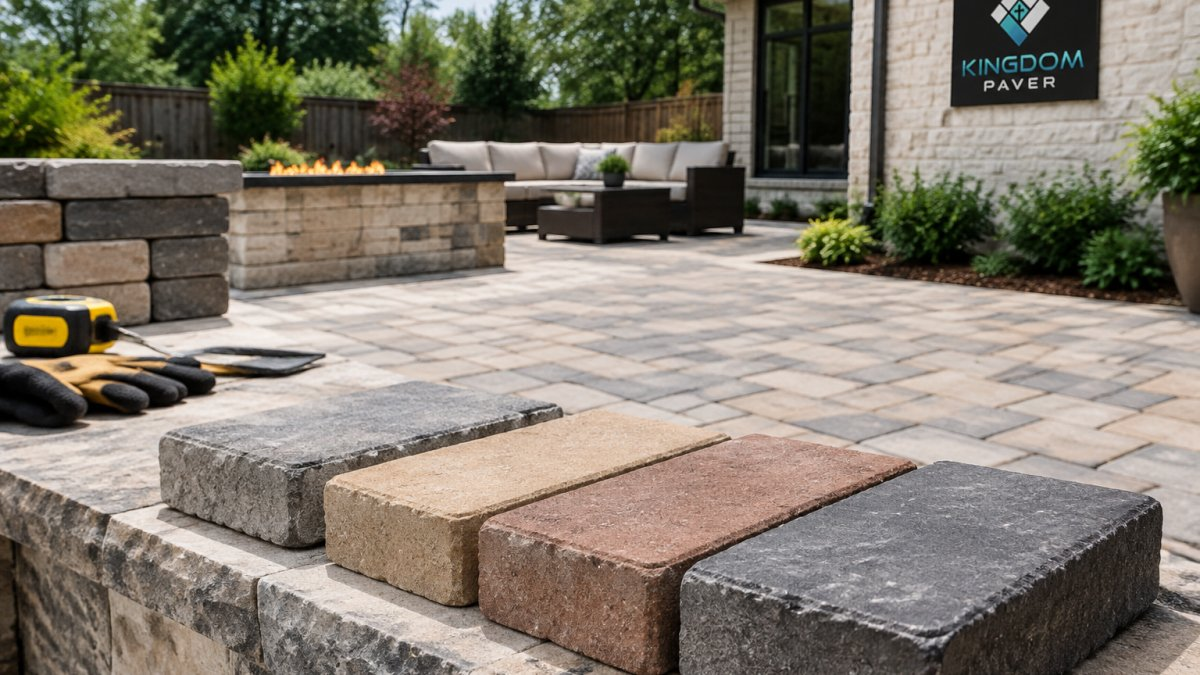
Durable pavers are paving units rated for high compressive strength, low water absorption, and proven freeze-thaw resistance, installed over a properly compacted base. Get those four things right and a patio can hold up for decades, since the paver is roughly half the equation and the base beneath it is the other half.
Clay brick pavers can last 20 to 25 years in moderate climates.
Porcelain pavers are fired at high temperatures, giving them a dense, nearly non-porous surface.
Skipping compaction between lifts is the single most common cause of sinking pavers.
Interlocking concrete and brick pavers can generally be lifted and reset individually.
Buy a few extra pavers at installation so future repairs are easier to match.
Start With the Durability Specs That Actually Matter
The short answer: durable pavers are paving units rated for high compressive strength, low water absorption, and proven freeze-thaw resistance, installed over a properly compacted base.
Many patios fail for reasons that have nothing to do with the paver itself. The material can be fine while the base is not.
Here is the uncomfortable truth most guides skip: the paver is roughly half the equation. The other half is what sits under it.
Compressive Strength, Water Absorption and Freeze-Thaw Ratings
Compressive strength is the load a paver carries before it cracks, measured in psi. Higher numbers mean the unit handles heavier loads and point pressure from furniture legs and dropped objects.
Water absorption is the percentage of its weight a paver takes on when soaked. Lower is better.
Freeze-thaw resistance describes how many cycles of freezing and thawing a paver survives without damage. This matters most in climates with hard winters.
For a patio, look for these targets:
Spec
What to Look For
Why It Matters
Compressive strength
High psi rating from the maker
Resists cracking under load
Water absorption
Low percentage
Limits freeze damage and staining
Freeze-thaw rating
Tested cycle count
Predicts winter survival
Surface texture
Broom, rock-face or matte
Grip when wet
Watch out: a paver with a great strength number and a weak base will still rock, sink and crack. For a closer look at why pavers fail, see our guide on why concrete pavers crack.
The Different Types of Pavers for Patio Projects
Four materials dominate patio work: concrete, natural stone, brick and porcelain. Each has a real trade-off, and none wins on every measure.
Concrete pavers are the workhorse. Concrete paving stones handle foot traffic and the occasional dropped grill lid well.
Natural stone, such as travertine or flagstone, brings unmatched looks and long life.
Porcelain pavers are the newer contender, with very low water absorption and a dense surface. They typically cost more than many alternatives.
Not all concrete pavers are the same product. The differences show up in density, finish and how the unit is made.
The main types:
Standard interlocking pavers: the budget-friendly default, good for patios and walkways
Large-format pavers: fewer joints, a cleaner modern look, and a current design trend per N&T Pavers’ 2026 trend report
Permeable pavers: designed with gaps or joints that let water drain through
The finish matters as much as the shape. A smooth paver looks sharp but gets slick when wet.
Ask your supplier for the strength and absorption numbers on the specific line you are buying. Two pavers from the same maker can carry very different specs.
Porcelain Pavers: The Low-Absorption Option
Porcelain pavers are fired at high temperatures, which gives them a dense, nearly non-porous surface. That low absorption is the whole point.
Why it matters for a patio:
Water beads on the surface instead of soaking in
Stains from grease and leaves wipe up easily
The dense body resists freeze damage better than porous materials
The catch is cost and installation. Porcelain is typically among the pricier options, and it benefits from a skilled installer because the units are thin and sensitive to a poor base.
For a homeowner who wants a low-maintenance patio with a modern look, porcelain is worth the premium. For a tight budget, concrete wins.
Matching the Best Pavers for Patio Use to Your Climate and Traffic
The best pavers for patio projects depend on two things: the weather your patio faces and the feet it carries. Match both and you avoid most failures. The problem with most advice is that it stops at “cold climate” or “heavy traffic” without giving you numbers to filter products. Use the thresholds below to turn those labels into a shortlist.
Start with the exposure your patio actually gets, then set minimum specs.
Freeze-thaw cycles: In regions that see repeated winter freeze-thaw, prioritize units with low water absorption and a documented freeze-thaw test. Lower water absorption is generally preferred in freeze-thaw areas, and porcelain is typically very low. Ask for the test method and cycle count, not just a “freeze-thaw rated” badge.
Heavy seasonal rain: Look for permeable or well-jointed systems, a base that drains, and a slope away from the house. Water absorption matters less here than drainage and joint design, because standing water softens the base regardless of the paver.
Heat and sun exposure: Dark pavers absorb more solar gain and get hot underfoot. Lighter colors and reflective finishes stay cooler, which is a real comfort factor on barefoot pool decks. Porcelain and light concrete tend to run cooler than dark brick or basalt.
Traffic and Use Filters
Match the unit to the load, not just the look.
Light foot traffic: Most concrete, brick or porcelain pavers work. Focus on appearance and slip resistance.
Heavy foot traffic and entertaining: Choose denser pavers with high compressive strength and a textured surface. Joint sand that locks units together helps spread point loads.
Driveway extensions and vehicle loads: Use pavers rated for vehicle traffic, not patio units. Thickness and base depth both increase; a patio paver under a truck is a warranty claim waiting to happen.
A Quick Selection Matrix
Use this to narrow materials before you shop:
Priority
Strongest Fit
Why
Lowest maintenance
Porcelain
Very low absorption, stain-resistant surface
Best value
Concrete
Broad range of strengths and finishes at lower cost
Classic look, repairable
Brick
Individual units lift and reset; color matching is feasible
Premium appearance
Natural stone
Unique look and long life, with higher care and cost
Freeze-thaw exposure
Low-absorption concrete, porcelain, or tested stone
Limits water expansion damage
Hot, barefoot areas
Light-colored porcelain or concrete
Lower solar gain, cooler surface
Large-format units, warm natural tones and stone-inspired textures are popular looks today, according to N&T Pavers. For a deeper dive on heavy-use ratings, see our guide on choosing durable pavers for heavy traffic.
Watch out: a paver that meets every climate spec will still fail if the base is undersized for the soil and load. Treat the material shortlist and the base design as one decision.
Base Preparation and Drainage Decide How Long Pavers Last
Here is the part that separates a 25-year patio from a 3-year one. A paver is only as good as the base beneath it.
A construction crew uses a plate compactor on a gravel base to ensure durable pavers for a backyard patio.
A proper base follows a set sequence:
Excavate to the right depth for your soil and load
Grade the subgrade so water runs away from the house
Lay and compact a crushed stone base in lifts
Screed a bedding layer to a consistent depth
Set, cut and compact the pavers into place
Sand the joints and compact again
Drainage is the other half. Water that pools against the house or sits in low spots will work its way under the pavers and soften the base.
Watch out: skipping compaction between lifts is the single most common cause of sinking pavers. It looks fine for a season. Then the ruts show up.
Long-Term Ownership Costs and Repairability
The cheapest patio is rarely the least expensive one. Long-term cost comes down to four things: what you pay up front, what you spend to maintain it, what repairs cost when something fails, and whether you can match a replacement paver years later. Most guides stop at the purchase price. The ownership view is where materials really separate.
The Four Cost Buckets
Purchase and installation: Material price plus base prep, labor, cuts, edge restraints and joint sand. Installation quality drives durability more than the paver brand, so a low bid that skimps on base depth is not a saving.
Routine maintenance: Sweeping, rinsing, weed control in joints, and resealing for porous materials. Porcelain needs the least; natural stone needs the most care to keep its finish.
Repairs: Lifting and resetting settled units, replacing cracked pavers, re-sanding joints, and correcting drainage. Interlocking systems make small repairs practical; monolithic surfaces make them harder to hide.
How Materials Compare Over Time
Concrete pavers: Moderate up-front cost, modest maintenance, and strong repairability because individual units lift and reset. Color matching is usually feasible if the same line is still produced; buy a few extra units at installation for future repairs.
Brick pavers: Similar repairability to concrete, with a classic look. Clay color can vary by run, so matching later depends on the manufacturer and dye lot.
Natural stone: Highest up-front cost and the most maintenance to preserve finish. Replacement is possible but matching color and veining later is tricky, so plan for spares.
Repairability Mechanics
Interlocking concrete and brick pavers can generally be lifted and reset individually, which makes many repairs simpler.
A common pattern is that settling, not the paver itself, drives most repair calls.
Sealing can help porous materials resist water absorption and stains.
Watch out: skipping the purchase of spare pavers at installation can make a small repair harder to match years later.
For a material-by-material durability guide, read how to choose the best paver materials for durability.
Plan Your Patio With a Local Paver Contractor
Choosing the right paver is a decision you can make on paper. Getting a patio that lasts 25 years takes a crew that gets the base, drainage and compaction right.
Kingdom Paver has a decade of experience building patios, driveways and walkways in the Katy and Cypress area. Our team focuses on durable materials and drainage built to last.
A beautiful patio starts with a solid plan. Request a quote from Kingdom Paver to talk through materials for your climate and traffic and map out a build that holds up for the long haul.
Frequently Asked Questions
What type of pavers are the most durable?
Concrete paving stones rank among the most durable options for a patio. Clay brick pavers hold up well too. Porcelain and granite also score high on durability in material comparisons. The right pick depends on your traffic, climate and budget, so weigh strength against water absorption and freeze-thaw performance.
How do you compare the durability of concrete, natural stone, and porcelain pavers?
Compare four specs: compressive strength, water absorption, freeze-thaw resistance and surface hardness. Concrete pavers deliver high strength at a mid-range cost. Natural stone lasts a long time but generally costs more than brick or concrete. Porcelain pavers absorb very little water, which helps in wet or freezing conditions. Ask for manufacturer test data on each material rather than relying on marketing claims, then match the numbers to how you use the patio.
How does the patio base affect paver durability?
The base does as much work as the paver itself. A properly excavated, compacted gravel base with correct slope moves water away and stops settling, which is the usual cause of sinking and cracking. Poor drainage lets water pool under the pavers and weaken the bedding layer. Ask your contractor how deep they excavate, what compaction equipment they use and how they grade for runoff. Skipping these steps shortens the life of even the best pavers.
Are concrete pavers durable enough for a patio?
Yes. Concrete pavers handle foot traffic, furniture and grills without trouble, and they resist cracking better than a single poured slab because each unit flexes independently. They also come in many colors and textures, so you can get a stone look at a lower cost. The catch is installation quality and sealing. A solid base and correct joint sand help keep concrete pavers stable over time, while a rushed install is more likely to fail early.
Your patio should still look right a decade from now, not just on install day. Kingdom Paver brings ten years of local experience, in-house installation, and a focus on durable materials and real drainage to every project. Get started with Kingdom Paver and build an outdoor space made to last.